
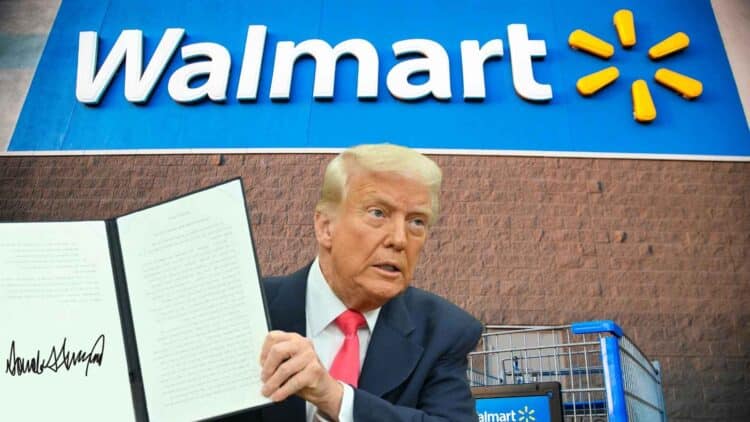
Walmart is one of the many retailers that has been feeling the pressure regarding tariff rates. Due to the constant increase in tariffs, retailers are forced to continuously raise the prices of their products. The retailer stated that the more the tariffs increase, the higher the prices of products would be. However, the company remains focused on the consumers and considers the fact that not everyone can afford to pay these high prices.
Impact of the Trump Tariffs
For the past few months, the president of the United States of America, Donald Trump, has decided to increase the tariff rates. The reason for this is to force consumers to purchase products created in the United States. By doing so, all the products and goods from other countries received an additional tariff increase on prices.
In addition, retailers are seeing the prices of goods rising every week, especially when it comes to large imports. These Trump administration tariffs affect all imports, and retailers are the companies that will make the decision to increase product prices. The reason why this is difficult, is because it has an impact on both the retailer and the consumers. If consumers decide that Walmart’s prices are too high and they cannot afford it, the retailer will lose that customer.
Previously, when the United States President Trump was threatening it increase tariffs up to 145% on Chinese imports, Walmart drew his ire by saying that would lead to higher prices. The Chief Executive Officer of Walmart, Doug McMillon, was on earnings call on Thursday about the company’s position regarding the tariff increase. McMillion stated that Walmart’s costs keep on increasing and that the retailer is seeing the difference every week. He added that the retailer is expecting that this will continue into the third and fourth quarters.
Walmart is responding to the tariff rates
The retailer has been increasing the prices of products these past few weeks, but it looks like the increase is not just a once-off event. The CEO stated that Walmart is continuing to attract higher-income consumers and that the retailer is lucky that the high tariffs did not lead to any major changes in shopping behaviour. Although the prices of some items had to be increased, the middle- and lower-income consumers, changed or skipped those purchases.
In addition, McMillon stated that the impact of the tariffs has been so gradually that the consumers’ behaviour was not really affected. The main reason for this is because everybody knows what is going on in the country and they are used to Walmart providing quality products at affordable prices.
Overall, despite the heavy tariff increase the consumers keep on spending at stores and restaurants. Therefore, Walmart’s sales in the United States grew by 4.6% in the last quarter. Another retailer, Home Depot stated on Tuesday, that its United States sales increased by 1.4%. This is the sales made in the last three months that ended on August 3, and these sales was much more compared to earlier this year.
Other retailers on the tariffs
The home-improvement chain, Home Depot, stated that people may have been moving on to smaller projects, while delaying major renovations. This is mainly because they are worried about where the economy is headed. In addition, several retailers and manufacturers have been avoiding massive price increases on their products. This is because of two key reasons; the fact that tariffs rolled out much slower than it was originally threatened, and several companies have stockpiled goods ahead of time.
In addition, this week, TJX, which is the parent company of discount clothing stores T.J.Maxx, Marshalls and HomeGoods, said it had bought up more inventory than usual to be well-stocked for months. This is an indication that company started making provision for the high Trump tariffs in advance.