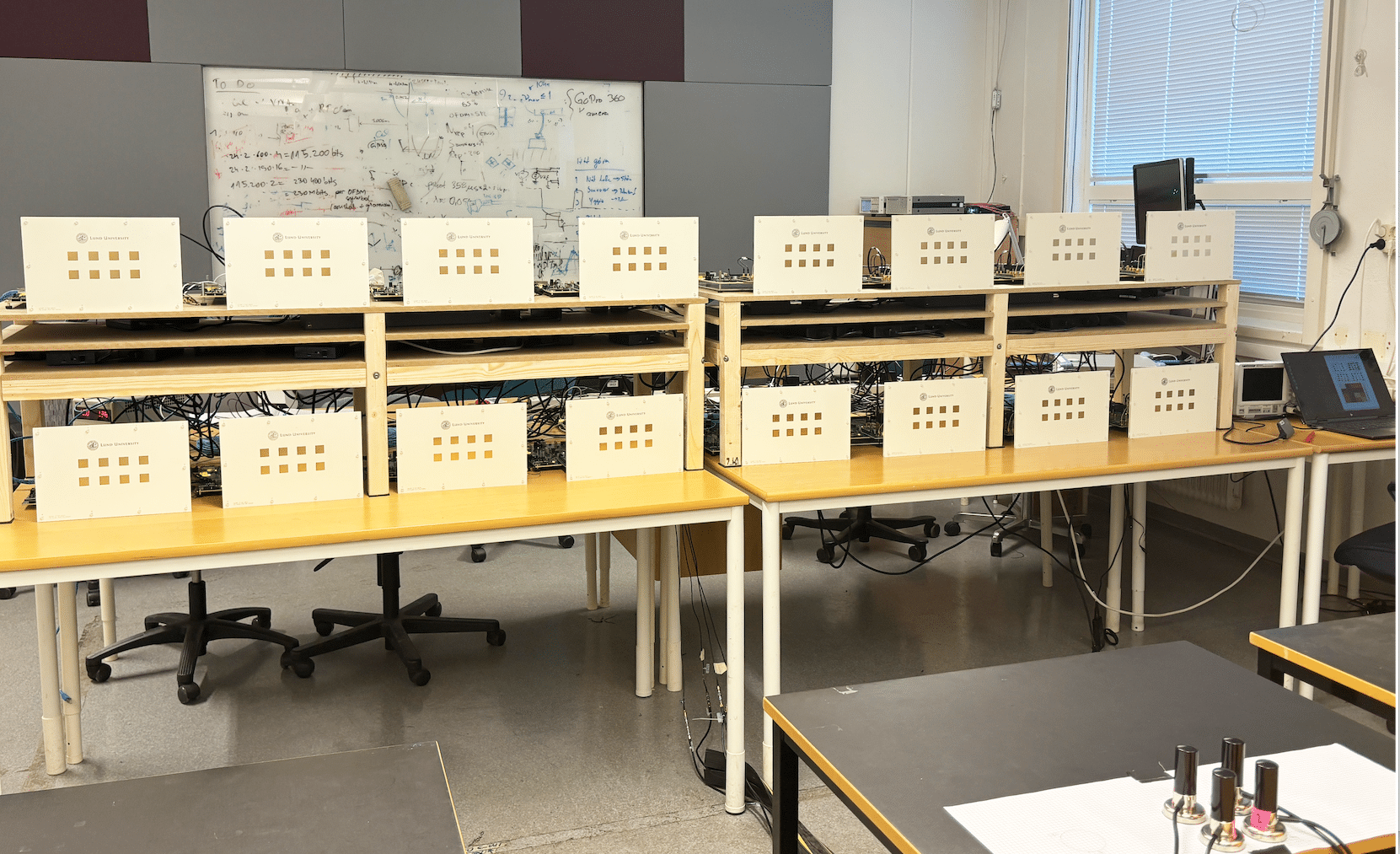
NVIDIA said its open source wireless research tools have surpassed 1 million downloads and are now used by more than 8,000 research and academic institutions worldwide, a tenfold jump in adoption over the past year as universities and companies race to prototype 6G networks.
The company detailed the milestone in a blog post published this week, a year after it first open sourced its Aerial wireless software alongside its existing Sionna simulation library.
What NVIDIA opened up
A year ago, NVIDIA open sourced its Aerial wireless software, joining Sionna and a broader suite of open source tools for accelerating next-generation 6G network development.
Over the past year, global developer adoption of NVIDIA AI Aerial and NVIDIA Sionna software has grown 10x, while NVIDIA’s open source 5G/6G tools have surpassed 1 million downloads.
The software gives researchers a shared way to design and test wireless systems without needing physical radio hardware for every experiment.
Together, the tools give researchers a common foundation for testing ideas, comparing results, and building on each other’s work – connecting simulation and AI training with experiments on real over-the-air wireless systems. That mirrors how other AI labs are compressing testing cycles before touching physical hardware, similar to the virtual practice runs now common in robotics research.
Universities and telecoms put it to work
At King’s College London, researchers linked a camera robot arm to Jetson AGX Orin running Sionna and sent semantic object descriptions instead of full images.
The goal is networks that help autonomous machines react faster to their surroundings.
SoftBank integrated a neural receiver into NVIDIA Aerial CUDA-Accelerated RAN (ACAR) and tested it with a commercial 5G smartphone under controlled interference. The neural receiver achieved higher uplink throughput than conventional receivers across all 15 tested settings, with a maximum gain of approximately 60%.
Separately, using NVIDIA Aerial Testbed, ETH Zurich researchers found that tuning neural receivers using local measurements reduced block error rates by more than one-third compared with selected pretrained versions.
Other institutions are using the tools to manage network capacity more efficiently. At the University of Leeds, researchers developed a system that predicts network demand 10 minutes ahead and uses those forecasts to guide base station sleep decisions. Before powering down, it checks that neighboring active stations can continue serving affected devices and monitors for changes that require capacity to be restored.
Why open source matters for 6G
NVIDIA frames the release as part of a broader industry shift away from closed, vendor-locked cellular infrastructure.
NVIDIA has positioned itself as a leading contributor to open source tools for the telecom industry, and the Aerial release is meant to accelerate AI-native wireless innovation across labs and vendors alike.
Alex Jinsung Choi, chairman of the AI-RAN Alliance, said in the original announcement of the open-sourcing that “with NVIDIA’s open-source Aerial software and DGX Spark, developers can create modular, software-defined wireless systems and experiment freely, from labs to live environments.”
The practical effect, according to NVIDIA, is a shorter path from theory to deployment. Faster simulations let researchers compare more designs, investigate demanding scenarios, and refine ideas before real-world deployment.
These projects share a common thread: open source tools are compressing the cycle from hypothesis to validated result. That approach lets teams start with Sionna for simulation, move to Aerial for over-the-air testing, and compare findings against a growing body of published work, all on the same software stack.
What comes next
NVIDIA is pointing researchers toward its upcoming developer conference for further updates. At NVIDIA GTC Washington, D.C., researchers and developers will showcase more innovations shaping the future of wireless networks during 6G Developer Sessions.
Commercial 6G networks are expected to arrive in the 2030s, but the expanding base of institutions using NVIDIA’s free tools suggests the chipmaker is positioning itself as a leading research platform well before any standard is finalized.
That mirrors how companies have built AI infrastructure businesses around providing the compute and software layers other firms build on, including recent moves in AI inference infrastructure elsewhere in the industry.
