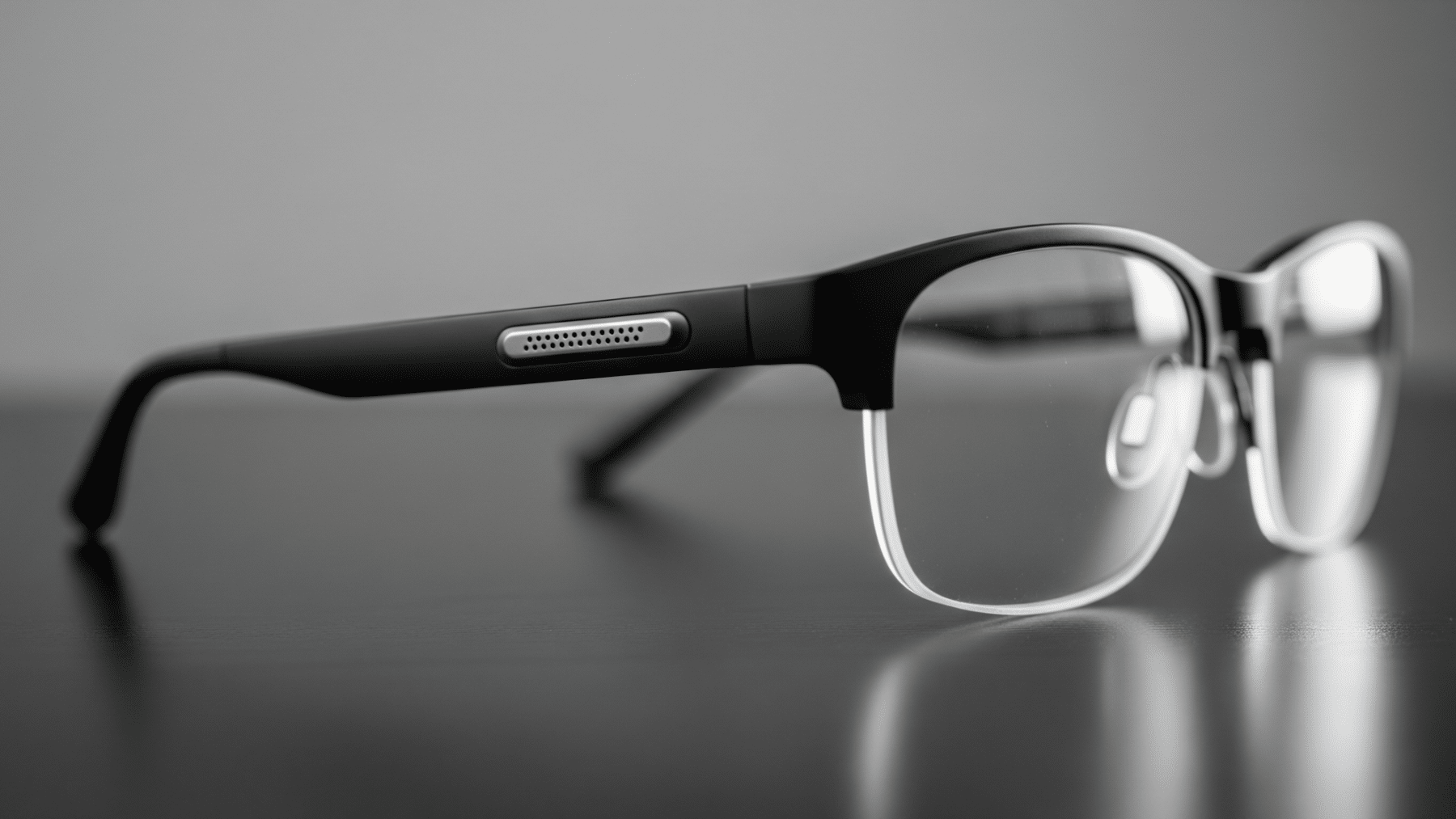
Samsung formally unveiled its Intelligent Eyewear on July 22, 2026, at a Galaxy Unpacked event in London. The lineup had first been announced at Google I/O 2026 in May; Samsung shared additional details and new frame designs at Unpacked. The glasses were developed with Google, Gentle Monster, and Warby Parker. The eyewear runs Android XR with Gemini, uses Qualcomm’s Snapdragon AR1 Gen 1 chip, and skips a display entirely. Battery life runs up to nine hours per charge, with the charging case able to deliver up to seven additional full charges.
A Gemini-powered companion for your pocket
Samsung says the glasses are designed as companion devices for smartphones, allowing users to access Gemini in a hands-free form factor. Both designs run Android XR without any screens, relying instead on built-in speakers that work in tandem with Google Gemini.
Pointed at a whiteboard or presentation, the camera can read the content on screen and distill it into organized notes. The glasses can also summarize incoming messages, provide real-time navigation guidance, and support live translation.
According to Google, there will be two types of intelligent eyewear: audio glasses that offer spoken help in the ear, and display glasses that show information when needed. Samsung’s roadmap is reported to include a future model adding a display, targeting a higher price tier and arriving after the display-free first-generation model.
That approach mirrors how the broader smart glasses market has evolved: prove the AI assistant use case first, add optics later.
The Gemini integration places the glasses squarely inside a growing Google ecosystem; Samsung’s first smart glasses will allow users to interact with Google’s Gemini AI hands-free, much as Meta ties its Ray-Ban glasses to Meta AI.
For buyers already in the Android ecosystem, that link to the same assistant powering their phones and tablets is a meaningful differentiator. Those interested in how Google has been expanding Gemini’s reach across devices can see its recent API work as part of the same platform push.
Fashion-forward frame partners
Samsung showcased two designs created with eyewear brands Gentle Monster and Warby Parker at Galaxy Unpacked in London. The Gentle Monster edition features a slim frame in black, pairing a straight upper rim with softly rounded lower edges, while the Warby Parker style features a subtly upswept brow line in a rich brown hue, creating a refined, versatile shape for everyday settings. These first Android XR glasses are set to launch in fall 2026, though pricing details remain unknown.
The dual-brand strategy directly echoes Meta’s move to co-brand its Ray-Ban smart glasses line with a recognized eyewear maker. It signals that the industry now treats wearable aesthetics as a primary competitive axis rather than an afterthought.
The smart glasses category is one of several wearable segments seeing accelerated investment in 2026. Apple Watch shipments jumped 21% in a single quarter as on-device AI reshapes what wrist and face-worn devices are expected to do.
Battery, specs, and the Meta comparison
The smart glasses developed in collaboration with Warby Parker and Gentle Monster will offer up to nine hours of active use, with up to seven additional charges provided by the charging case. Ray-Ban Meta Gen 2 advertises up to six hours of mixed use, with additional hours available via its case.
Samsung’s claimed per-charge runtime represents a notable advantage on paper, though real-world comparisons will require independent testing after the Intelligent Eyewear ships.
Pricing and availability remain undisclosed. A fall 2026 launch is planned for select markets. Reports before Unpacked pointed to a range of $379 to $499, but that figure remains a rumor even after the reveal.
Platform stakes beyond the hardware
Android XR is the platform Google has built with Samsung and Qualcomm. The glasses require a connected smartphone to function. The Intelligent Eyewear will be the first true Android XR smart glasses, expanding the platform beyond Samsung’s existing mixed reality headset.
Samsung is placing a big bet on smart glasses as the next staple in its wearables lineup. Google’s Android XR was announced back in 2024, and outside of the Galaxy XR headset, Samsung is trying to expand its presence with more mainstream-ready pairs of AI glasses. That means consumers stand to benefit from increased competition, faster innovation cycles, and more refined value propositions across different price points and use cases.
The bigger fight, analysts note, is ecosystem rather than hardware. For most buyers the decision comes down to which AI assistant and which frame partner they would rather wear, not raw specs.
With a fall ship date still to be confirmed and pricing unannounced, Samsung has given consumers a clear first look at its wearable ambitions in its official Unpacked announcement, while leaving the most consequential details for a follow-up announcement.
