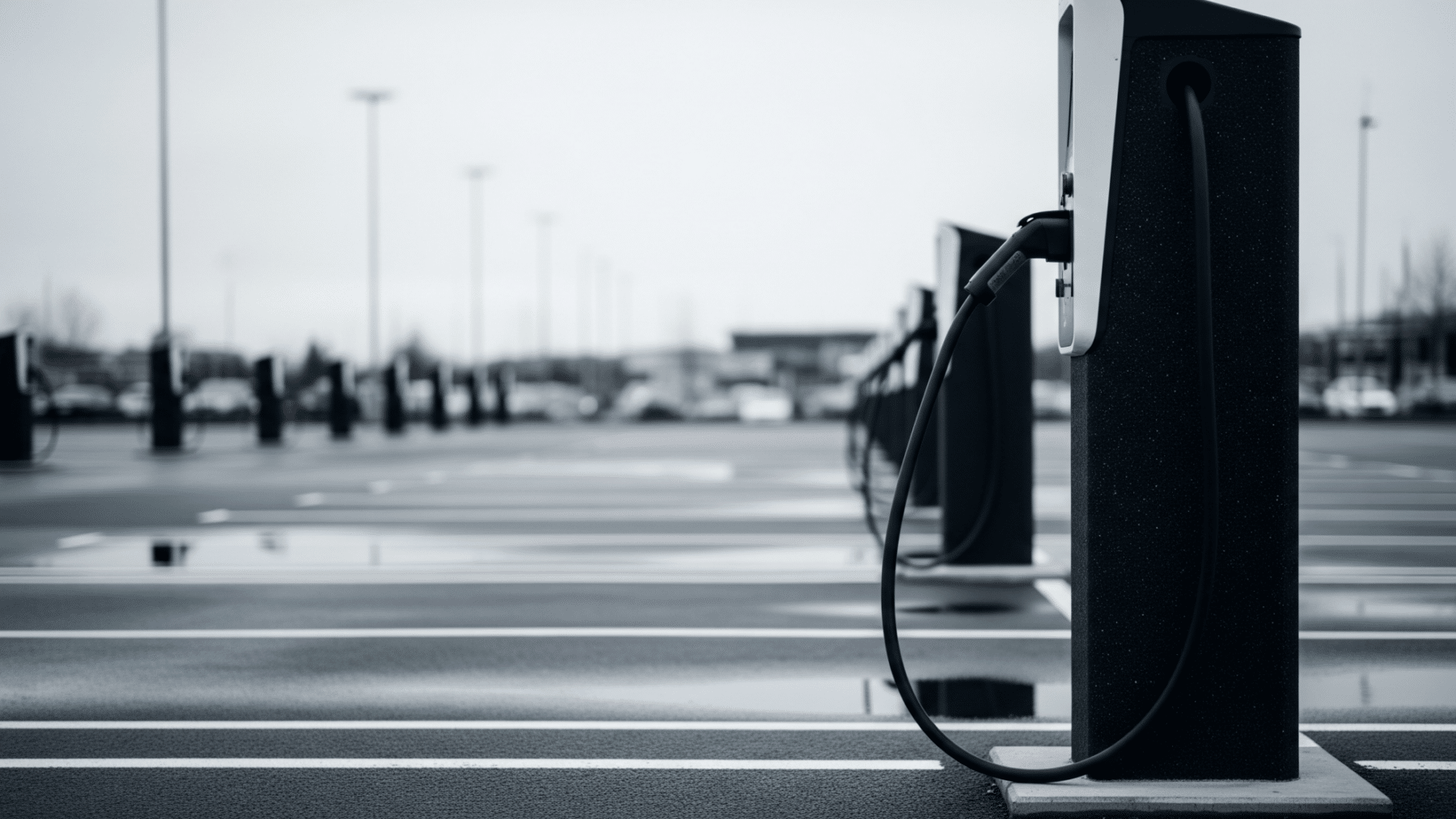
The number of public DC fast-charging ports in the United States reached 72,514 as of May 1, 2026, according to data from the Department of Energy’s Alternative Fuels Data Center (AFDC). That segment of EV charging infrastructure is growing by roughly 30 percent year over year. That rapid buildout is now forcing grid planners, utilities, and federal agencies into a reckoning over how and when all that new load will hit the nation’s distribution infrastructure.
A network expanding at pace
According to the Alternative Fuels Data Center, as of May 1, 2026, there were 72,514 public DC fast-charging ports across the country, counting all connector standards. April brought over 1,100 new DC stalls, slightly below the monthly average for the year.
The Tesla Supercharger network remains the largest DC network in the United States, with its share at around 51.6 percent of all public DC fast-charging ports, though that figure has been gradually declining. The top ten largest DC fast-charging networks account for roughly 85 percent of the total available ports.
Grid load: the harder problem
The DOE’s Office of Electricity released a report to Congress examining the implications that EV charging will have on the grid, along with considerations for managing and integrating that load. EVs and the grid can have a symbiotic relationship, since EVs have flexibility in terms of where and how long they use energy to charge, may sit idle for long periods, and store energy in batteries that can support non-transportation applications. Meeting growing energy demand from EV charging will require investments in infrastructure and approaches that take advantage of both demand and supply flexibility.
Proactive planning that incorporates a portfolio of options, including infrastructure upgrades, mitigative load management approaches, and programs that engage consumers as active participants, can balance the growing need for electricity while maintaining grid reliability and affordability.
EVGrid Assist is a cross-DOE effort that is led by the Office of Electricity’s Advanced Grid Modeling Research Program, the Office of Energy Efficiency and Renewable Energy’s Vehicle Technologies Office, and the DOE/DOT Joint Office of Energy and Transportation.
Distribution infrastructure under pressure
The load pressure is not theoretical. Research has found that a majority of feeders in California alone will need capacity upgrades by 2045, requiring tens of gigawatts of upgrades at an estimated cost of billions of dollars.
State-level analysis points to the same bottlenecks in the near term. A Massachusetts grid impact assessment found that EV charger deployment in line with state clean energy targets could add over 1,500 megawatts to peak demand by 2030 and roughly 4,000 megawatts by 2035.
Up to 11 percent of distribution feeders could be overloaded by 2030 and about 10 percent of substations are at risk in the same timeframe. Managed charging could reduce the share of feeders overloaded in 2030 to just 2 percent, and limit substation overloads in 2035 to 6 percent.
Those numbers illustrate why the DOE’s EVGrid Assist program frames managed charging not as optional but as essential infrastructure policy. Smart EV chargers in buildings, homes, and public stations can adjust charging power levels or delay sessions, giving grid operators a tool to flatten demand spikes without disrupting drivers.
Funding pressure complicates the picture
The NEVI program, a five-year, $5 billion federal program created to help states build EV charging stations along major travel routes, has faced a series of setbacks. In February 2025, FHWA suspended NEVI, creating uncertainty about future progress. Then, in January 2026, Congress passed a budget law that rescinded just over $503 million in NEVI funding across 30 states and territories.
By early 2025, more than $526 million had been obligated and contracts had been awarded for nearly 4,000 DC fast-charging ports at 990 locations, a fraction of what the program was designed to deliver. The gap between authorized funding and actual deployment has widened even as the private charging network continues to expand without federal assistance.
Utilities and grid operators watching the fast-charging count climb past 72,000 ports are increasingly focused on a narrower question than how many chargers exist: the question is when and where drivers plug in.
Successful integration with the electric grid will be essential for maintaining reliable electricity and reducing system costs, but it will also introduce complex, interdependent challenges that require increased coordination among stakeholders.
With more than 6.5 million EVs already on U.S. roads, and DC fast-charging capacity growing by roughly 30 percent year over year, that coordination challenge is arriving faster than most grid investment timelines were designed to handle.
