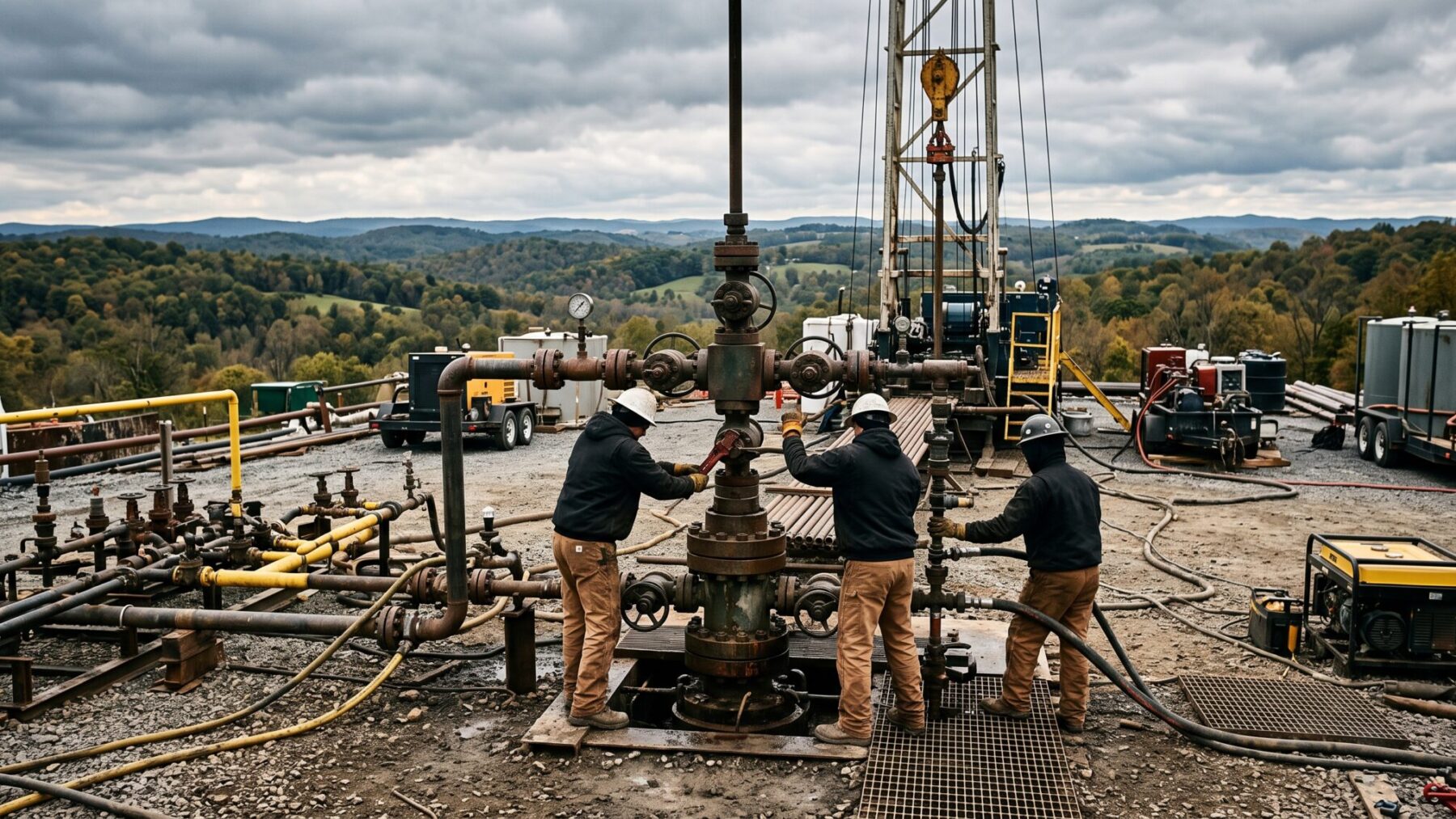
The U.S. Department of Energy is putting $14 million behind a plan to convert an existing horizontal shale gas well in western Pennsylvania into an enhanced geothermal system, marking the first EGS project to be implemented in the eastern United States.
Appalachian shale as a geothermal resource
The U.S. Department of Energy’s Hydrocarbons and Geothermal Energy Office (HGEO) announced the $14 million project on April 14, 2026, to support field tests for enhanced geothermal systems. Led by the Pennsylvania Department of Environmental Protection, the project will leverage the significant thermal resources in the Appalachian Utica Shale to assess the efficacy and scalability of EGS in the eastern United States.
The EGS pilot demonstration project will generate both electrical power and thermal energy for rural communities in Indiana County, in areas adjacent to legacy and active oil and gas development. The pilot project will use an existing unconventional gas well operated by CNX Green Ventures, though the specific well has not yet been selected.
The project will extract heat from subsurface geologic formations and transfer it to the surface using gas and fluid circulation in an EGS. That thermal energy will be used to generate electricity for the local power grid and provide direct-use heat for nearby homes and businesses.
Repurposing oil and gas infrastructure
The project activities include converting a horizontal shale gas well to geothermal, with the effort assessing optimal well orientations and placements as well as testing various techniques to create the fractures necessary for a human-made geothermal reservoir.
The project will repurpose existing oil and gas infrastructure, avoiding additional land disturbance, while extending the life of infrastructure like wells to catalyze a new geothermal energy industry.
That approach of reusing the Appalachian basin’s dense network of drilled wells could significantly cut project development costs compared with drilling new bore holes from scratch. That cost dynamic has historically limited geothermal to a handful of western states.
If successful, the project will offer a replicable model that could expand the use of EGS in more locations nationwide. This project is the second-round selection under HGEO’s Office of Geothermal (OG) EGS Pilot Demonstrations opportunity.
Part of a broader federal geothermal push
The Pennsylvania award is one piece of a larger federal investment ramp-up in geothermal. On February 25, 2026, the DOE’s Office of Geothermal announced up to $171.5 million to support next-generation geothermal field tests, as well as characterization and confirmation drilling for next-generation and conventional hydrothermal resources. The funding opportunity includes six topics with varied levels of anticipated funding and awards, with two topic areas open in the first round of applications.
On June 2, 2026, the U.S. House of Representatives passed the bipartisan Geothermal Energy Advancement Act (H.R. 5631), sponsored by Reps. Jeff Hurd (R-Colo.) and Susie Lee (D-Nev.), by voice vote. The package consolidates six separate bills targeting the permitting and regulatory bottlenecks that have long constrained geothermal development on federal lands. The legislation establishes a geothermal ombudsman appointed from within the Bureau of Land Management to act as a liaison among different parts of BLM, provide dispute resolution services, and facilitate permit processing, and also creates a Geothermal Permitting Task Force led by the ombudsman.
At the grid level, the DOE’s own projections underscore the stakes. The work in projects selected under the EGS Pilot Demonstrations funding opportunity will help spur further use of geothermal as a critical source of firm, flexible energy, targeting 90 gigawatts of domestic electricity-generating capacity by 2050, enough to power the equivalent of more than 65 million American homes.
Pennsylvania, sitting atop decades of shale gas drilling, is now one of the primary candidates to break into that eastern-state column. Energy planners note that firm, around-the-clock geothermal generation could serve as a complement to the record battery storage capacity being added to U.S. grids, covering hours when storage cycles are depleted.
What comes next
EGS demonstration projects explore the greater potential for geothermal technology to provide reliable, cost-effective electricity using the earth’s abundant heat resources, supporting the Trump Administration’s commitments to advance energy addition and reduce energy costs for American families and businesses.
The broader $171.5 million funding notice may remain open across multiple application cycles, subject to Congressional appropriations. The Pennsylvania pilot, by contrast, moves forward as a selected project, though selection for award negotiations is not a commitment by DOE to issue an award or provide funding.
The eastern U.S. EGS push also arrives as grid operators face mounting demand from data centers and industrial loads. Analysts tracking surging load growth have pointed to firm, dispatchable generation as one of the most difficult capacity gaps to fill with intermittent resources alone.
A demonstrated EGS model in the Appalachian basin, where existing gas-well infrastructure spans multiple states, could accelerate the commercial case for geothermal well east of its traditional western footprint.
