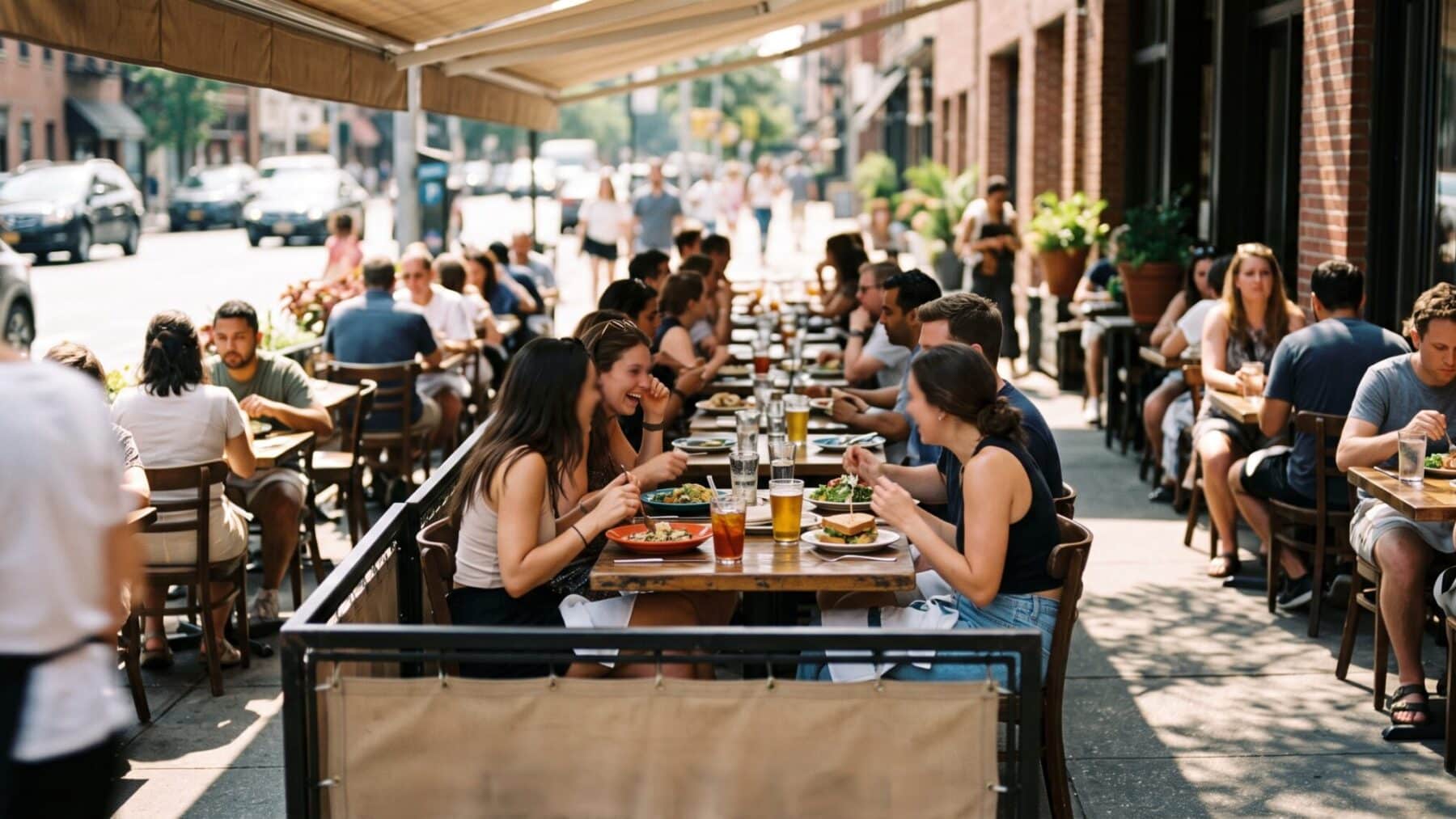
Visiting a restaurant has become the defining act of American summer travel, outranking every other vacation activity, according to new data from the National Restaurant Association. The organization’s 2026 Summer Travel and Dining report, based on a May 2026 survey of more than 1,000 consumers, finds that 55 percent of consumers plan to take at least one overnight domestic trip this summer.
Of those travelers, visiting a restaurant ranks as their most popular activity, beating shopping and sightseeing, with 98 percent planning to use a restaurant during their upcoming travel.
Restaurants at the center of summer plans
Visiting a restaurant is the most popular activity for summer travelers, ranking ahead of shopping (85 percent), sightseeing (83 percent), and visiting beaches (76 percent).
The breadth of intended restaurant use is equally striking: 93 percent of those travelers plan to dine in at a restaurant, 90 percent plan to use takeout, delivery, or drive-thru options, and 84 percent plan to stop at a coffee shop or snack spot.
The NRA’s report frames the findings as evidence that dining has moved to the center of vacation planning, as consumers want affordability and convenience alongside memorable, local dining experiences. For a growing share of Americans, the meal itself is the destination, reflecting a broader shift in how people assign meaning and value to time spent away from home.
The social dimension of sitting down at a table with others continues to anchor that impulse, something researchers who study face-to-face conversation as a coordinated social act have documented across a range of contexts.
Economic weight behind the trend
Travel dining is a major part of restaurants’ economic influence, totaling more than $3.7 trillion in direct and indirect impact overall. The Association’s chief economist, Chad Moutray, has noted that roughly 30 percent of sales at a typical restaurant come from tourists, meaning operators actively lean into travel demand, particularly during the summer months.
According to the NRA’s 2026 State of the Restaurant Industry report, total restaurant and foodservice sales are projected to reach $1.55 trillion. In inflation-adjusted terms, restaurant sales are now projected to increase 0.8 percent in 2026, compared to a 1.3 percent increase forecast at the start of the year, according to the Association’s mid-year economic analysis.
The NRA’s State of the Industry report noted persistent cost pressures for businesses, with uneven traffic and rising costs straining revenues and profitability, and 42 percent of operators reporting their restaurants were not profitable in 2025. Operators are facing uneven traffic and elevated operating expenses, while consumers, particularly those in lower- and middle-income households, are increasingly stretched.
A generational split in dining behavior
Gen Z and millennials continue to lead the industry’s off-premises growth. Higher-income consumers largely remained confident and their spending continued to support the broader economy, while households in lower-income brackets pulled back, with noticeable impacts on discretionary categories like restaurants, and, depending on a restaurant’s customer mix, that divergence meaningfully impacted sales and traffic.
For the industry, these trends point to a divergence across generations and income levels in dining behavior: higher-income diners are spending freely, while lower- and middle-income consumers are becoming more selective and dining out less often.
What travelers want on the road
The NRA report also highlights the pull of local and authentic food experiences as a primary driver of travel-related dining decisions, with survey findings showing consumers want affordability and convenience alongside memorable, local dining experiences.
That desire for place-specific food is reshaping how travelers discover and choose restaurants. Word of mouth and online review platforms remain powerful channels for consumers selecting an unfamiliar restaurant while on vacation, according to the report.
The data arrives as the wider picture of how Americans spend leisure time continues to shift. Earlier this year, a GCN analysis found that about one in four Americans eats every meal alone, making the social pull of a shared restaurant table during travel all the more pronounced.
Despite challenging business conditions, restaurant sales will continue to rise in 2026, though at a somewhat slower pace than forecast at the start of the year, with the NRA now projecting total restaurant and foodservice sales to increase 4.3 percent. The National Restaurant Association expects the operating environment to improve during the second half of 2026.
