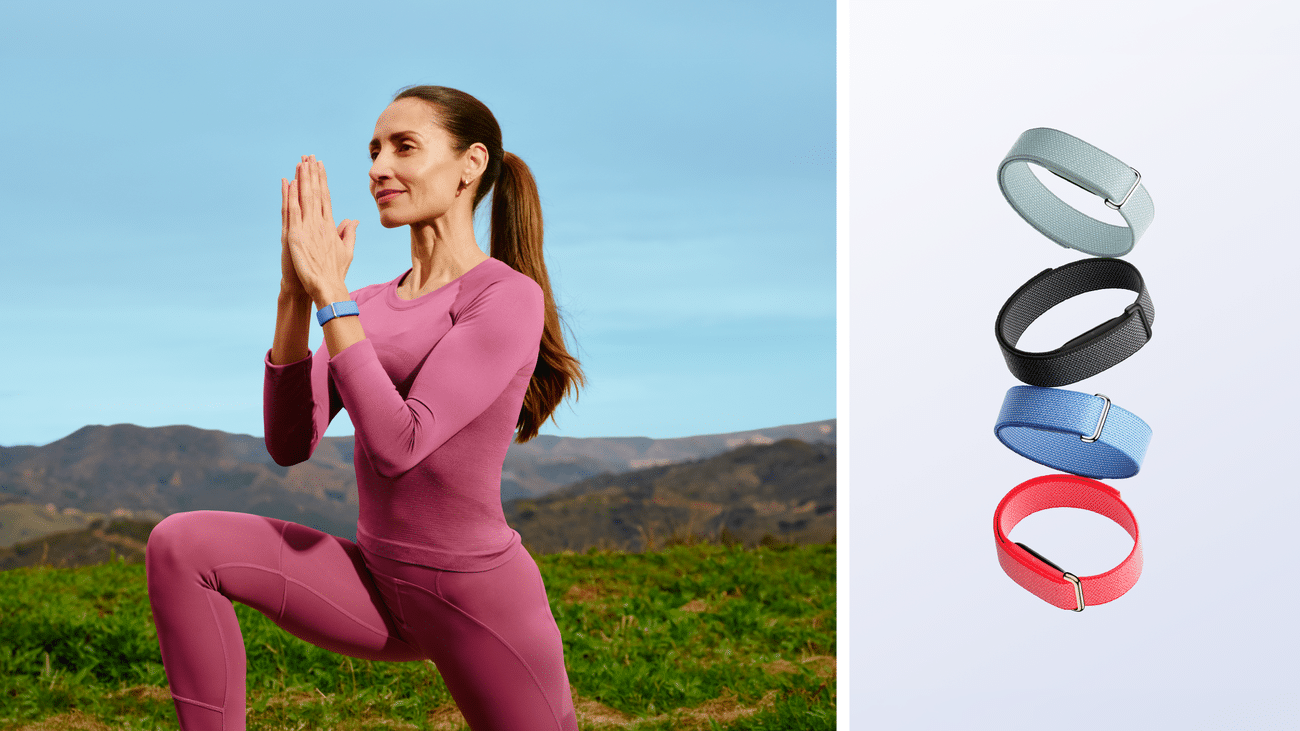
Google unveiled the Fitbit Air on May 7, 2026, a Whoop-like screenless wearable that retails for $99 with no screen, designed to passively collect health and fitness data , paired with a Google Health Coach built using Google Gemini models, marking the company’s most direct push yet into the wearables market occupied by Whoop and similar platforms.
A new tracker without a screen
The Fitbit Air is a screenless wrist-worn health tracker. It has no display, no buttons, and no screen of any kind. All data is viewed in the Google Health app on a paired Android or iOS smartphone.
The device includes health and fitness tracking features like 24/7 heart rate monitoring, heart rhythm monitoring with A-fib (atrial fibrillation) alerts, blood oxygen level, resting heart rate, heart rate variability, sleep stages and duration, and more.
Alongside taking the wraps off the new Fitbit Air, Google also rebranded its Fitbit app as Google Health and launched an AI-powered health coach as a subscription service. The Health app will become a central part of Google’s fitness strategy, capitalizing on its 2021 acquisition of Fitbit.
The Fitbit Air ships from May 26, 2026. Pre-orders opened on May 7, 2026 via the Google Store. Google also indicated that the separate Google Fit experience would be folded into Google Health later in 2026.
The Fitbit app becomes Google Health
Starting May 19, 2026, the Fitbit app became the Google Health app. The update rolls out automatically for existing Fitbit users, with the software changing name, icon, and interface without requiring any manual action, and historical data migrating into the same Google account.
Anyone who has not moved their account by July 15, 2026, will see it deleted.
Google Health keeps the same core tracking, steps, sleep, heart rate, workouts, but reorganizes everything around four tabs: Today, Fitness, Sleep, and Health. Users can connect third-party data sources to the Google Health app, including Android Health Connect and Apple Health.
Three things changed at once: the app was renamed Google Health, the subscription was renamed Google Health Premium and repriced from $79.99 to $99 per year, and the Gemini coach moved from limited preview to a paid feature available in 37 countries.
Fitbit will continue to operate as a hardware brand. Google announced the change alongside the Fitbit Air, signaling that the Fitbit hardware brand would live on even as the software brand shifted under Google Health. The software transition effectively completes the integration Google began when it announced the Fitbit Air alongside the rebrand in 2026, retiring the consumer-facing Fitbit app name after more than a decade.
This kind of platform consolidation mirrors moves seen elsewhere in big tech: Google is one of several companies facing fresh regulatory scrutiny over its data practices, including a €403 million fine from Irish regulators over location tracking that concluded earlier this year.
Gemini coach and a subscription price increase
The Google Health Coach service had been in public preview since 2025 and underwent improvements based on user feedback. Google Health Coach launched globally on May 19, offering personalized, AI-driven wellness guidance through the Google Health Premium subscription.
One capability is being able to use the Coach to conversationally or photographically log a meal. Leveraging Google’s Gemini AI, the Google Health Coach offers personalized insights to users, acting as a combination fitness coach, sleep expert, and health and wellness advisor.
Core tracking features are free. Google Health Premium is now part of Google AI Pro ($19.99 per month) and Ultra plans, and is otherwise $9.99/month or $99.99 annually.
Google raised the annual price by about $19 from Fitbit Premium’s previous $79.99 per year. The service is priced at $9.99 per month or $99 annually, though Google AI Pro and Ultra subscribers receive access at no additional cost.
The AI coaching layer is part of a broader industry shift. Wearable platforms that once competed purely on sensor accuracy are increasingly differentiating through AI-driven personalization.
Frontier AI reasoning scores have climbed sharply this year, and health applications are among the first consumer categories absorbing those gains at the product level.
User reaction and what comes next
Google rebranded Fitbit to Google Health in May 2026, stripping out badges, groups, the web dashboard, Sleep Profile, and every social feature. The initial reaction from users was sharply negative, with threads on social platforms drawing criticism of the changes. Google published a roadmap acknowledging the complaints and promising fixes shortly after the rollout.
July 15, 2026 is the last date to export data tied to features that no longer exist in Google Health, including badge histories, group activity, and community content. After that date, Google permanently deletes this data and it cannot be recovered.
For the Fitbit Air itself, the commercial test is whether a no-screen, AI-first form factor can build a loyal base in a wearables market where, according to Google’s own support documentation, the platform now spans both Fitbit hardware and Pixel Watch users.
