The benchmark measure of used-vehicle wholesale prices in the United States has turned negative against year-ago levels for the first time in 2026, reversing a strong spring run and signaling a new phase for dealers and shoppers heading into the final quarter of the year.
Index slips to 206.2 in early September
Wholesale values pulled back in the first half of September, with the Manheim Used Vehicle Value Index falling 1% from August to 206.2, and non-adjusted prices declined 1.1%. Used electric vehicle values continued to decline from their elevated spring baseline as availability improves.
That decline is enough to tip the year-over-year comparison negative for the first time in 2026, sitting 0.4% below last September, after decelerating from a stronger-than-normal first half of the year.
“The market has fully given back the stronger pricing trend from the spring’s tax-refund bounce and is now tracking a touch below last year,” said Jonathan Gregory, Senior Director of Economic and Industry Insights at Cox Automotive, in a statement.
At the end of August, wholesale vehicle supply reached 27.2 days, up 2.5 days against August 2025. As of September 15, days’ supply had risen further to 27.8 days, higher by about 2.4 days against last year.
A year defined by a strong spring and a softer fall
The first half of the year was defined by a strong spring selling season fueled by tax-refund activity that pushed wholesale values to their highest levels in several years. Since peaking in March, the market has gradually normalized, with wholesale pricing realigning closer to long-term averages.
Wholesale used-vehicle prices softened in recent weeks, with EV values pulling back after seeing sustained appreciation in the first half of the year. The pullback matters for dealers because retail prices typically follow wholesale moves with a lag of several weeks, meaning consumers shopping for pre-owned vehicles could see sticker adjustments through October.
More than 300,000 EVs are expected to return from lease in 2026, an increase of more than 200% from the 123,000 units projected for 2025.
Total off-lease EV returns are forecast to roughly double again in 2027, to approximately 600,000 units.
Compact cars and EVs hold relative ground
Following a record-setting Labor Day, gas prices have continued to move higher amid renewed unrest in the Middle East. As of mid-month, Compact Cars and EVs were the only major segments with values above year-ago levels, potentially reflecting greater demand for fuel-efficient vehicles.
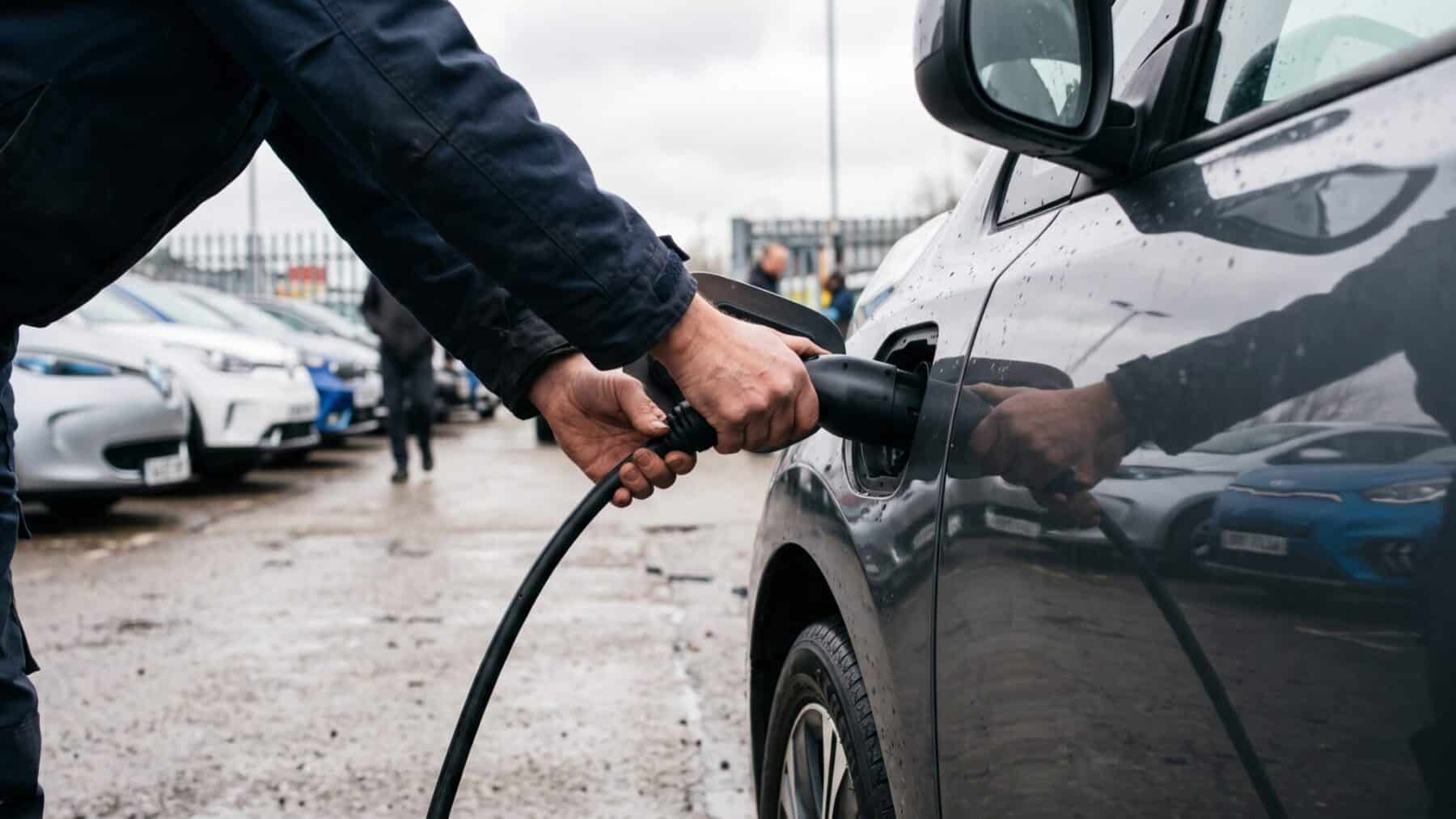
The rate of increase in wholesale values for used electric vehicles slowed compared with recent months, but EV values were still above year-ago levels and still outperforming used gasoline vehicles as of the Manheim index published September 18.
Demand for used EVs has grown since last year, when the federal government phased out a $7,500 tax break applying to new EV purchases. That shift has pushed budget-conscious buyers toward the pre-owned market, a dynamic also evident in record secondhand EV sales earlier this year.
What the shift means for buyers and dealers
While the supply of newer off-lease vehicles is beginning to improve, inventory remains tight in several key age segments due to lower production and sales during the pandemic. That pinch is most acute among vehicles in the four- to six-year-old range that many value-focused shoppers seek.
Affordability has been the throughline in 2026, with stronger appreciation in older units and the most affordable segments among the year’s best performers in both wholesale and retail channels.
That affordability pressure is compounding a broader squeeze: new cars crossed $50,000 on average last month for the first time this year, keeping more shoppers anchored to the pre-owned lot.
The next complete suite of monthly Manheim index data is scheduled for release on October 7, 2026, which will provide the first full-month read on whether the mid-September softness accelerates or stabilizes before the end of the third quarter.
