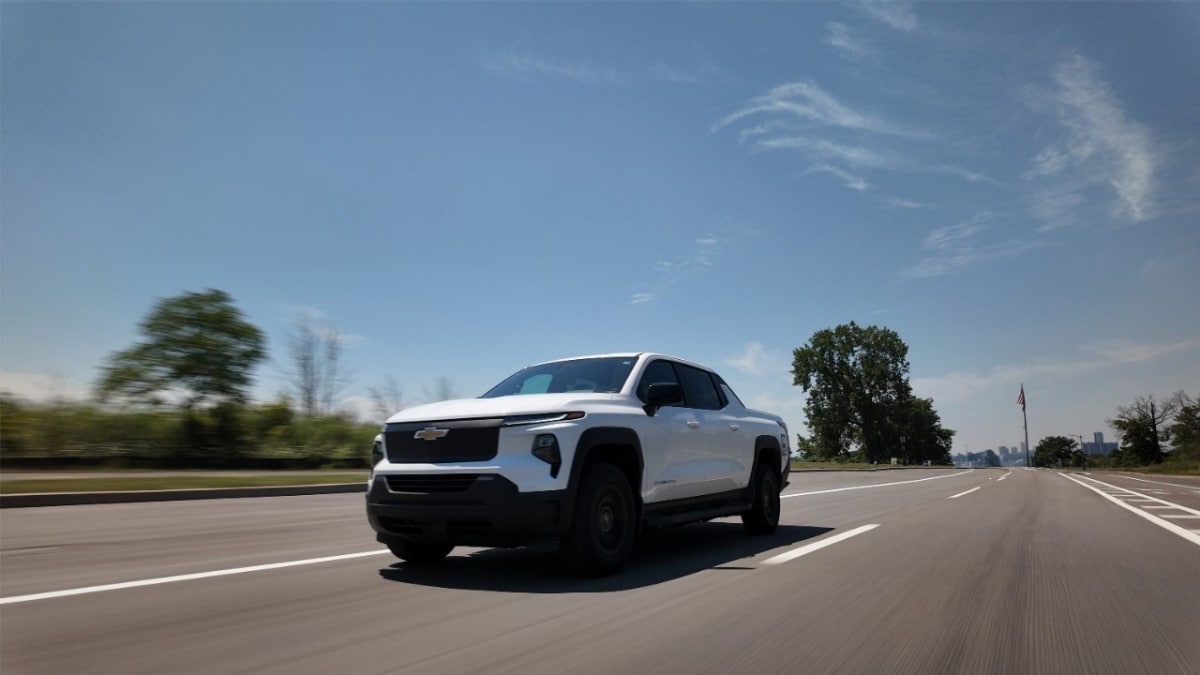
The odometer kept climbing past midnight, past the next morning, then into a second day, and a third.
Forty engineers took turns at the wheel in shifts, circling public roads in Michigan, hour after quiet hour, barely faster than a cyclist. Nobody stopped to charge. The question hanging over every mile was the same: how far can an electric pickup truck actually go?
How a massive battery pack turns slow driving into extraordinary distance
The Max Range Work Truck carries a 205-kilowatt-hour battery, one of the largest fitted to any production vehicle on sale in the US. At normal highway speeds, aerodynamic drag eats into that capacity quickly, and the energy needed to overcome drag on a truck doesn’t just increase with speed, it skyrockets. So the physics of range are brutally simple: cut the speed, and the energy bill falls faster than most people expect.
The team found the truck’s most efficient cruising speed to be 20 to 25 mph, a pace at which nearly all battery power was going to move the vehicle forward. The drivetrain becomes remarkably efficient, converting stored energy into motion with very little waste.
Minor adjustments reinforced the effect. Tire pressure was raised to the top of the safe range, a tonneau cover smoothed the airflow, the spare tire was removed, and climate control was switched off for the duration, all within the limits of the owner’s manual. Nothing was modified that a careful owner could not replicate.
Seven days on public roads in Michigan, finishing at a Detroit island
A team of forty engineers drove the production Work Truck on public roads near the company’s Milford Proving Ground in southeastern Michigan, with the final stretch completed on Detroit’s Belle Isle, over seven days. The engineers rotated in one-hour shifts so the truck never stopped. Grocery runs happened nearby; coffee appeared at windows.
The achievement started as a passion project for the Michigan engineering team. What began as a casual question, how far could the Work Truck go if everything were optimized, turned into a structured challenge. The guesses kept rising: 800 miles, 900, maybe even 1,000.
Propulsion calibration engineering manager Jon Doremus led the project and spoke for the team when the battery finally ran dry. The trip computer confirmed the totals: more than 1,059 miles traveled, well more than double the EPA’s 493-mile rating. And with US public charging ports now crossing 250,000, the infrastructure to support long-haul drives keeps expanding.
The verified numbers behind the record and what the EPA comparison reveals
The 2026 Work Truck is EPA-estimated for up to 493 miles. The run broke the previous world record of 749 miles, set by Lucid’s Air Grand Touring earlier that same summer. The margin was not narrow: the new mark exceeded its predecessor by more than 310 miles, a gap larger than the entire rated range of a typical mainstream EV.
That gap did not come from exotic hardware. It came from speed, or rather the deliberate lack of it. The automaker achieved 214 percent of the vehicle’s expected range on a production truck with no hardware changes, showing how much headroom exists in a big battery when the driver’s foot cooperates.
The primary record log was published directly on the automaker’s newsroom at news.gm.com, and the company’s own customer research showed range is the number one purchase driver for this model.
Where the record breaks down and what it cannot tell a daily driver
Twenty-five miles per hour is not a highway, and most American commutes involve traffic, climate control, and speeds sitting three times higher than the test’s sweet spot. Achieving over 1,000 miles required hypermiling techniques that are simply not practical for everyday driving. At 70 mph on a cold January morning, with heat running and a load in the bed, the same truck behaves very differently.
The 493-mile EPA figure is the more useful daily benchmark, and even that number drops in winter. The gap between ideal and real-world conditions is where most buyers live.
Still, the record matters for what it says about the pack itself. With around 215,000 leased electric cars returning to US dealer lots this year and resale values under scrutiny, demonstrated battery headroom reinforces confidence in a truck’s long-term energy capacity. A cell that sustains peak efficiency over that distance is one that will degrade gracefully over years of normal use.
What the result means for electric truck buyers making decisions right now
For anyone weighing an electric pickup against a gas truck on range anxiety grounds, last summer’s drive reframes the conversation. The 205-kilowatt-hour pack shows what is possible when manufacturers prioritize range as a core design goal. The truck was not built for the record; the record simply revealed what the truck already contained.
Select models can also provide up to 10.2 kilowatts of offboard power through multiple outlets. That detail matters: the same battery that logged the record run can power a job site, a campsite, or a house during an outage. Range and utility overlap in ways a gas tank never could.
The record stood unbroken as this story was filed. Whether a rival team will mount a challenge with a lighter sedan, a more aerodynamic body, or an even larger pack is still open. What is already settled is the baseline: a production electric pickup, bought off a lot, carries enough stored energy to cross the country and keep going. That ceiling just moved somewhere most drivers never expected to find it.
