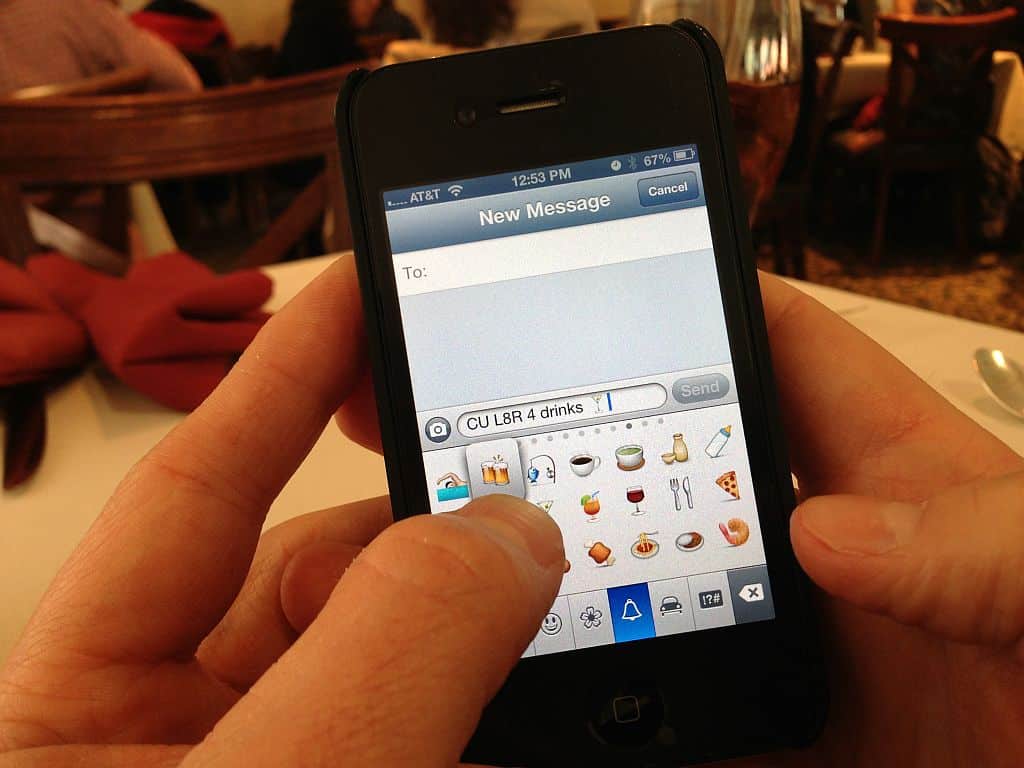
Adding an emoji to a work chat message can make the sender look less competent and less professional, according to a new study from the University of Ottawa.
The research, published in the journal Collabra: Psychology, found that plain text without any emoji was consistently rated as the most professional choice in workplace instant messaging.
What the researchers tested
A team led by Erin L. Courtice, working with professor Isabelle Boutet and colleagues Megan Lawrence and Charles A. Collin, recruited 243 participants to read a series of simulated workplace instant messages.
The messages varied in tone, some positive, some neutral, some negative, and in whether they included an emoji.
Participants read workplace instant messages that varied in tone and emoji use, and messages with no emojis were clearly the winner, making the sender appear more competent and professional.
To keep the emotional signal easy to isolate, the team used only three emoji conditions in the experiment, a grinning face, an angry face, or no emoji at all, a narrow design that was intentional.
Participants then judged how competent the sender seemed and how appropriate the message was for a professional setting, using a Likert scale ranging from very norm violating to not at all norm violating, according to the published study.
Tone mattered more than the emoji itself
Positive emojis enhanced impressions when paired with a neutral or positive message, but employing an emoji is not always beneficial.
Adding a positive emoji to a positive sentence did not increase the perception of appropriateness, and the tone of the message was seemingly more important.
The clearest pattern emerged when messages carried neutral or negative content. In those cases a message without emoji was seen as the most professional.
This pattern was especially strong when the message content itself was neutral or negative, and in those settings the presence of a negative emoji made the sender look less competent and the message less appropriate.
Mismatched signals carried a cost even when the text itself was upbeat. Researchers found that positive emojis did not produce the same effect across the board.
They could improve impressions of competence when paired with positive or neutral text, but they did not rescue bad news or critical feedback. Positive emojis paired with harsher content could increase suspicions of dishonesty and insincerity.
Why workplace messaging habits are under scrutiny
The study lands as instant messaging platforms have become the default channel for office communication, replacing many of the in-person cues that once conveyed tone.
When people interact in person, subtle signals like facial expressions, body language and tone of voice play a crucial role in communicating intent, whereas written communications lack these non-verbal cues and can lead to misinterpretation.
Emojis became a popular tool to provide context, but how they are perceived in workplace communications is not so well understood.
The authors suggested the effect may reflect something broader than a judgment about an employee’s overall abilities. Mismatched emoji use could instead be read as a sign of weak communication skills in digital-first offices, since unclear signaling undermines professional trust, as the commentary on the findings noted.
The researchers also flagged that mixed signal messaging can potentially affect an employee’s willingness to collaborate on future projects and affect professional trust.
The findings add to a growing body of research on how small stylistic choices shape perception in text-based exchanges, a theme GCN has previously covered in reporting on how social media contacts and digital habits affect everyday wellbeing, and on generational shifts documented in coverage of younger consumers’ spending influence.
What the authors recommend
The research team stopped short of telling workers to avoid emojis altogether, since positive icons still boosted impressions in upbeat or neutral exchanges.
Their broader suggestion was that emoji choice should match message tone rather than attempt to soften or disguise it.
Future research should consider how emojis function within broader communication patterns, examining outcomes such as conversation flow, rapport building, conflict resolution, and team cohesion in digital workplace environments, the authors wrote.
The study was conducted with university-aged participants rather than a broad cross-section of working professionals, a limitation the authors acknowledged while calling for further study across different workplace settings and seniority levels.
