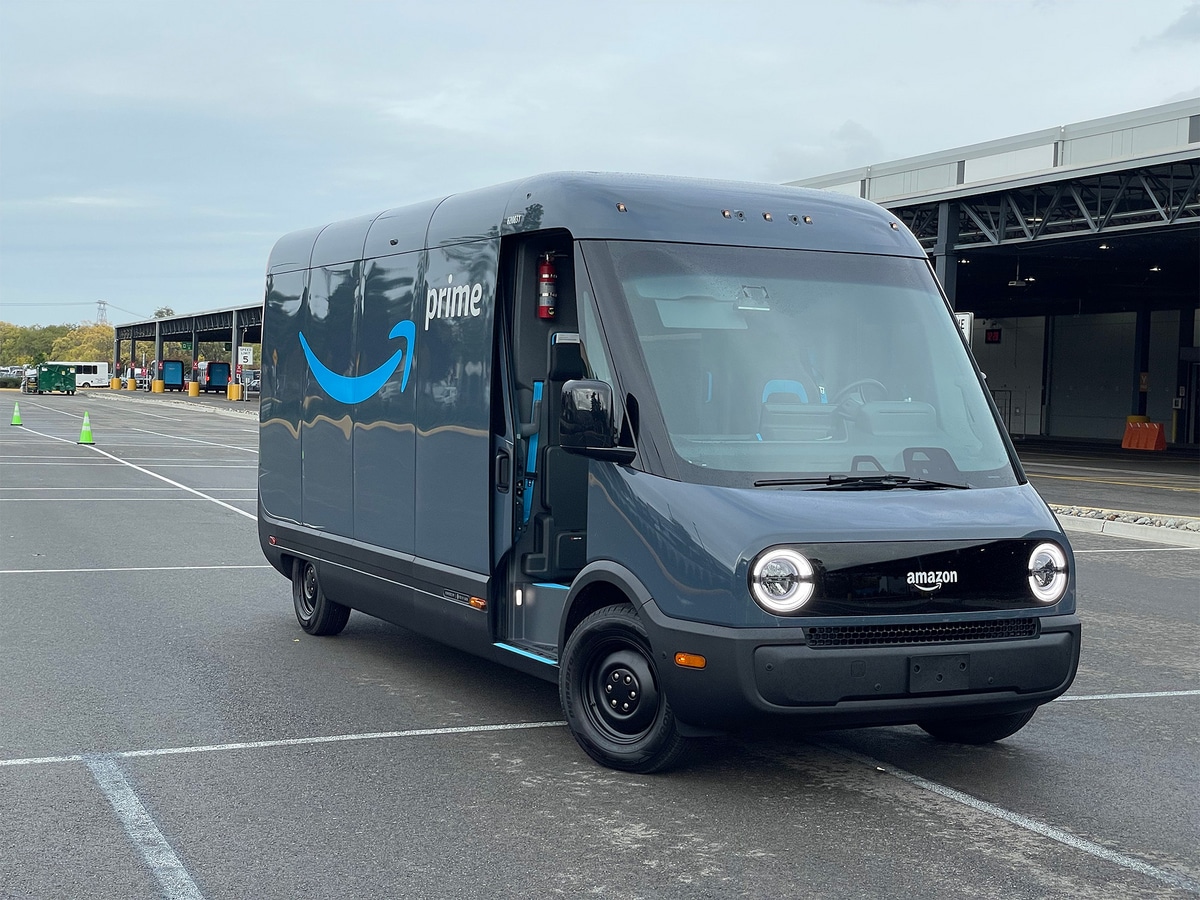
A parking lot full of boxy electric vans and angular pickups now tells a story that was unthinkable a year ago.
Shoppers walking a US dealer lot this fall are seeing a different lineup of badges than they expected.
Some brands that barely registered in these sales charts last year are suddenly impossible to ignore.
Others that used to dominate every conversation about electric cars are quietly losing ground on paper, even while staying on top.
So what actually moved, and why did the order flip so fast?
How a shrinking market still produced new winners
The mechanism here is simple but counterintuitive: the overall electric vehicle market got much smaller, and that smaller pie let a handful of brands grow their actual unit sales even as the market around them shrank. When federal tax credits disappeared, weaker buyers left first, and the brands with loyal repeat customers or genuinely new products kept selling regardless.
That is exactly what separated the quarter’s winners from its losers. Industry data shows the broader EV market spent the third quarter grinding through a difficult year-over-year comparison, yet a few companies moved against that current entirely.
Because fewer total buyers were shopping electric, each brand’s market share became a sharper signal of who built something people actually wanted.
That split is the whole story of this quarter. One automaker’s legacy lineup kept the lights on through sheer scale, while a smaller challenger used new model launches to grab a bigger slice of a tighter market.
Inside the numbers that moved the ranking
The clearest illustration sits in the raw sales count. The electric automaker moved 41,009 vehicles in the US through the first three quarters of the year, up 26.8% from the same period a year earlier, according to the latest industry tracking.
That growth accelerated sharply in the third quarter alone. Industry estimates put the automaker’s quarterly sales at 19,239 vehicles, a jump of nearly forty six percent from the prior year, a pace almost no other electric brand matched.
And that single quarter reshuffled the entire leaderboard. The brand ranked 10th a year ago. Now it holds 7.2% of the US EV market, enough to pass every rival except the segment’s longtime leader.
Meanwhile, that leader did not fade quietly. The industry’s dominant brand still posted 144,094 estimated sales and a 54% market share for the quarter, even as its own volume slipped nearly twenty percent from a year earlier, a sign that a shrinking market can still reward scale.
What the raw data and the primary source actually show
This picture comes from the latest sales report for the quarter, the industry’s most closely watched tracker of electric vehicle registrations by brand. It breaks volume down model by model, not just brand by brand.
That detail matters because the surge was not about one new product alone. A compact crossover debuted with 3,456 sales and commercial vans tripled in the same stretch, spreading the growth across the lineup.
Toyota’s swing was even steeper in percentage terms, selling 12,904 EVs in the quarter versus 3,015 a year earlier, a striking jump in volume, pushing the brand’s share of the market up alongside Lexus, whose combined EV sales with Toyota rose nearly fivefold from a year earlier according to the same report.
So the pattern was not random. Only six brands in the sales table sold more EVs than a year earlier, meaning nearly every other nameplate in the market lost ground. That short list is the real headline buried inside the spreadsheet, and it is also reshaping who shows up on the public charging networks drivers depend on.
Where this growth has limits and does not hold
None of this means the overall EV market is healthy. The commentary attached to the same report makes that plain, noting nearly every automaker posted lower year-over-year EV volume in the quarter, although a handful stood out.
That caveat applies to the climbing brand too. Its flagship models did not share in the gains, with its SUV down nearly thirty two percent and its pickup down over a quarter, so the brand’s overall growth leaned almost entirely on vans and a cheaper new model.
Which means the ranking shift is real but narrow. It reflects specific product timing, not a broad swing of American buyers back toward electric cars as a category.
Worse for the market overall, the swing happened against a backdrop of falling used values and returning lease inventory, a trend covered in recent reporting on wholesale pricing pressure as more off-lease electric cars reach dealer lots.
What the shift means for buyers and the industry ahead
For shoppers, the practical upshot is more real choice at the dealership than existed a year ago. A buyer cross-shopping an electric truck or van now has credible options beyond the one brand that used to be the default answer.
For the industry, the lesson is that scale alone no longer guarantees growth.
Even a company holding more than half the market saw its own volume shrink, while a much smaller rival nearly doubled its sales rate by shipping new products on schedule. That is a healthier kind of competition than the market has shown in years, even with total EV sales smaller than a year ago.
What happens next likely depends on whether the next wave of electric vans and midsize trucks can repeat this quarter’s pattern instead of becoming a one-time blip in an otherwise cooling market.
