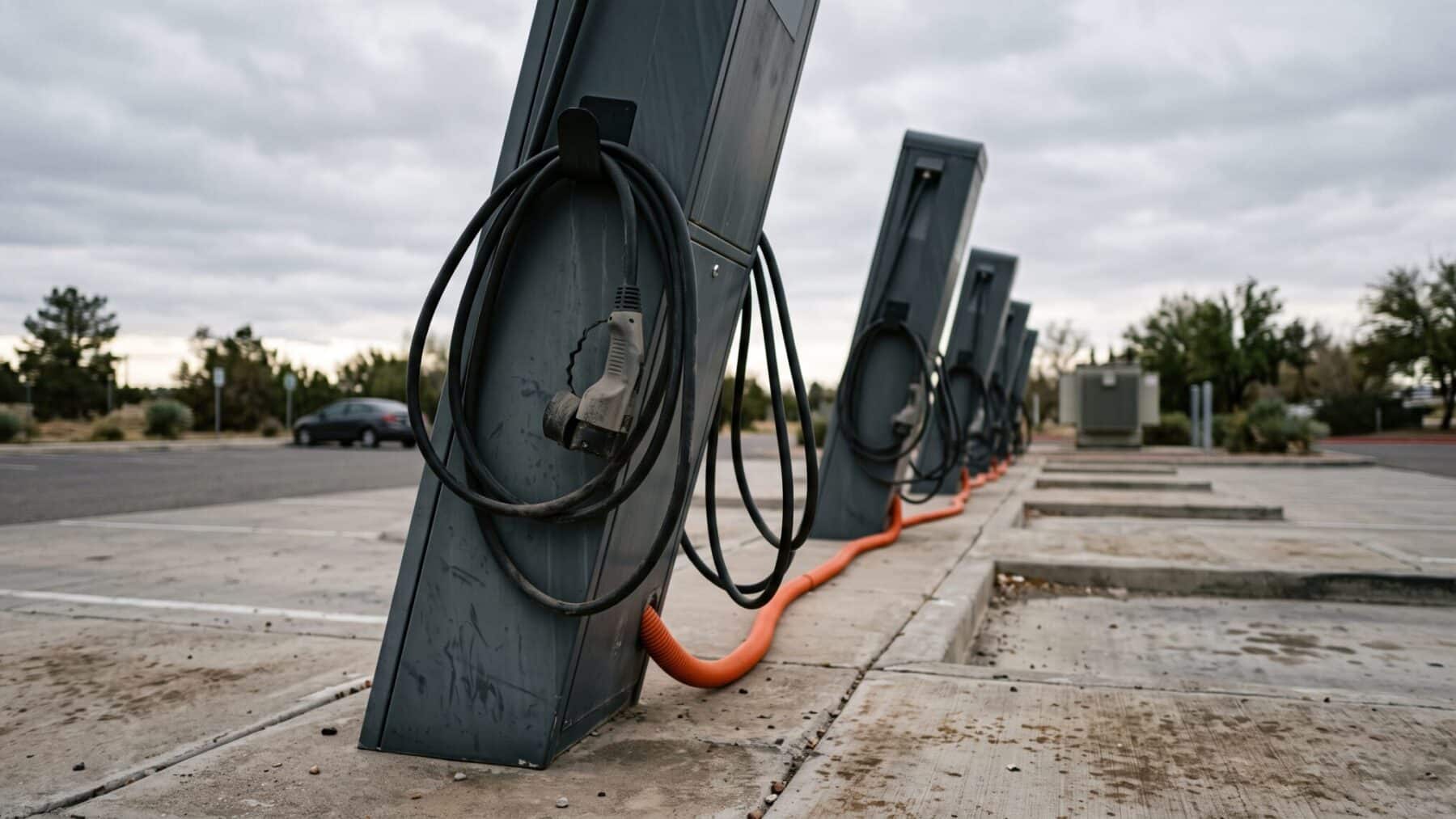
Pacific Gas and Electric is letting electric vehicle charging sites plug into its grid months or even years before traditional infrastructure upgrades would normally allow, under a pilot program called Flex Connect that trades guaranteed full power for a dynamic, grid-aware connection.
The utility told Utility Dive that active Flex Connect participants have seen operational loads impacted less than 1% of the time during “the rare confluence of events” when the local grid is constrained and their demand remains high, Alex Collins, PG&E’s manager of execution operations and distributed energy resource management systems, said in an interview. The utility also said customers participating in the pilot, which offers expedited hookups for agreeing to have the utility limit their capacity when the system is constrained, have been able to tap the distribution grid for their needed capacity in 90% of hours during its first two years.
How the program works
Flex Connect addresses a persistent bottleneck in EV infrastructure buildout: the program allows larger distribution-connected loads to energize in months instead of waiting “several years” for firm interconnection, the utility says.
Instead, PG&E issues a customer a firm floor along with a flexible ceiling that moves with real-time grid conditions.
According to Latitude Media’s reporting, an EV charger is a particularly good fit for Flex Connect because what the program is ultimately doing is reducing the maximum amount of power a site can use, and customers receive a firm floor, but a dynamic ceiling, up to the total amount of capacity requested, depending on grid headroom.
A Flex Connect customer’s energy management system links to PG&E’s grid platform, which “provides scheduled or real-time capacity limits based on grid availability” for the customer’s load to follow, according to a PG&E one-pager on the pilot.
That software coordination, built on distributed energy resource management technology, is what allows the utility to offer extra headroom most of the year while reserving the right to throttle sites during rare peak events.
Demand has grown over two years
It has been two years since Pacific Gas and Electric first launched its flexible interconnection program on the distribution grid, with the program, dubbed “Flex Connect,” designed as a workaround to getting distribution-level projects connected faster if they rein in their demand during peak hours. PG&E first publicly detailed the pilot in 2025, and interest has accelerated since. Alex Collins, the utility’s manager of execution operations and distributed energy resource management systems, said Flex Connect grew out of feedback from customers rather than a commission mandate, but PG&E is now working to formalize the program with the commission’s oversight, Collins said.
Most of PG&E’s five current and roughly 85 prospective Flex Connect customers are in the electric vehicle charging business, but the pipeline also includes smaller data centers, advanced manufacturing facilities and battery energy storage facilities, looking to participate in California’s wholesale market, Collins said.
Site sizes vary widely. Most active and potential Flex Connect sites range from 2 MW to 5 MW, though some data center and manufacturing prospects push 10 MW, he said.
One real-world example cited by industry outlet mGrid involved a PepsiCo depot in Fresno: under a traditional interconnection process, the facility would have waited until mid-2026 for a substation upgrade to increase its capacity from 3 MW to 4.5 MW, but Flex Connect granted the full 4.5 MW connection 18 months ahead of schedule, supporting the site’s growing fleet of electric semi-trucks.
Why utilities see it as a bridge, not a fix
Flexible interconnection is not a substitute for grid upgrades, utility officials and analysts caution. It is designed as a stopgap while permanent distribution infrastructure catches up with EV charging demand.
PG&E and fellow major utility Southern California Edison have launched their flexible interconnection pilot projects as a “bridging solution” for the growing backlog of EV charging sites that their grids can’t yet accommodate.
The approach shifts some of the operational risk onto charging site operators, who must accept the possibility of reduced power during rare peak events rather than utilities bearing the full cost of accelerated construction. That tradeoff mirrors a broader pattern GCN has reported in California, where operators now carry the forecasting risk themselves under newly rewritten commercial EV charging rates.
The stakes extend beyond California. Nationally, EV electricity consumption growth has been slowing even as the vehicle fleet expands, a trend the Energy Information Administration tracks in its Monthly Energy Review, where it found light-duty electric vehicles in the United States consumed 8% more electricity during the first six months of 2026 than in the last half of 2025 in our Monthly Energy Review, down from the 13, 24% growth seen in six-month periods in recent years.
Even with that slowdown, cumulative EV charging demand keeps climbing, and the interconnection queues that programs like Flex Connect are meant to shorten remain a live constraint, one that GCN has also traced in slowest grid load growth tied to electric cars this year.
What comes next
PG&E says it plans to continue publishing field data from live Flex Connect sites, aiming to build the case for expanding the program and persuading state regulators to make it a standard interconnection option rather than a pilot.
If adopted more broadly, the model could reshape how utilities across the country handle the fastest-growing category of new electric demand on their systems.
