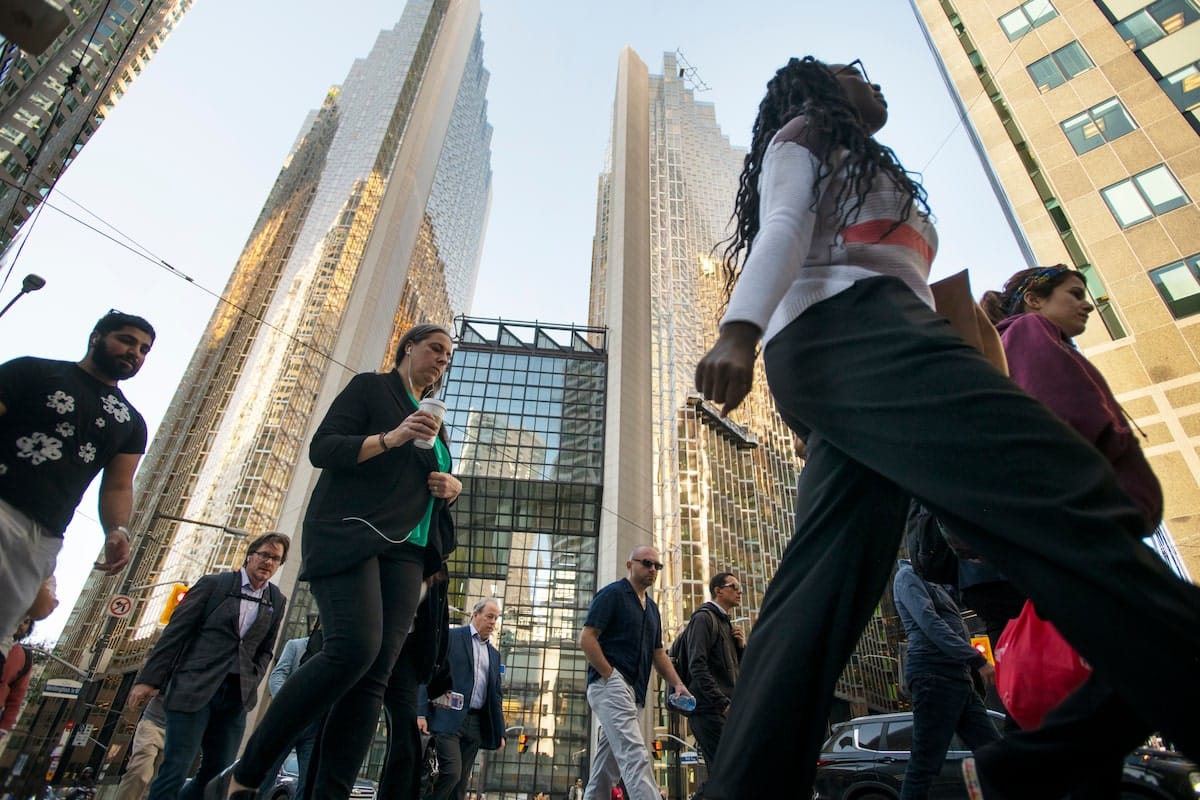
Office occupancy across America’s largest cities has climbed to one of its highest levels since the pandemic began, but the gains are concentrated almost entirely in the middle of the week, according to badge access data from Kastle Systems.
The company’s Back to Work Barometer found Tuesday, September 29 was the peak day nationally for all building classes, according to the Kastle Occupancy Barometer, which reported an average of 65.5%, up slightly from the previous Tuesday.
A strong week, lopsided by design
Kastle’s tracker measures anonymized keycard, fob, and app access data from over 300,000 Kastle users across ten major cities to identify trends in how Americans are returning to the office.
The firm’s most recent weekly report put the national average occupancy at 55.4%, up 0.7 points from the prior week, with all 10 cities posting a September average above their 2024 through 2026 average, and the 10-city figure 2.9 points higher, with New York City leading the gains.
Premium buildings are also showing strength. Class A+ buildings nationally averaged 77.5% occupancy, up 1.4 points from the prior week, with the peak day across all Class A+ buildings nationwide reaching 95.5% on Tuesday, September 29.
Monday and Friday stay quiet
What the latest numbers underscore is how narrow the surge actually is. In the September 29 week, Tuesday was the national peak day, with three cities peaking a day later; seven of the 10 cities reported Tuesday as their peak day, compared with eight the prior week.
In a separate week tracked by Kastle’s day-of-week data, Tuesday was the peak at 64.7%, down from the prior week at 66.8%, a record high for the nation, with eight of the ten cities having Tuesday as their peak, while New York City and Houston both reported Wednesday peaks, likely due to local events that impacted workers’ ability to get in to the office.
That midweek concentration has become a defining feature of hybrid work rather than a temporary quirk, with Tuesday consistently the single busiest office day across Kastle’s reporting over the past several years, followed by Wednesday and Thursday, while Monday and Friday lag well behind.
Analysts who track the figures say the split reflects a natural compromise: employees concentrate collaboration and in-person meetings mid-week while preserving Monday and Friday for focused remote work.
What it means for downtown economies
The consequences extend beyond office lobbies. City centers that once relied on five days of steady foot traffic are instead seeing a midweek surge followed by quieter bookend days, a pattern that shapes everything from transit ridership to lunch-hour retail.
It is a different stress on urban life than the empty-office narrative of a few years ago, and one that connects to other shifts in how Americans spend their time away from a desk, including the changing use of space once reserved for a single daily routine.
Corporate return-to-office mandates appear to have reinforced the midweek clustering rather than smoothing it out. CBRE’s Americas Office Occupier Sentiment Survey found that 73% of organizations report office utilization on peak attendance days is effectively at capacity, with Tuesday and Wednesday typically the peak days.
That leaves commuters, transit agencies, and downtown merchants planning around a week that functions more like three peak days bolted onto two quiet ones, a scheduling pattern that echoes how Americans increasingly compartmentalize routines, from work schedules to leisure habits like the rise of structured social gatherings built around fixed, predictable time slots.
Where the trend goes next
Kastle updates its figures weekly, measuring occupancy against a pre-pandemic baseline established using daily credential-use data from a three-week window in February 2020, just before COVID-19 disrupted office attendance.
Whether the midweek peak eventually flattens into a fuller five-day pattern, or whether Monday and Friday remain permanently lighter, will shape commuting infrastructure, parking demand, and downtown business hours in major metro areas for years to come.
