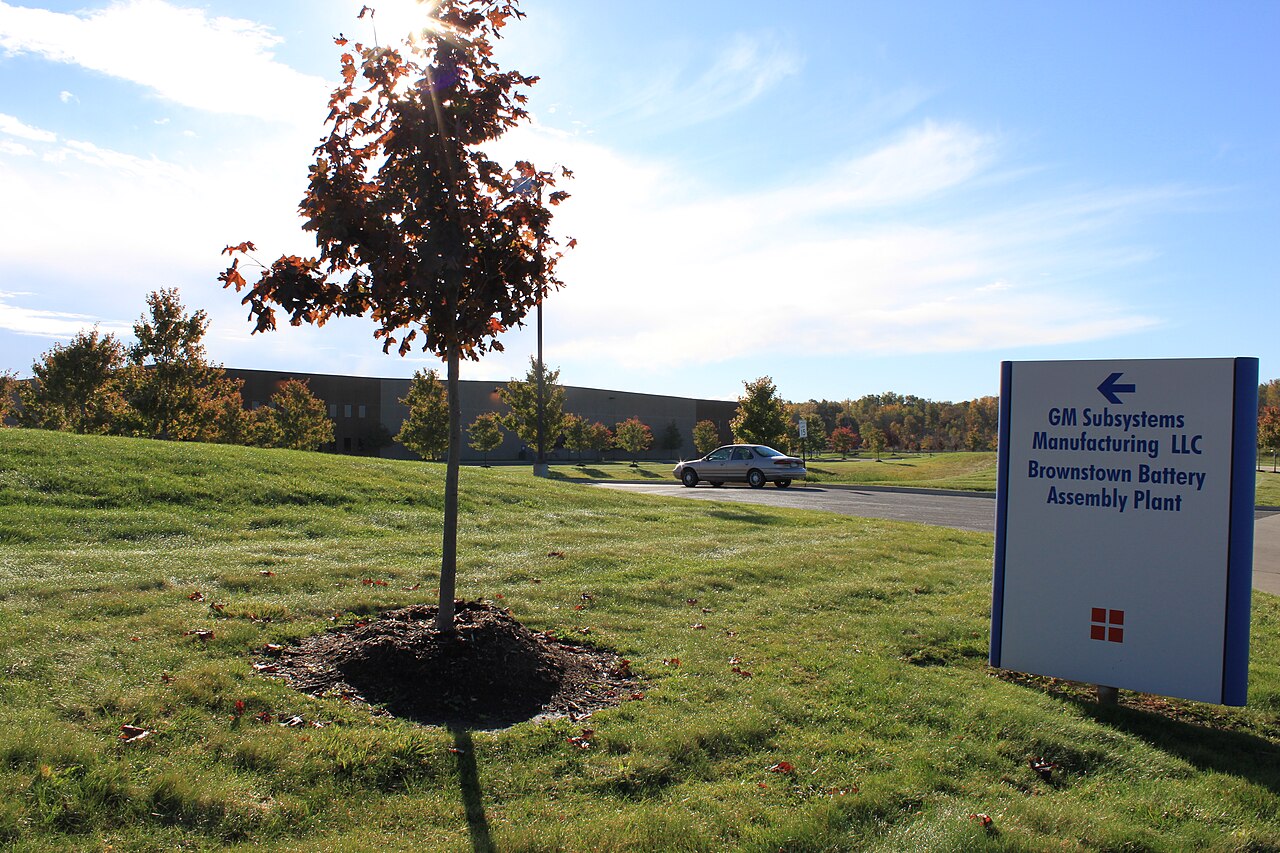
General Motors will close its Brownstown Battery Assembly plant in Michigan when the facility’s lease expires next summer, ending operations at a site that has built battery packs and electric drive components for more than a decade.
GM confirmed the closure to Automotive News, and a company spokesperson said the decision is tied to the lease timeline rather than a shift in the automaker’s electric vehicle strategy.
What the plant built
The 480,000-square-foot facility supplied components for two of the automaker’s low-volume electrified models.
It assembled battery packs for the Chevrolet Corvette E-Ray and battery packs for the Cadillac Celestiq , Cadillac’s flagship EV, along with electric drive units for the plug-in hybrid version of the sports car.
The Brownstown plant opened in 2009, and, before the Celestiq and E-Ray, it supplied components for the Chevy Volt.
Workforce has already shrunk sharply
Brownstown originally opened in 2009 and once employed approximately 300 people. However, production cuts gradually reduced its workforce to fewer than a dozen employees.
GM did confirm that the employees and work will transfer to other facilities, though it has not named them.
GM told employees earlier this year of the closure plan and offered jobs at other nearby facilities.
Part of a broader retreat from EV and hydrogen projects
The closure follows other recent pullbacks in GM’s electrification plans. In 2024, GM withdrew from plans for a $2.5 billion battery plant in Lansing, Michigan, leaving LG Energy Solution to operate the project.
The company also ended its hydrogen partnership with Honda and canceled a separate plan with Piston Automotive to develop fuel-cell production in Detroit.
GM has since assumed the building’s long-term lease from Piston Automotive and is evaluating alternative uses, although no decision has been made.
A related deal with Piston Automotive involved a US$55 million investment and plans for 150 jobs before the automakers abandoned the initiative over profitability concerns.
GM maintains the move is administrative rather than strategic. A GM spokesperson said “the lease on the Brownstown Battery Assembly plant is ending next year” and that the closure “is not related to GM’s electric vehicle strategy.”
The company continues to build EVs elsewhere and is expanding into newer battery chemistries, a shift already visible at other sites such as a Michigan lithium iron plant producing the industry’s first domestic lithium iron phosphate cells for mainstream EVs.
Timing coincides with a major capital return move
The Brownstown announcement landed the same week GM disclosed a large new shareholder payout.
GM’s board approved a new $20 billion multi-year share repurchase authorization after completion of an earlier $6 billion program , according to GM’s Q3 earnings announcement.
GM’s manufacturing footprint has been in flux all year, with the company simultaneously closing some facilities while pouring billions into others building gas, hybrid and electric models, a pattern that echoes how Detroit automakers continue adjusting production amid shifting demand and trade policy, including the tariff reimbursements booked this quarter.
Brownstown’s closure adds to a year of recalls and plant changes across the industry, including Rivian’s camera-related recall affecting nearly 99,000 vehicles.
No final decision has been made on what becomes of the Brownstown site or the adjacent hydrogen building once the lease runs out next summer.
