Tenstorrent, the AI chip company led by veteran semiconductor architect Jim Keller, has closed a $1.5 billion Series E funding round at a $6.2 billion post-money valuation, the company announced.
The raise, disclosed in a statement on the company’s newsroom, more than doubling the $2.6 billion it fetched in its previous financing in December 2024.
What the funding will pay for
Tenstorrent, the AI computing company, has closed $1.5B in Series E funding at a $6.2B post-money valuation.
The round was led by Trace Capital and Innovation X, with participation from new and existing investors including Agostinelli Group, ARK Invest, Brett Barna, Cadence Ventures, Eclipse, Fidelity Management & Research Company, Maverick Silicon, Morgan Stanley, Protagonist, Sandisk, T. Rowe Price, Tether Investments, Troluce Capital, Virtu Financial, and XTX Markets.
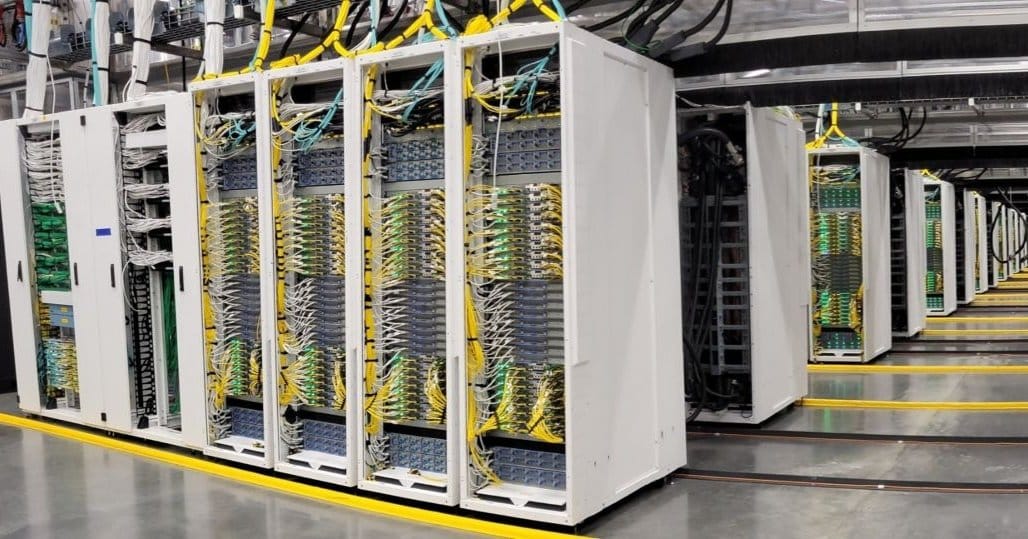
Tenstorrent will use the capital to deploy Galaxy servers at scale, continuing to serve open-weight models across LLMs and video generation, and advance the AI and CPU IP it licenses to customers designing their own silicon.
The funding will be used to deploy its Galaxy servers at scale, continue serving open-weight LLMs and video generation models, and advance the RISC-V CPU and AI core IP it licenses to chip designers such as Samsung and LG.
A bet on open architecture over proprietary chips
Tenstorrent designs AI accelerators and builds CPUs based on the open RISC-V instruction set, positioning itself as an alternative to the dominant proprietary chip architectures used across the AI data center market.
CEO Jim Keller’s technical career spans key engineering roles at Apple, AMD, Tesla, and Intel before leading Tenstorrent.
“We built one architecture and sell it at every size,” said Jim Keller, Chief Executive Officer of Tenstorrent. “The future of compute is open, scalable, and owned by the people building on it.”
Investors backing the round pointed to the company’s dual focus on chips and software.
“Tenstorrent does both, and its video generation results beat industry benchmarks ahead of our expectations,” said George Bousis, Co-Founder and Managing Partner at Protagonist. “We are excited to double down in the Series E to back Jim and the team through this next phase of growth.”
Trace Capital founder Ben Mahdavi echoed that confidence in the company’s leadership.
“Jim and his team bring decades of hands-on silicon, software, and IP experience, and we’re excited to partner with Tenstorrent as Galaxy continues to scale,” said Ben Mahdavi, Founder at Trace Capital.
Independence over a buyout
Earlier this year, Tenstorrent held talks with companies including Intel and Qualcomm about a possible takeover, Bloomberg reported.
According to Bloomberg reporting, Tenstorrent chose fresh funding over a sale, having held takeover talks with Intel and Qualcomm earlier this year .
Keller said a May demonstration showing the servers could run DeepSeek models was a turning point.
“Once we had the ability to fundraise and demonstrate the performance and started to ship, the investor interest came in,” Keller said, according to Bloomberg.
Keller said buyers are hunting for alternatives and that Tenstorrent can compete on price, and that the company’s varied client base lets it take orders too small for the biggest players , according to Bloomberg.
It has 1,150 employees and can tailor either its software or its hardware to what a given customer requires.
Part of a broader infrastructure buildout
The deal lands amid a wave of large financings for AI infrastructure and tooling companies.
It follows closely on the heels of other enterprise software funding activity, including a coding assistant’s rising enterprise pricing and growth in AI operations tooling such as Nvidia’s own infrastructure monitoring push, as companies across the AI stack compete for enterprise and sovereign computing budgets.
Within days of the funding announcement, Tenstorrent and Japanese AI lab Preferred Networks were selected for a Japanese government-backed chip research project administered by Japan’s New Energy and Industrial Technology Development Organization, known as NEDO, under the theme “xPU Design and Development Incorporating Photonics Electronics Integration Technology.”
Under the project, Preferred Networks will lead development of AI chiplets, including designs that use three-dimensional memory stacking, while Tenstorrent will develop open-architecture CPU chiplets with support for confidential-computing features.
The NEDO collaboration is a separate research award, and the companies did not link a specific portion of the Series E funding to it.
