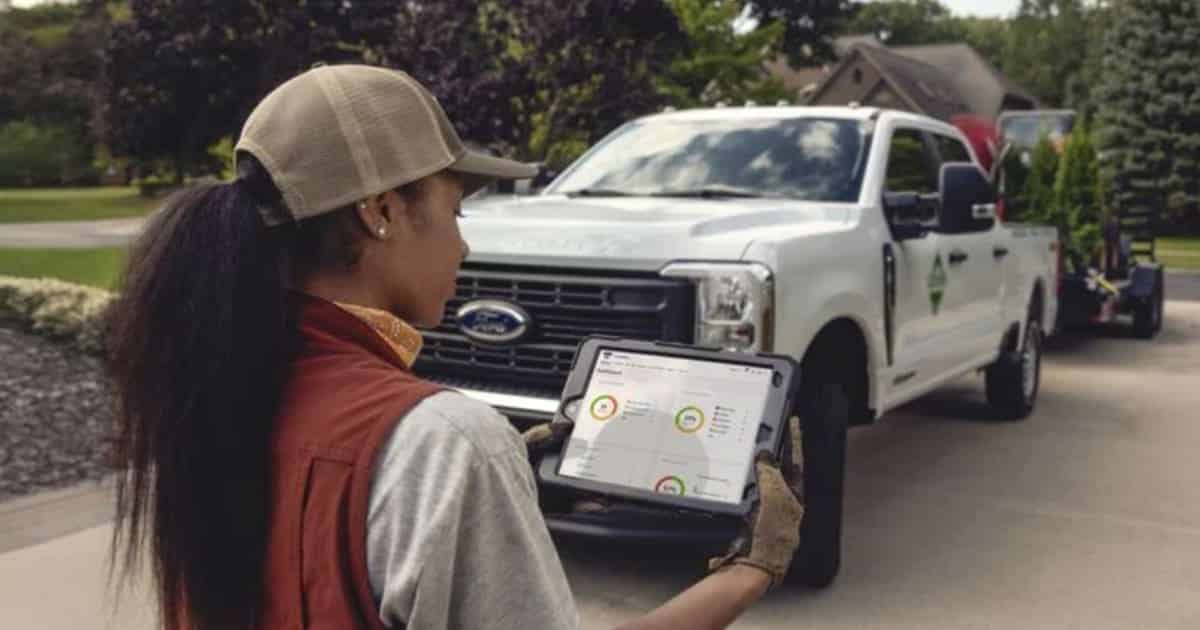
A box truck rolls out of a depot at dawn.
Hundreds of miles away, someone watching a laptop screen already knows exactly how fast it is allowed to go.
No wrench touches the engine, and no technician climbs under the dash.
The truck simply obeys a number typed into a browser the night before.
That quiet handoff of control is becoming common across American work fleets, and it starts with a question most drivers never think to ask about their own trucks.
How a dashboard command actually slows down a moving truck
The trick is not a new part bolted onto the vehicle. It is a software command that travels over the same cellular connection already built into millions of modern trucks and vans, reaching straight into the engine control computer that was there all along.
The automaker calls its version the Top Speed Limiter, and the mechanism is simple once you see it. A fleet manager sets a maximum speed in a web dashboard.
That instruction gets pushed to the vehicle’s modem, and the onboard computer then caps throttle response so the truck is designed not to exceed the chosen number under normal driving, no matter how hard the driver presses the pedal.
What makes this notable is what is missing. Traditional speed-governing solutions have generally required costly hardware installations, with wiring work and time-consuming vehicle downtime.
The newer approach treats the limit as pure software, dialed up or down in minutes from a desk, a shift the automaker describes as moving from one-way vehicle tracking toward true two-way control.
A fleet office scene that looks nothing like a mechanic’s bay
Picture a regional delivery company running fifty Super Duty trucks across three states. Under the old model, enforcing a lower top speed meant scheduling each truck into a bay, installing hardware, and losing a day of revenue per vehicle.
Under the software model, a single manager opens one screen and applies the cap across the whole roster at once. That drop in friction is the entire reason adoption has moved quickly through fleets that could never justify a hardware retrofit for speed control alone.
The same dashboard increasingly handles other blunt controls too. The rollout bundled the speed cap with an acceleration limiter that slows how aggressively a truck lurches off the line.
It also added a fleet start inhibit that lets fleet managers remotely control when a vehicle is turned off, including locking it down if it is reported stolen. None of that required new hardware, a shift documented in the company’s own software release notes.
What the company’s own numbers say the feature changed
The telematics unit has published figures tied to a related tool called In-Vehicle Coaching, which nudges drivers in real time rather than hard-capping them outright. Fleet managers using that coaching tool with relevant settings enabled have seen a 25 percent drop in speeding instances, according to the company’s own data.
That is a softer tool than a hard cap, since it coaches rather than forces compliance. But it points to the same underlying architecture, a connected truck that can be adjusted long after it leaves the factory floor.
The feature first reached American roads on specific model years. It became available in the fleet telematics platform on model year 2022 and newer F-150 Lightning electric pickups and model year 2023 and newer Super Duty trucks, meaning trucks already on dealer lots could gain the capability without a single new part.
The same no-hardware approach has since reached additional Ford commercial vans in the lineup, a sign the system is not tied to one powertrain alone.
Where the software still runs into hard limits
Even so, this is not a universal fix. The capability only exists on vehicles with the right modem generation and an active telematics subscription, so older trucks and other brands in a mixed fleet are simply left out entirely.
That gap matters for fleets managing trucks bought years apart. A yard full of older diesel trucks and newer connected ones cannot be governed from the same dashboard.
Businesses weighing a related tradeoff already know how often sticker numbers and real-world limits diverge, much like a half-ton pickup’s true payload once real cargo is loaded. There is also a human layer software cannot touch, since a manager can cap top speed but a driver can still tailgate or brake late within that lower ceiling.
Fleets juggling connected trucks alongside connected chargers face a similar patchwork, not unlike companies managing older tracking boxes never built for this kind of remote command.
What this points to for the next generation of work trucks
The broader signal here is less about any single speed number and more about where control now lives. A truck’s behavior is no longer fixed the day it rolls off the assembly line.
It can be reshaped from a browser tab for as long as the subscription stays active, which raises a quieter question fleets are only beginning to answer. Who decides the ceiling, and how often does it change.
A seasonal delivery surge, a new hire still learning a route, or a stretch of winter weather could all justify a temporarily lower cap, adjusted in minutes rather than scheduled weeks out.
For now the technology stays additive, something fleets opt into through a telematics plan. But as more trucks ship with the right modem already installed, the gap between a truck that can be remotely governed and one that cannot keeps shrinking, one software update at a time.
