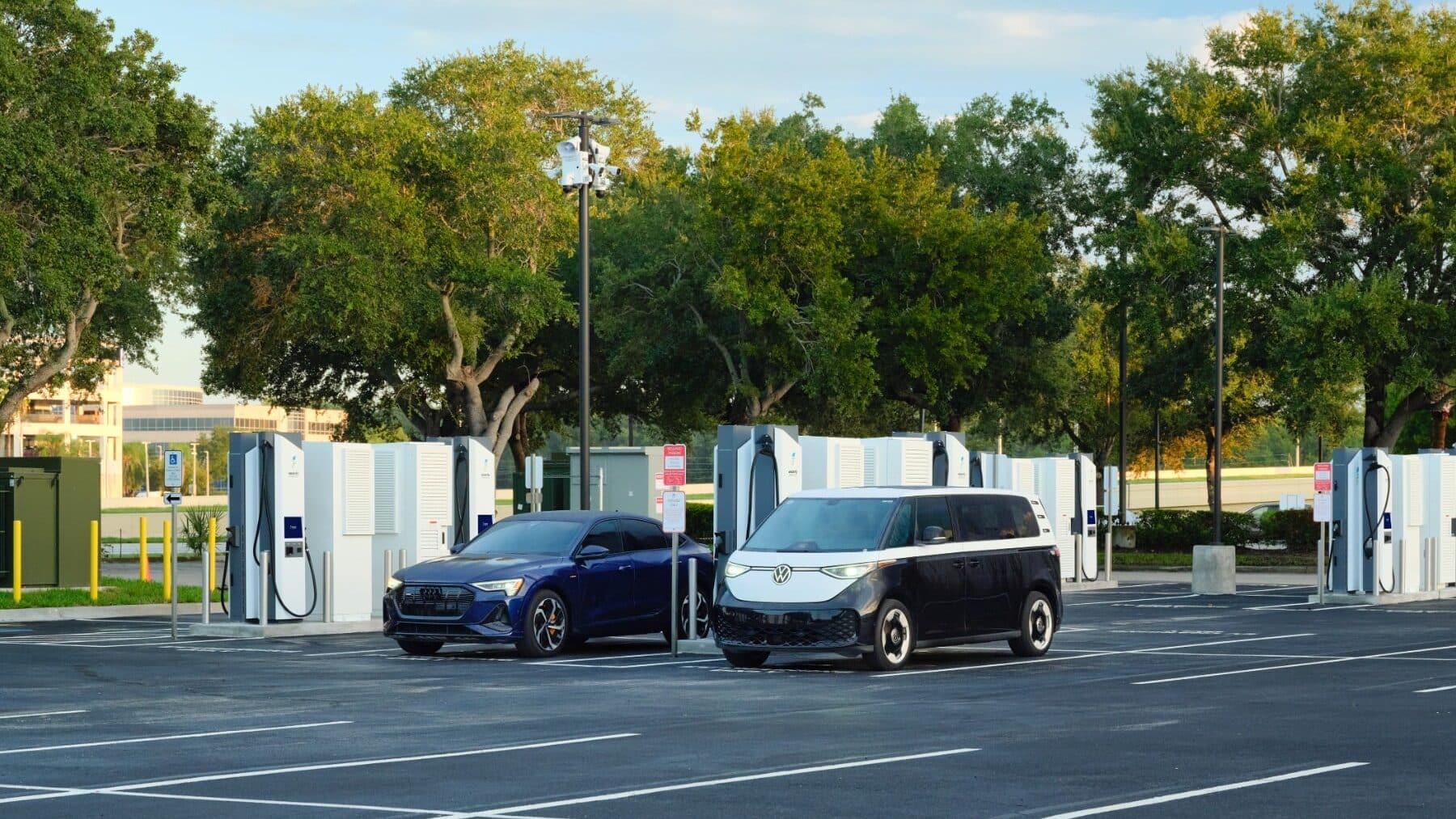
A charging cable clicks into a car outside a strip mall, the screen blinking through a routine payment.
Nothing about the stall looks different today than it did last month.
But behind that ordinary scene, the company that owns thousands of these plugs just became the subject of a buyout fight worth watching.
Its stock jumped harder in a single day than it had in two years.
The offer came from the same investor that already controls the company.
So why would an owner try to buy out the shareholders it already mostly controls?
Why a majority owner wants the rest of the company too
The mechanics are straightforward once you see who is making the offer. LS Power, an energy investment firm, already holds roughly 56 percent of EVgo’s combined voting power, and on November 2 it sent EVgo’s board an unsolicited and non-binding proposal to acquire all of the outstanding shares of the Company’s Class A common stock not currently owned by LS Power for cash consideration of $2.00 per share.
That price was not picked at random. In its letter to EVgo’s board, LS Power describes the proposal as representing a 62% premium to the 30-day VWAP of the Company’s shares as of October 30, 2026 and a 59% premium to the closing price on the same date , which tells you the stock had been trading well below what its controlling owner thinks the charging business is worth.
Taking EVgo fully private would let LS Power stop answering to public markets while it keeps funding a capital heavy buildout of stalls and grid connections.
A company still adding plugs while its share price collapsed
The timing looks strange next to EVgo’s underlying business, which has kept growing stall by stall. The company’s Q3 2025 results showed continued growth, with EVgo describing itself as a public electric vehicle fast charging infrastructure provider and one of the largest public fast charging networks in the United States. Yet the stock had been sinking for most of the year even as those numbers improved. Before the offer landed, shares were trading near a dollar and change, closing at just $1.26 on October 30.
That gap between a growing network and a shrinking stock price is exactly what made a take private move attractive to the one shareholder who already had the votes to push it through. When the offer hit the wire, the stock did not creep, it leapt, trading volume reaching approximately 58.56 million shares, against a 100-day average of 3.67 million shares.
What the filings actually show, and why the timing matters
This is where the hard numbers help explain investor nerves. The proposal was not a casual approach. LS Power stated plainly in its filing that the firm does not want to sell the existing holdings or participate in another transaction that changes control of EVgo , meaning this is about consolidating what it already runs, not flipping the business to a new owner.
So the charging side of the business, drivers plugging in and paying per kilowatt hour, keeps climbing even as the headline stock price lagged. The gap between operating momentum and market price is the exact seam LS Power’s offer is pressing on, and it helps explain why a controlling owner sees more value here than public traders have been willing to price in.
There is also a forward looking piece nobody should skip. EVgo has pursued a strategic agreement to deploy EVgo branded Superchargers compatible with the NACS plug standard, a move the company has said could widen its addressable market well beyond its current driver base.
The complication nobody can resolve yet
None of this is settled, and that is the limit every reader should hold onto. The Board has established a special committee composed of independent and disinterested directors to review and evaluate the Proposal, and no decisions have been made with respect to EVgo’s response to the Proposal.
Even the structure LS Power wants is unusual. The firm told the board it expects EVgo’s board to appoint independent directors to a special committee that would assess the proposal, and said the firm would proceed only if that committee recommends the transaction to the board, with advice from independent legal and financial advisers , a sign the firm expects scrutiny. That stance means this could still collapse if directors decide the price undervalues the network.
Meanwhile the broader charging market has not stood still. A separate industry count found the national fast charging network crossed 80,000 ports this year, a milestone covered in our public fast chargers across America report, and operators have been racing to add stations even as margins stay thin.
What it means for drivers and for the rest of the charging business
For the ordinary driver pulling up to an EVgo stall, nothing changes this week. Charging prices, session fees and the app experience stay exactly as they are regardless of who owns the stock, because EVgo’s shareholders do not need to take any action at this time.
But the longer term question is real. A private EVgo answers only to LS Power, which could mean faster site decisions on where new stalls go, or it could mean the quiet trimming of unprofitable locations that a public company would have had to explain to investors first.
That tension, patient private capital against public market impatience, is also reshaping how rival networks plan expansion, a shift visible in how one long dominant network recently slipped under half the national total of US fast chargers for the first time.
For now the special committee is doing its work, LS Power has made clear it is ready to move fast if the committee agrees, and the only certainty is that America’s charging networks are entering a period where ownership, not just plug count, decides who wins.
