Iceland’s state-owned power company Landsvirkjun is throttling electricity supply to data centers as hydro and geothermal capacity fails to keep pace with rising demand, according to a published interview with the utility this week.
The company, which produces over 70% of Iceland’s electricity , said its grid is now running close to its ceiling.
New industrial and computing demand keeps arriving faster than new power stations can be built.
A closed grid with no room to spare
The power grid is physically separated from the networks in Europe and the United States, restricting the pass-through of foreign energy market imbalances. That means every megawatt of new demand must largely be matched by new domestic generation.
According to data compiled by DC Market Insights, Landsvirkjun said in December 2024 that it had cut sales to data centres to one third of the 2022 level because of a tight power system , and that its priority is general use and the energy transition, then high-tech data centres, then existing large users.
Industry reporting has separately put data centre consumption at around 70 MW, about 3.5% of total power consumption, with demand increasingly focused on AI and high-performance computing .
The constraint is structural rather than temporary. Iceland runs a closed system with no coal or gas plants and no subsea import cables, so supply must keep pace with domestic demand. That leaves geothermal wells and hydro dams as the main levers available when consumption climbs, and both can take years to permit and build.
Geothermal fields near their limit
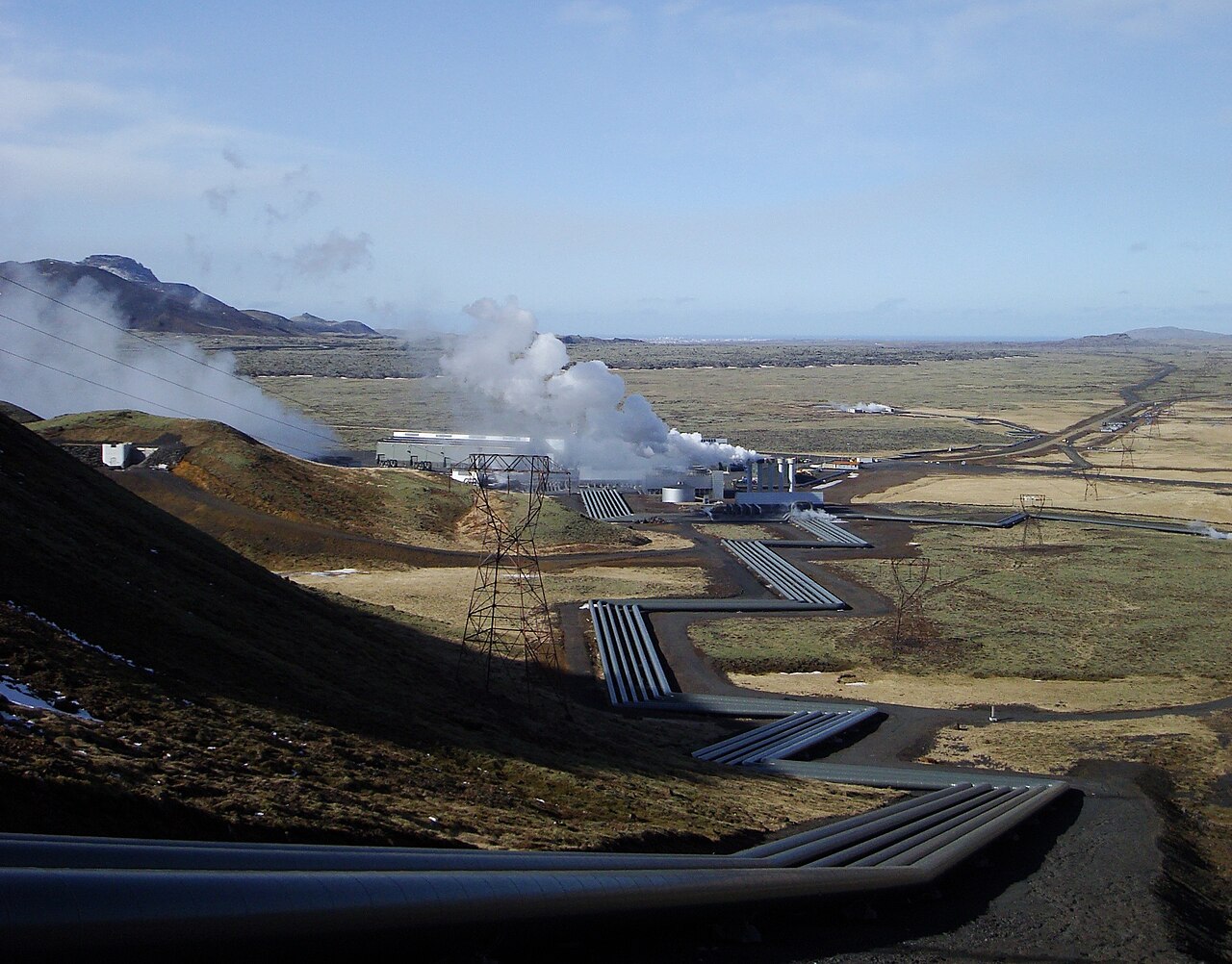
Geothermal and hydropower together make up the bulk of Iceland’s electricity, with Landsvirkjun’s largest geothermal plant located in the Þeistareykir field , pictured in the utility’s new interview.
The Þeistareykir geothermal power plant has an installed capacity of 90MW , Landsvirkjun’s largest geothermal station, part of a wider network that also includes hydropower and wind facilities across the country.
Headroom at individual fields is limited: Landsvirkjun has previously considered a further 45MW expansion at Þeistareykir, according to industry trade press, though national totals across all of Iceland’s geothermal plants could not be independently confirmed.
That headroom looks modest when measured against a national grid that an OECD economic survey found is already maxed out.
Iceland’s largest electricity producer reports that the power system is now running at full capacity, with households and small firms adding 5 to 10 MWh or 0.5% of power demand per year, excluding additional demands from the transport sector. The system already appears to be operating at full capacity, before new power stations are expected to come online around 2028.
Landsvirkjun executives have acknowledged the squeeze is not new. “We have more demand than we can deliver, but I think that’s true everywhere in Europe,” Haraldur Hallgrímsson, director of business development at state-owned power company Landsvirkjun, said in a separate interview describing the strain on the system.
Rationing by priority, not by price
Rather than letting prices ration scarce power, as happens in competitive US wholesale markets, Landsvirkjun has said it is allocating supply by customer class.
The company has stated publicly that its priority is general use and the energy transition, then high-tech data centres, then existing large users , which includes support for innovation in sectors such as food production and other green industries.
The same tight supply picture that is slowing Icelandic data center growth echoes debates playing out in US grid regions. There, backlog remains above 2,000 gigawatts and new large loads are testing how quickly American utilities can add firm capacity.
Iceland’s bind also underscores why utilities and regulators elsewhere are leaning harder into geothermal as a dependable, round-the-clock power source. Earlier this year, officials in the United States produced similar resource mapping, including a Denver Basin power potential study, as states weigh how to add firm generation without the multi-year buildout delays Iceland is now confronting.
What comes next
Landsvirkjun has pointed to new geothermal field expansions and hydro projects as the primary path to relieving the shortage, with the OECD noting new capacity is not expected to come online until around 2028 .
For now, the company’s message to prospective large power users, including data center operators eyeing Iceland’s low-carbon electricity, is that new firm supply will arrive on the grid’s timeline, not the customer’s.
