A furnace fan clicks on at 2 a.m. during a hard freeze, and the sound coming from the basement is not the quiet hum a homeowner expected.
Underground, just a few feet down, the soil barely moves from its usual temperature.
Inside the house, something else just switched on to cover the gap.
That switch shows up on a bill weeks later as a number nobody budgeted for.
What flips on inside that metal box during the coldest nights is the real story, and it has nothing to do with the ground loop itself.
What actually turns on when the ground alone cannot keep up
A geothermal, or ground source, heat pump works by circulating fluid through buried pipes to pull heat from soil that holds a nearly constant underground temperature no matter the season outside. On paper, that stability is the entire sales pitch, since the compressor can lean on the same mild source in January that it used in October.
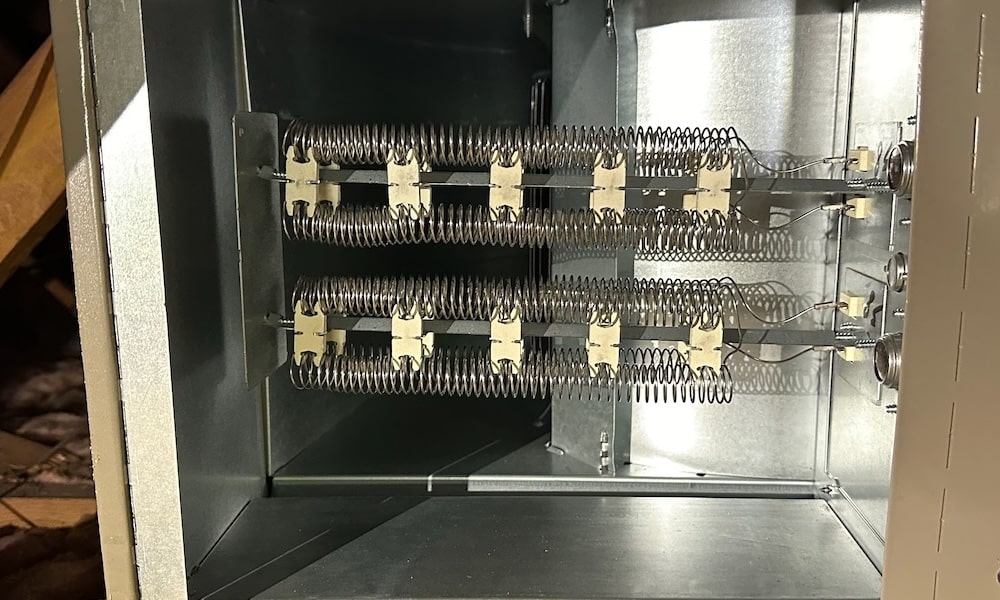
But installers rarely size the heat pump for the single coldest hour of the year, because building a system that large would sit idle most of winter. Instead, most residential systems are built with a second, hidden heat source bolted inside the air handler, a bank of electric resistance strips, sometimes called auxiliary or emergency heat.
Those strips work like a toaster, converting electricity to heat at roughly a one to one ratio. The geothermal compressor, by contrast, produces three to five units of heat for every unit it draws. One HVAC guide for homeowners puts it plainly, noting that “electric backup heat, on the other hand, operates at a 1:1 ratio.”
So when a cold front drops temperatures fast, the gap between demand and what the ground loop can supply gets filled by the least efficient part of the system, and it switches on automatically, with no alert.
A box in the basement nobody is told to watch
Picture the air handler: a plain gray cabinet tucked beside a water heater, usually ignored until something sounds wrong. Inside sit coils that look almost like a bare electric oven element, waiting for a signal from the thermostat.
That signal does not require a broken system. A homeowner who bumps the thermostat before bed, a defrost cycle outside, or a multi day freeze can all trigger the strips. One technician’s winter guide calls this the costly auxiliary heat trap, describing it as a rare, supplemental boost needed only during extreme, prolonged cold snaps when the heat pump alone cannot keep up.
The jump is real. Another guide aimed at diagnosing winter bill spikes states that aux heat strips draw two to three times more electricity than the compressor. Full emergency mode, bypassing the compressor entirely, pushes that further still.
It is a far more common catch than the tax credit paperwork deadlines that have tripped up other geothermal buyers, since this one fires automatically, every winter, with no form involved.
What federal data shows about how homes actually heat
None of this means geothermal heat pumps are inefficient compared with other heating choices. Federal data confirms the opposite baseline claim behind the technology.
The Energy Information Administration’s consumer guide states that, according to the EPA, geothermal heat pumps are the most energy efficient, environmentally friendly, and cost-effective systems for heating and cooling buildings. That comes from the agency’s own geothermal heat pump explainer.
A separate EIA analysis, drawing on U.S. Census Bureau survey data, shows how much homes now lean on electricity for heat generally. It found that in 2024, 42% of US households reported that electricity was their main space heating fuel, according to annual estimates from the US Census Bureau’s American Community Survey. Natural gas was the main heating fuel in 47% of homes last year, a decline from 49% in 2010.
More homes now carry this same resistance backup risk, whether their primary system is geothermal or a standard air source heat pump. Independent breakdowns echo the same math, three to five units of heat per unit of electricity from the loop, against one to one for strips that carry a very high impact on bills.
Where the marketing promise still holds, and where it strains
The efficiency claim is not false advertising. Across a full heating season, a correctly sized geothermal system genuinely uses far less electricity than resistance heat alone, and far less than most furnaces burn in fuel costs.
But the strain shows up specifically during the coldest stretches, exactly when bills get the most attention. One guide to diagnosing a high bill after a cold month puts it bluntly: auxiliary heat is the single biggest driver of a spike.
The catch is not that the technology fails. It is that the sales pitch rarely mentions the hidden backup coil, while the installer’s sizing choice, made to keep the upfront system smaller and cheaper, quietly decides how often that expensive backup fires.
That tradeoff echoes a pattern seen elsewhere in geothermal energy, including the drilling and injection costs on the utility scale side, where the promised number and the real operating number diverge for engineering reasons buried far from the sales pitch.
What homeowners and buyers can actually do about it
None of this requires abandoning the technology. It requires one specific question before signing a contract: at what outdoor temperature does the system’s balance point sit, and how many hours a year does local weather fall below it.
A heat pump sized closer to a home’s true peak load runs its backup strips far less often, even if that raises the upfront price. Buyers can ask installers for that balance point number directly, the same way they would ask about loop depth or compressor output.
Thermostat habits matter too. Deep overnight setbacks are a known trigger, since recovering several degrees at once calls on the fastest heat source available.
The ground beneath a geothermal system never stops being the efficient part of the equation. The lesson from a cold snap is that the box above it, the one almost nobody asks about, decides how that efficiency actually reaches the monthly bill.
