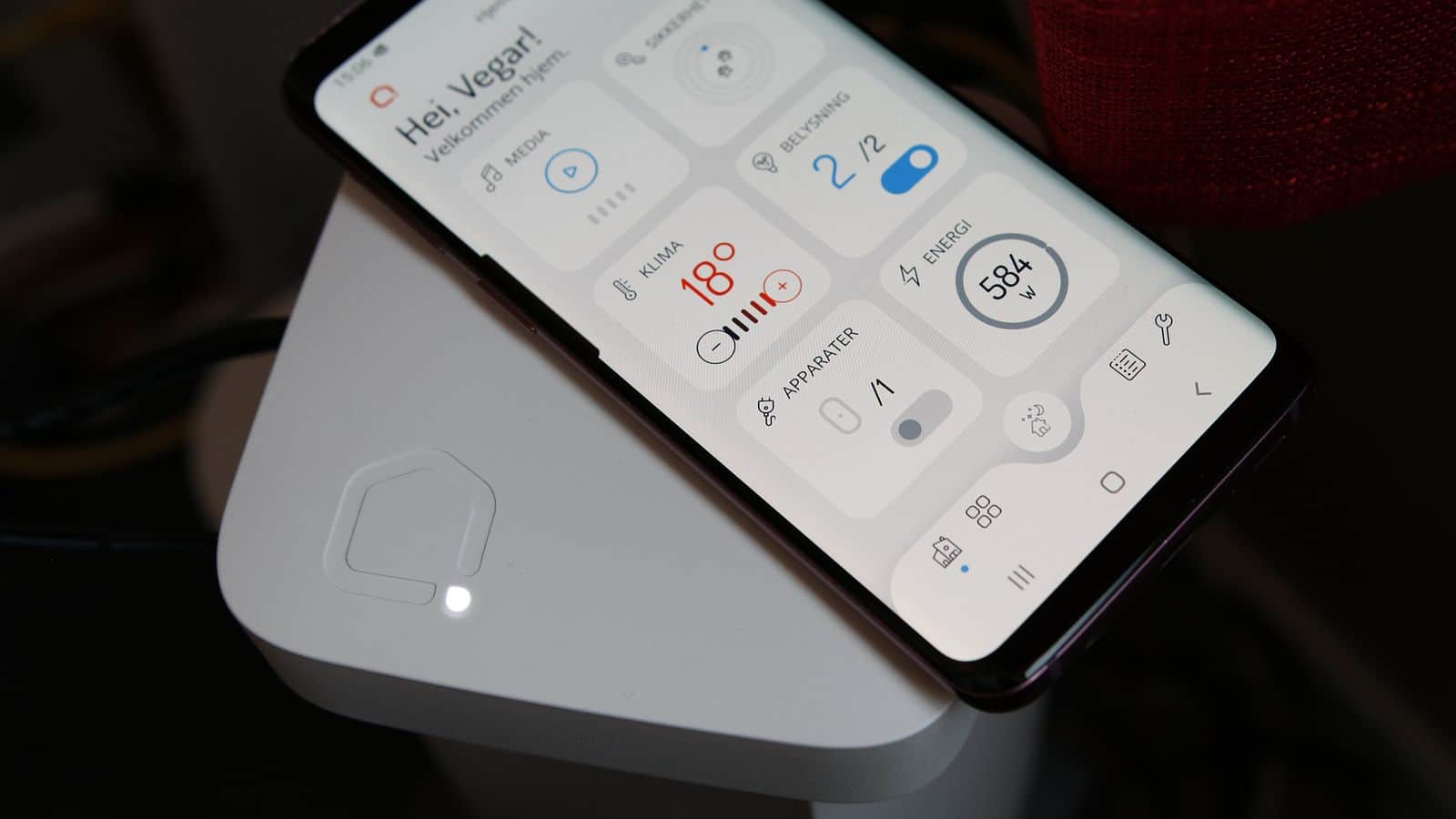
A small white box bolted to a hallway wall once ran an entire house without asking for a dime beyond its purchase price.
Lights dimmed on schedule, thermostats nudged themselves down at night, and an electric car charger waited for cheap overnight power before it ever drew a watt.
Then one morning, the app that controlled all of it started asking for money it had never asked for before.
What actually changed inside that little box to make it suddenly refuse to work for free?
How a one-time purchase quietly became a monthly bill
The mechanism here is simple and increasingly common: the physical hub never changed, but the cloud service behind it did. Most of what a smart home gadget does, from scheduling to remote access to voice assistant hookups, runs through servers the manufacturer owns, not through the device sitting on the wall.
The platform and related services were purchased from the bankruptcy estate, 50 percent by former Futurehome owners and 50 percent by Sikom Connect, and are now operated by FHSD Connect AS. The buyers of those servers gained total leverage over every household plugged into them.
So the new owner, a firm called FHSD Connect, did what the mechanism allows.
It enforced a subscription lock that flipped previously free functions behind a paywall through firmware and server-side checks. One account of the episode described how Futurehome sold its smart home hub to 38,000 Norwegian customers, with a promise of no subscription fees after the initial purchase , before the new owners locked features behind a paywall. Nothing broke physically; the company simply holds the key to features it can switch on or off from a server a thousand miles away, long after the sale is final.
What owners actually lost inside their own living rooms
For 38,000 Norwegian households, the change arrived as a notice, not a slow decline. The FAQ from Futurehome, which claims to be in 38,000 households, laid out which paid features would be inaccessible without a subscription.
Remote control stopped working from outside the house, and automations, the schedules and routines owners had spent months fine-tuning, simply quit firing. “You lose access to controlling devices, configuring; automations, modes, shortcuts, and energy services,” a company FAQ page says.
Even specialized hardware wasn’t spared.
Even the specialized products, such as Futurehome’s EV charger, lose their intelligence. For example, its smart charging feature (which delays charging to off-peak hours to save money) is disabled without a subscription. A feature sold specifically to save owners money became unusable unless they paid new money to keep it. Local devices still work manually, but without app control , so manual light switches still flipped lights on and off while anything resembling the smart part of a smart home stopped the moment the subscription lapsed.
The fine print nobody read when the box was still in its wrapping
This pattern is well documented across the smart home industry, and this case followed a familiar script down to the grace period. FHSD Connect AS has acquired the rights to the Futurehome platform from the bankruptcy estate of Futurehome AS (May 20, 2025). Those terms require an active paid plan going forward for full functionality.
The timeline matters. The subscription requirement was activated on 26 June 2025, and both existing and new households were given a four-week trial period before charges apply.
After that window closed, the bill became mandatory for anyone who wanted their hub to keep behaving like a smart hub. Critics argue the legal footing is shaky, noting that the company which is charging the subscription fee is not the same company that sold the smart hubs: Futurehome declared bankruptcy in May; this fee is being charged by its successor. Yet enforcement rarely waits for that argument to settle. FHSD CEO Øyvind Fries justified the subscription model as necessary to “secure stable operation, fund product development, and provide high-quality support.”
Why this is not an isolated glitch in one product line
None of this is unique to one Norwegian startup, and that is the uncomfortable part. A decade earlier, Google’s Nest shut down the servers behind the Revolv smart hub entirely. The Revolv was a $300 home automation hub that was sold with a “lifetime subscription,” and Nest’s decision to brick its $300 Revolv home automation hub turned paid-for devices into dead hardware rather than charging a new fee, a reminder that buying devices reliant on backend services carries the risk that the company behind the device will stop paying the server bills and leave users with a paperweight.
Because so much modern hardware depends on a company’s servers rather than the device itself, ownership becomes conditional by design. Smart locks, thermostats, mesh routers, fitness trackers and even some kitchen appliances assume the company selling them will exist indefinitely and keep its backend running forever.
This same tension shows up elsewhere, including how a deleted chatbot conversation can leave a memory summary on a company’s servers for weeks, and how a single missing earbud can cost nearly as much as a whole secondhand pair.
Buyers increasingly have one real defense: devices built on open standards that talk directly to a home network rather than routing every command through a distant company. After pairing, Futurehome devices run locally and directly on Homey, with no Futurehome hub or active subscription required for them to work properly.
What it means for anyone eyeing a smart home upgrade this winter
The lesson is not that smart hubs are worthless, but that the sticker price was never really the full price. A device that leans on cloud software for its best features is, in practice, a recurring commitment wearing the costume of a one-time purchase.
That does not mean every connected gadget hides this trap. Plenty of thermostats, lights and sensors advertise local control explicitly, and shoppers can now ask that question before checkout instead of after a surprise email arrives.
For the Norwegian households already affected, the choice came down to paying roughly $117 a year or watching their automations go dark.
Some paid, deciding a working system beat starting over. Others are migrating to self-hosted platforms that answer to no outside server at all. Either way, the box on the wall never moved, but the terms of owning it clearly did.
