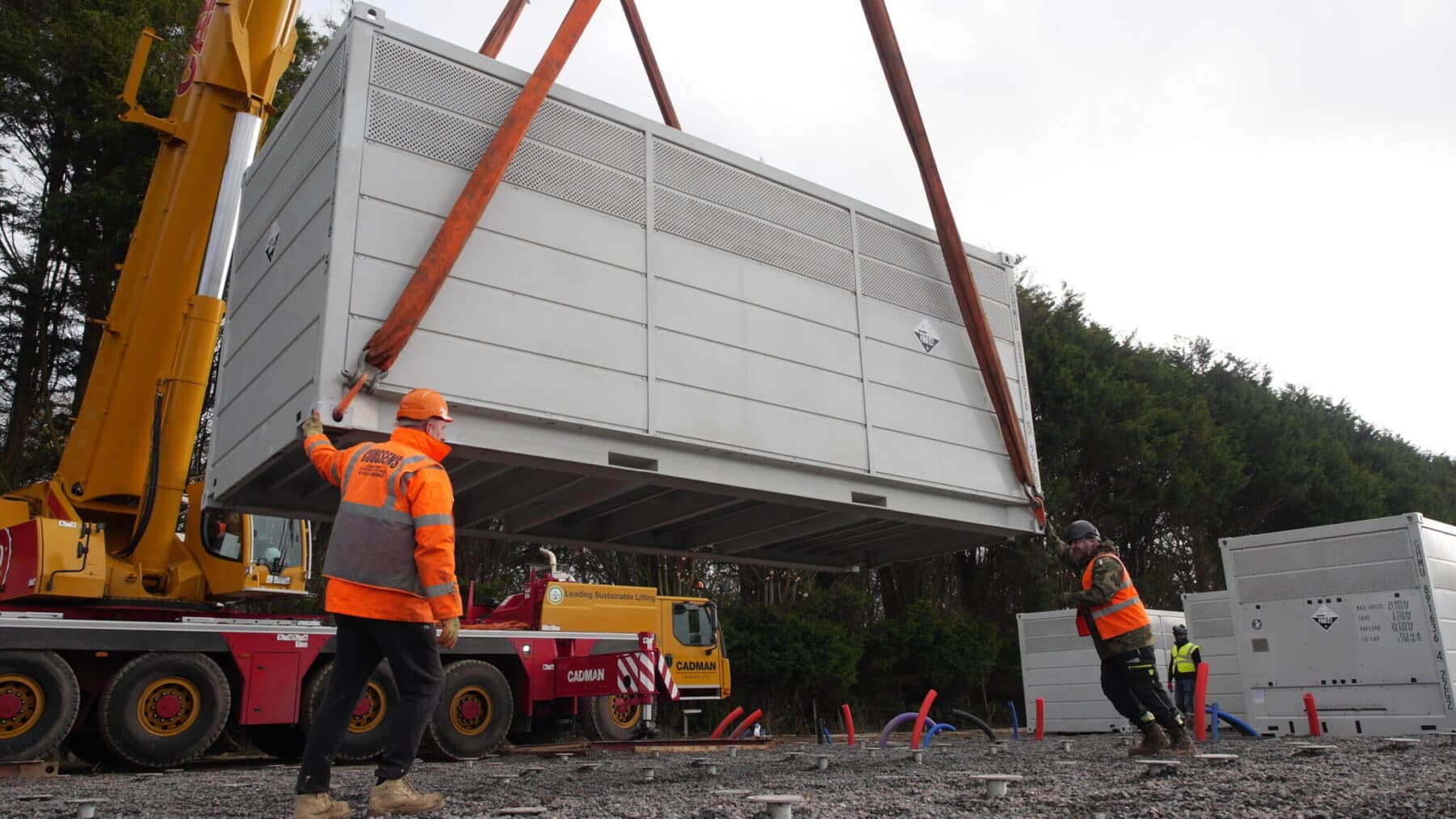
Britain’s state-owned National Wealth Fund has taken a £12.2 million cornerstone stake in Invinity Energy Systems, a UK based maker of vanadium flow batteries, as part of a £25 million fundraising announced last month.
The investment marks one of the clearest signals yet that a long duration battery technology built around flowing liquid electrolyte, rather than solid lithium cells, is attracting serious government backed capital.
What the deal involves
The National Wealth Fund has confirmed a £12.2m cornerstone investment into Invinity Energy Systems plc to enhance its manufacturing capabilities and continue the development of its vanadium flow battery technology. The remainder of the £25 million raise came from institutional and retail investors.
Vanadium redox flow batteries work differently from the lithium-ion packs that dominate the grid storage market today. They expand the range of available energy storage solutions, with particular emphasis on safety and long service life.
The chemistry stores energy in tanks of liquid electrolyte rather than in solid battery cells, a design that supporters say allows for longer discharge durations and less degradation over repeated cycling.
Earlier this month, the company announced a performance upgrade to its Endurium line of vanadium flow batteries. The latest Endurium module, now released for general sale, delivers a 50% increase in energy capacity, together with a 33% increase in peak power output, alongside a range of additional upgrades.
A growing global pipeline
The UK investment lands amid a broader expansion of vanadium flow battery deployment worldwide, much of it concentrated in China, India, and Australia.
In Western Australia, the state government recently awarded funding to build out a domestic vanadium electrolyte supply chain. The Western Australian Government has awarded $15 million to Australian Vanadium Limited (AVL) to establish a high-capacity vanadium electrolyte manufacturing facility, supporting local manufacturing and large-scale battery development.
In India, state-backed utilities have also begun awarding contracts for the technology. Vanadium redox flow battery startup Delectrik Systems has been awarded a 20MW/120MWh project in Gujarat, India.
The long-duration energy storage project was put out to tender by GIPCL in May.
China remains the largest market for the technology by installed capacity, with multiple grid-forming vanadium flow projects now in commercial operation, underscoring how the sector has moved from pilot demonstrations toward utility-scale deployment in several countries at once.
Why duration matters for grid planners
Flow batteries occupy a different niche than the four-hour lithium-ion systems that utilities have been racing to deploy across US markets.
That includes projects GCN has covered, such as the 125 megawatt Kern County battery built for California’s grid.
Vanadium systems are typically pitched for even longer discharge windows, where degradation-free cycling can offset higher upfront costs per unit of power.
That durability pitch has also drawn interest in markets grappling with surging electricity demand from data centers and AI computing.
That dynamic is already reshaping utility planning in places like Iceland, where data center power has been curtailed as generating capacity tightens.
What it means for storage markets
For Invinity, the National Wealth Fund’s cornerstone position gives the company a government-backed anchor investor.
It now competes for utility-scale contracts against both established lithium-ion suppliers and rival flow battery developers in China, India, and elsewhere.
The fundraising adds to a year in which vanadium flow technology has moved from a niche alternative into a more visible line item in grid storage planning documents across multiple continents.
Whether the technology can scale fast enough to compete on cost with lithium-ion remains the central question for the sector.
Electrolyte supply, vanadium pricing, and manufacturing capacity all factor into how quickly new projects can be built and commissioned.
