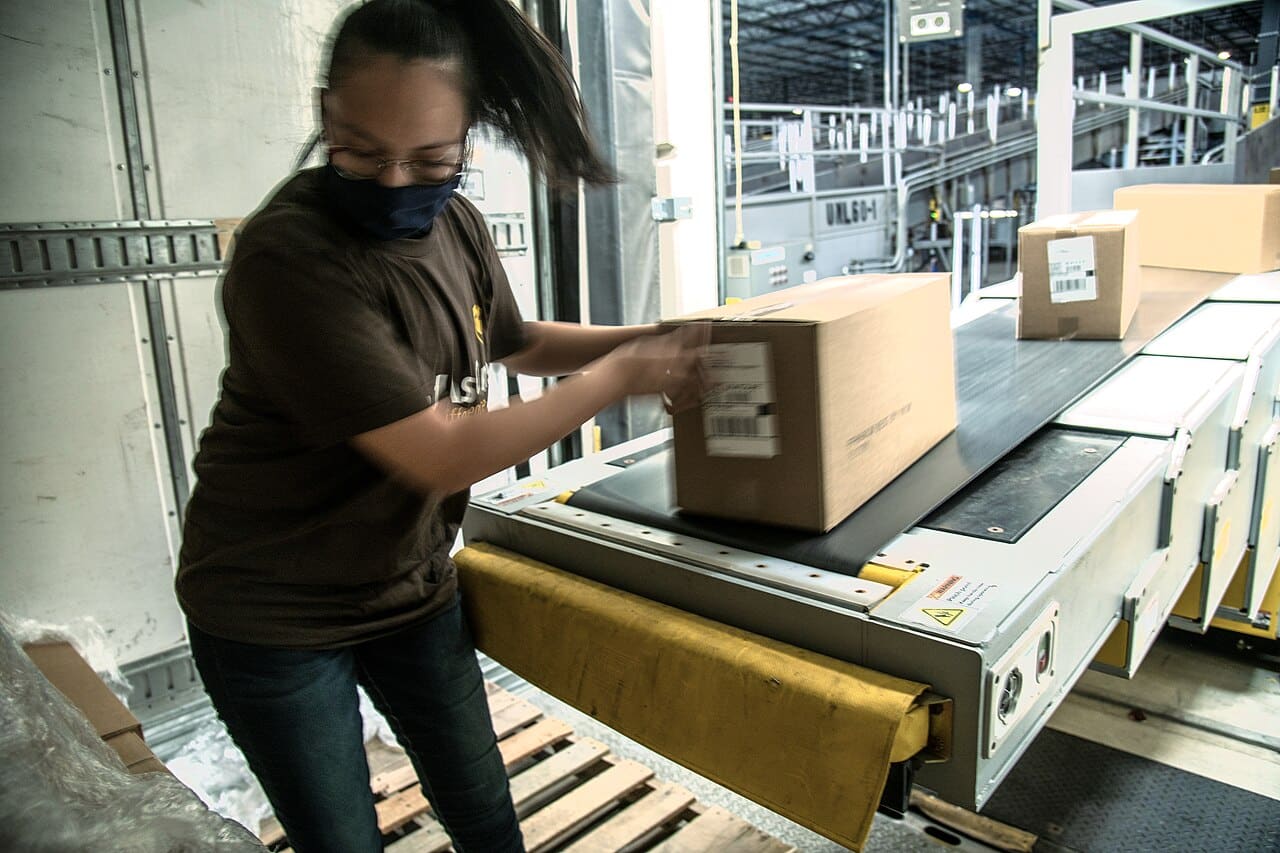
A cardboard box comes back to a warehouse with the tags still dangling.
The receipt is missing. Nobody at the loading dock blinks.
It happens millions of times a day across the country. That routine box is quietly one of the most expensive habits in American retail. Behind it sits a number most shoppers never see.
Why a simple refund can quietly cost a retailer more than the item is worth
Every return triggers a chain of physical work that has nothing to do with the original sale. A worker has to open the box, inspect the item, decide whether it can be resold, then repackage, relabel and often ship it to a different warehouse entirely.
That reverse logistics chain is where the real money disappears, long before anyone mentions fraud. Industry accounting now puts returns processing cost at 30% of the retail cost of the unit, totalling $212 billion in loss across all returns , according to the loss prevention firm Appriss Retail.
So a $60 sweater can burn through nearly $18 in labor, shipping and handling just to get back on a shelf, if it even makes it that far undamaged.
Then there is the smaller but nastier slice of the problem: returns that were never honest to begin with. That includes empty boxes, stolen merchandise sent back for cash, and counterfeit swaps where a customer mails back a knockoff and keeps the real item.
Retailers call this outright fraud, and it is only one layer of a much bigger bill.
Inside the number: how a $706 billion return pile turns into a $100 billion loss
Appriss Retail’s newly released benchmark report sized up the full scale for the first time with fresh data. Of the $706 billion in merchandise returned last year, 14.2 percent, roughly $100 billion, was classified as preventable loss tied to fraud and abuse. That total covers everything from returned appliances to the clothes shoppers tried on in their living rooms and shipped right back.
That $100 billion breaks into two very different categories, and the split matters more than the headline number itself.
That splits into $14 billion in outright fraud and $86 billion in policy abuse: wardrobing, bracketing and the full spectrum of behaviors that exploit generous return windows without technically breaking any laws. Think wearing an outfit once for an event or ordering three sizes with no intention of keeping more than one.
Where the figures come from and why estimates still swing so widely
These numbers come from survey based industry benchmarking rather than a single government count, since no federal agency tracks retail returns the way it tracks home sales or unemployment. Appriss Retail studied returns and shrink from both the consumer’s and retailer’s perspectives by surveying more than 1,000 consumers and analyzing in-store and online returns across 250 million unique customer identifiers , which is standard practice in loss prevention research but still leaves room for variation between firms.
That variation shows up clearly against the other major industry tracker. The National Retail Federation, working with Happy Returns, a UPS company, separately projected returns at a 15.8% return rate in 2025, totaling $849.9 billion .
The gap between the two totals is not a contradiction so much as a reminder that these are modeled estimates, not census counts. Different firms sample different retailers and weight categories like apparel and electronics differently.
Even so, both trackers land in the same general territory, a nine figure sum measured in the hundreds of billions, with fraud and abuse eating a meaningful double digit share of it.
The behavior that keeps the number climbing even as retailers fight back
Retailers are not sitting still. Many merchants have responded by making returns harder through fees, shorter windows and stricter proof-of-purchase rules , moves aimed squarely at trimming that $86 billion abuse slice.
Those changes are also reshaping ordinary shopping habits in ways that echo how physical stores are gaining ground this holiday season as shoppers rethink where and how they buy.
Yet tighter policies carry their own cost. Yet the figures suggest those steps do not always reduce abuse , and eight in ten shoppers say a positive returns experience makes them more likely to purchase from a retailer again , so a retailer that clamps down too hard risks losing sales it never gets back.
That tension between stopping losses and keeping customers happy is unlikely to resolve cleanly in either direction. It mirrors a pattern seen elsewhere in consumer life, like how installment payments at checkout quietly reshape spending habits without feeling like debt at all.
What the number means for the receipt in your own shopping bag
None of this means an individual shopper mailing back an ill fitting pair of shoes is doing anything wrong. Ordinary returns remain a normal, expected part of retail, and most of that $706 billion is perfectly legitimate buyer’s remorse.
The concern for retailers sits specifically in the abuse and fraud slice layered on top. Even so, that slice is large enough to shape prices, return windows and shipping fees for everyone else.
When a retailer absorbs tens of billions in preventable loss, the cost tends to surface eventually in subtler restocking fees, shorter return deadlines or slightly higher sticker prices across the board.
For now, the trend line points toward more friction, not less, with retailers investing in tighter verification rather than rolling back the convenience shoppers expect. The $100 billion figure is unlikely to shrink overnight, but it has given the industry a clearer picture of where its money is actually going.
