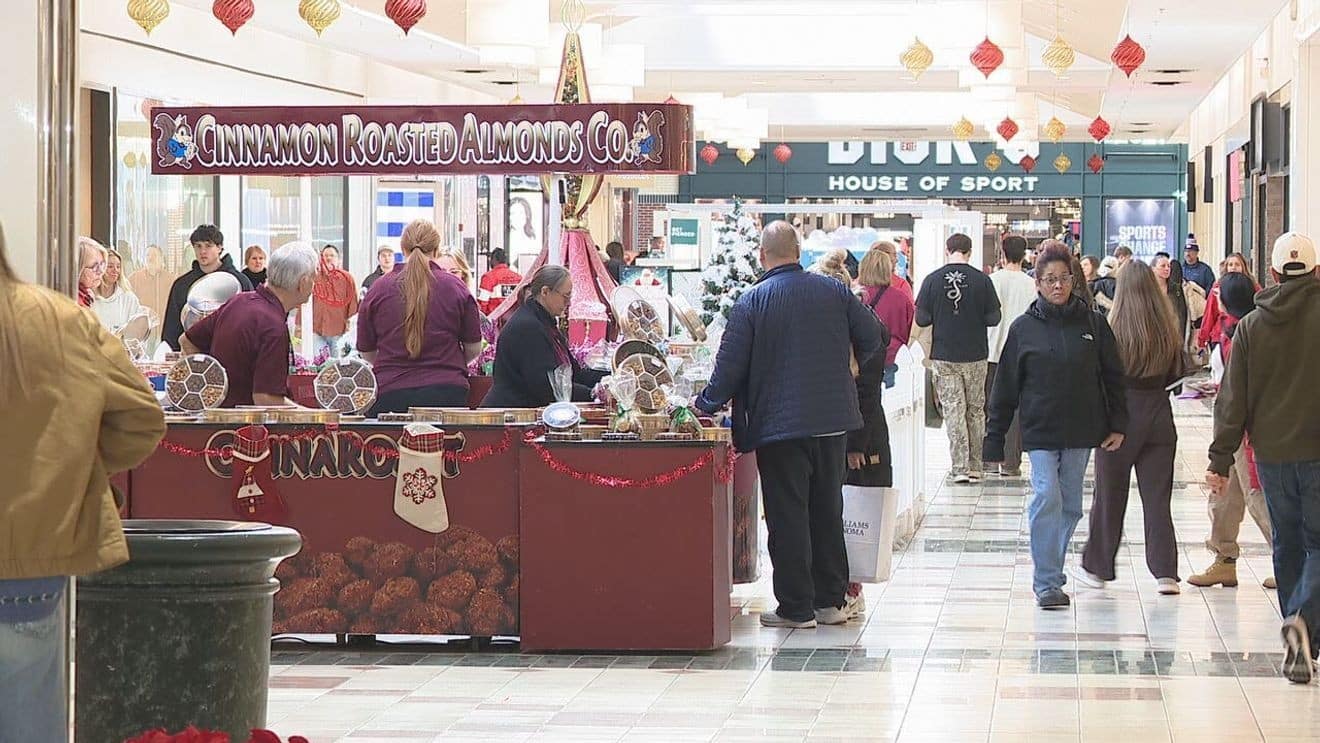
Enclosed shopping malls are the only retail channel gaining ground this holiday season, according to a new survey from real estate services firm JLL.
Consumers who shop at malls budget significantly more than those who do not. More than half of shoppers (55.3%) plan to visit an enclosed mall this season, up from 49.9% in 2025, while mall shoppers budget $1,357 for the holiday season, compared to $1,101 for those who aren’t planning to visit a mall.
Mall shoppers spend more, stay longer
The gap in spending between mall shoppers and everyone else is substantial. Mall shoppers budget $1,357 against $1,101 for everyone else.
That premium extends beyond dollars spent. Mall shoppers also expect to spend an average of 67 minutes per visit, compared with 48 minutes for other shoppers.
Mall visitors also tend to wander further through a property, expecting to stop at about six different stores per trip. Two-thirds of households earning over $150,000 plan a mall trip this year , according to the JLL report.
Spending shifts from gifts to experiences
Nationally, JLL found that US shoppers plan to spend $1,243 on the holidays this season, up 9.7% from last year. But the extra money is not going toward wrapped presents.
The lion’s share of the holiday budget increase went to food and decorations, up 16.0%, and to entertainment and dining out, up 17.3%.
As a result, gifts now represent 48.1% of consumers’ total holiday budgets, slightly less than last year. That shift toward dining and shared experiences helps explain why mall landlords, who typically mix retail with restaurants and entertainment, are seeing renewed traffic while standalone retail formats soften.
Food and drink purchases signal bigger spenders
One of the clearest predictors of a big holiday budget, JLL found, is whether a shopper buys food or a drink during the trip itself.
Refueling during shopping trips has emerged as a key indicator of higher overall spending, as JLL found that consumers who regularly purchase food or drinks while out shopping consistently maintain significantly larger holiday budgets.
The number of stores a shopper plans to hit also correlates strongly with spending. Shoppers planning one or two retail categories budget about $570, while those planning seven or more budget just over $2,000 , a pattern that rewards properties able to pull visitors into more than one storefront.
Price pressure persists despite bigger budgets
Even with budgets rising, shoppers remain wary of costs. Despite the larger overall holiday budgets, consumers remain concerned about prices.
JLL said 71.6% of shoppers expect rising prices to affect their holiday spending, including 38.5% who strongly agree. JLL’s findings are based on a national survey of 1,054 consumers.
The findings echo a broader pattern this reporting desk has tracked this season, including how lower income shoppers cut essentials to fund holiday gifts.
Shoppers are also increasingly turning to community and in-person experiences, a trend also visible in how a third of US adults have quit an online community in search of different forms of connection.
Artificial intelligence is also entering the picture for the first time. Approximately six in 10 consumers plan to use AI to help make shopping decisions this season , JLL reported, marking the first year the firm has tracked AI use in its holiday survey.
