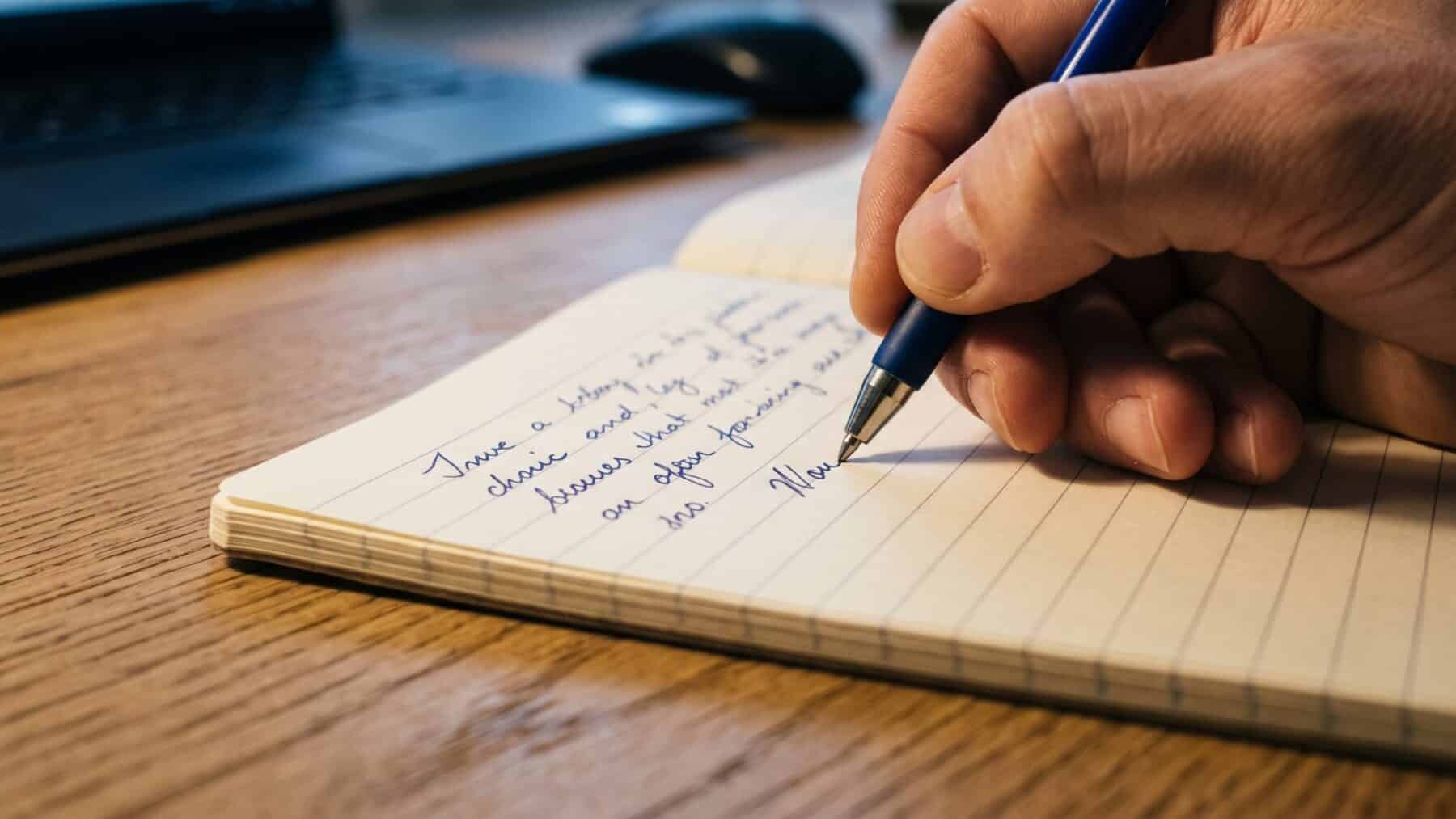
A pen sits uncapped on the desk, notebook open, ruled lines waiting.
For millions of people, that scene plays out every morning before a screen is even unlocked. It looks old-fashioned. It looks slow.
But a growing stack of brain research suggests the slowness is the point.
So what is actually happening inside the brain when a pen moves across paper, and why can a keyboard not replicate it?
Why the hand and the brain are doing something the keyboard simply cannot replicate
When a person forms a letter with a pen, the brain is doing something far more demanding than tapping a key. Neuroscience shows that writing by hand engages different brain regions than typing does: the physical act activates areas linked to memory formation, motor control, and language processing, and that multi-sensory engagement creates stronger neural pathways and deeper retention.
Each stroke is unique. Each curve requires a distinct sequence of fine motor moves, while typing uses the same finger motion for every character, weakening the motor-symbol connection. The keyboard is faster, but speed is the problem, not the advantage.
The slower pace of pen-and-paper writing forces deliberation. Writers must compose thoughts sequentially rather than editing simultaneously, and that process strengthens compositional thinking. It is the friction, not the flow, that does the cognitive work.
What a notebook on a kitchen table actually looks like across different generations
Ask someone born before 1980 to jot down a phone number and they reach for a pen without thinking. Ask someone born after 2000 and the reach is almost always for a phone screen. For younger generations who grew up surrounded by digital technology, there is a clear, measurable decline in this once-essential skill.
Research from the University of Stavanger in Norway points to the striking finding that after just one year of using only keyboards, around 40 percent of students see a decline in how legible and fluid their handwriting is. The skills needed for smooth, fluid writing on paper do not transfer from constant typing or tapping on touchscreens.
University lecturers in North America and Europe report students arriving at exams without a single pen.
Meanwhile the older habit persists quietly in millions of kitchens, offices, and commuter bags. People who keep paper notebooks tend to be written off as nostalgic rather than strategic, but the research says the label is backwards. And just as switching to grayscale cuts social scrolling without touching deeper video habits, the analog swap here is also targeted: it is not about rejecting screens, it is about choosing the right tool for the job that matters most.
Where the evidence comes from and how strong it actually is
A review of the handwriting-versus-typing literature, authored by Giuseppe Marano and colleagues and published in the journal Life on February 22, 2025, drew together 30 neuroimaging and cognitive studies into a single assessment. The conclusion was clear: people remember information better when they write it by hand, with multiple studies finding stronger memory retention and faster recall than typing.
The likely reason is that the slower process forces deeper engagement with material rather than passive transcription.
A study by Longcamp and colleagues, included in the review, found that participants who wrote unfamiliar characters by hand demonstrated better retention and faster recall than those who typed the same characters. The handwriting group outperformed typists consistently across recall tests, an advantage the researchers attributed to the greater cognitive load that handwriting places on the encoding process.
The effect was not marginal. Additional studies indicate writing notes by hand positively impacts comprehension, retention, and the ability to synthesize concepts. That synthesis gap matters most: it is not just recall that suffers, it is the ability to connect ideas across a page.
Where the habit does not hold and what it cannot fix
None of this is a blanket case against the keyboard. For speed, search, collaborative editing, and accessibility, screens win without contest. The research-backed advantage of handwriting shows up most clearly in two situations: initial learning of new material, and reflective note-taking during a meeting or lecture where understanding matters more than speed.
Several studies found that students who took notes on laptops performed worse on conceptual questions than students who wrote by hand. Researchers argued that laptop note-takers transcribe verbatim, which bypasses the processing step the brain actually needs. Verbatim capture feels productive but delivers less.
The limit is real. Handwriting may help keep the aging brain active and the cognitive demands could stimulate neuroplasticity, though researchers stop short of claiming it prevents decline. For the students who are losing basic handwriting fluency, the friction of relearning can itself become a barrier.
The practical reframe: one notebook is not a retreat, it is a precision tool
The calming conclusion from all this research is also the most actionable one. Nobody is being asked to give up their laptop. For older adults, regular handwriting engages multiple brain systems at once, and for anyone looking to keep their mind sharp, science offers an unexpectedly low-tech suggestion: pick up a pen.
The specific habit that earns the biggest return is simple: write the first draft of any important idea, list, or decision by hand before moving it to a screen. That single switch routes the thought through the motor system, the visual cortex, and the language network simultaneously.
No keyboard shortcut comes close to that.
What the generational divide ultimately reveals is not that older people are behind the times. It is that a habit dismissed as slow and quaint happens to be cognitively precise. The pen is not slower than the keyboard. It is just doing a different job, and for memory and comprehension, it turns out to be the better one.
