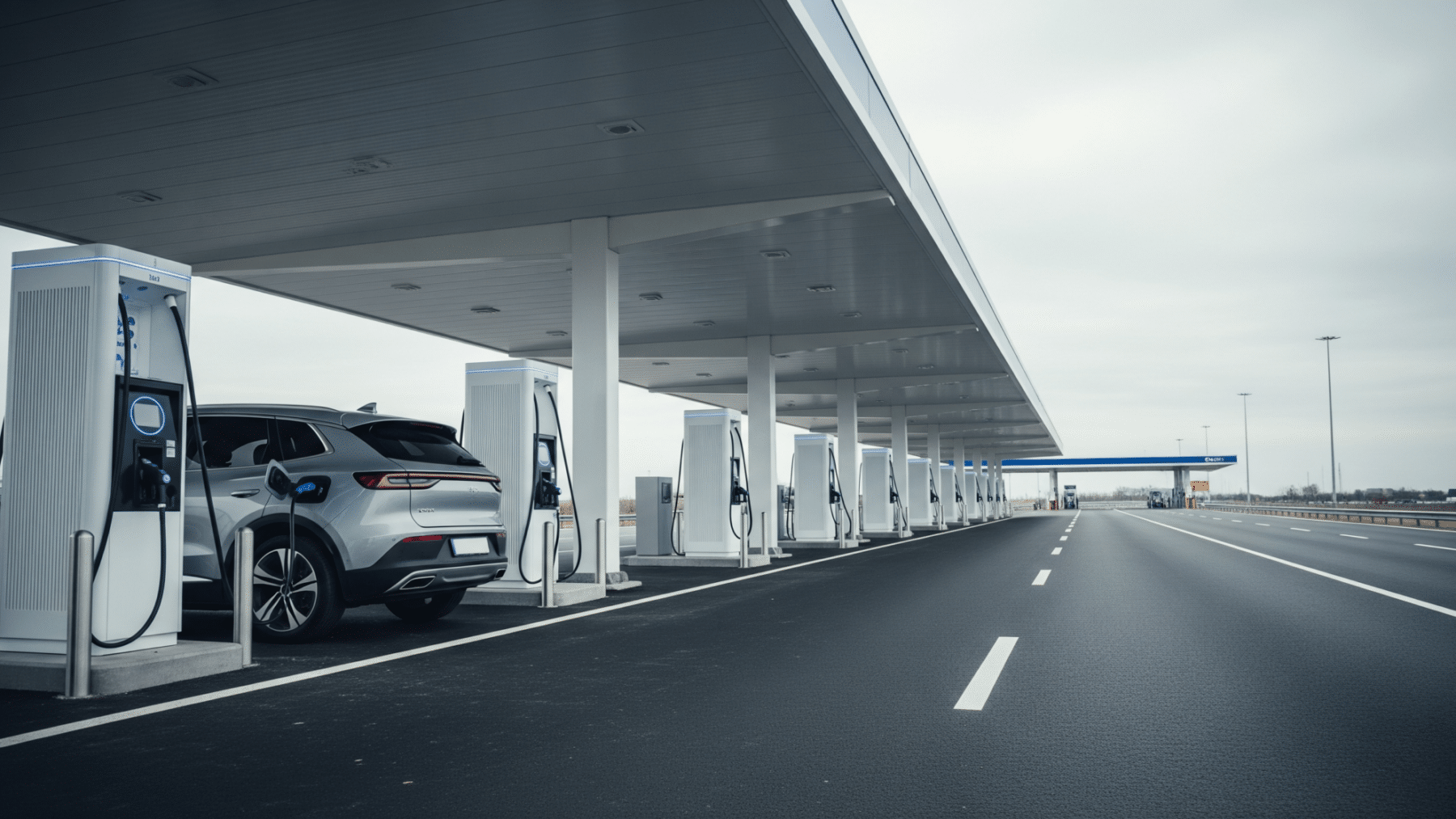
Something quiet happened at highway rest stops across America this summer, and most drivers blew past it at 75 miles an hour.
A network familiar to every long-haul trucker and road-trip family just crossed a milestone that dedicated EV charging companies have been chasing for years, and it did it in a fraction of the expected time.
A number that took some operators years to reach
Pilot Flying J, the biggest travel center network in North America, just hit a major milestone in its push to cover the United States with fast chargers: the company now has over 300 EV charging stations spanning from coast to coast, an increase of over 50% in less than a year.
As of this month, the network stands at 309 locations with 1,323 individual charging stalls, after the company added 50 new sites across 25 states in the first half of 2026 alone.
Pilot’s 309 EV-equipped locations now cover a third of the company’s 900-plus travel center footprint, which spans 44 states and five Canadian provinces.
How half a year can change the whole map
The pace of the buildout is what stands out.
Pilot Travel Centers added 50 new DC fast-charging sites in the first half of 2026, and the expansion spans 25 states.
Pilot’s charging network had just over 200 sites and roughly 850 stalls when it crossed the 200-location mark in September 2025.
By January 2026, the network had passed 1,000 stalls across 40 states.
That is roughly 475 new stalls added in six months, the kind of ramp that catches infrastructure analysts off guard.
What you actually find when you pull in to charge
The hardware matters as much as the location count.
Pilot and Flying J locations use 350-kilowatt EVgo dispensers, each with two charging cables. Maximum output is split between two vehicles if both connectors are used, but if only one car is charging, it can draw the full power of the stall. Plug-and-Charge, which lets drivers simply plug in and start a session, is also supported for compatible vehicles.
Pilot says the frequency of EV charging availability within its network ensures that “summer travelers can confidently navigate long-distance road trips without range or experience anxiety.”
Amenities matter on a long drive, and Pilot’s travel centers already offer restaurants, showers and fuel alongside expansive lounges, free Wi-Fi and modernized restrooms, making a 20-minute top-up feel less like a chore than a planned break.
The company behind the canopy is not who you think
Here is the part that changes the picture.
Pilot Flying J built its empire on diesel pumps and coffee. It is not a startup chasing venture capital, and it is not a legacy automaker hedging its bets. It is the country’s dominant highway fuel stop, and it is now one of the largest DC fast-charging operators in America.
When counting the Pilot and Flying J network separately, it ranks as the eighth-largest charging network by number of ports in the United States, ahead of dedicated EV charging operator Ionna.
The travel center giant is part of a partnership formed in 2022 between Pilot Company, GM Energy and EVgo to install up to 2,000 fast chargers at up to 500 Pilot and Flying J locations in the U.S. Having now deployed more than 300 fast-charging locations, the network has passed the halfway point of that broader plan.
Given that Pilot serves an average of 1.2 million guests each day, it can play a vital role in electrification efforts.
The same pattern playing out at Walmart‘s growing charging footprint is now visible at Pilot: America’s biggest retail and travel destinations are quietly becoming its most consequential charging infrastructure, not the companies built solely for that purpose.
Where the network goes from here
The 300-location mark is a milestone, not a destination.
The 309-location total, confirmed by EV charging data platform Paren and independently reported by InsideEVs and Electrive, puts the network past the halfway mark toward Pilot’s original goal of deploying up to 2,000 stalls at up to 500 Pilot and Flying J locations.
The charging expansion coincides with broader investments in Pilot’s travel center network: during 2026, the company opened new sites in Chicopee, Massachusetts, and Ponce de Leon, Florida, while completing curb-to-counter upgrades at existing locations across 13 US states.
The United States has seen strong growth in public DC fast-charging ports, with the national total reaching 74,265 as of July 2026, up 27% year-over-year.
The next time a driver pulls off the interstate for coffee and a restroom break, there is a growing chance the charging cable goes in right alongside the coffee cup. That shift, happening one travel center at a time, is what highway charging at scale actually looks like.
