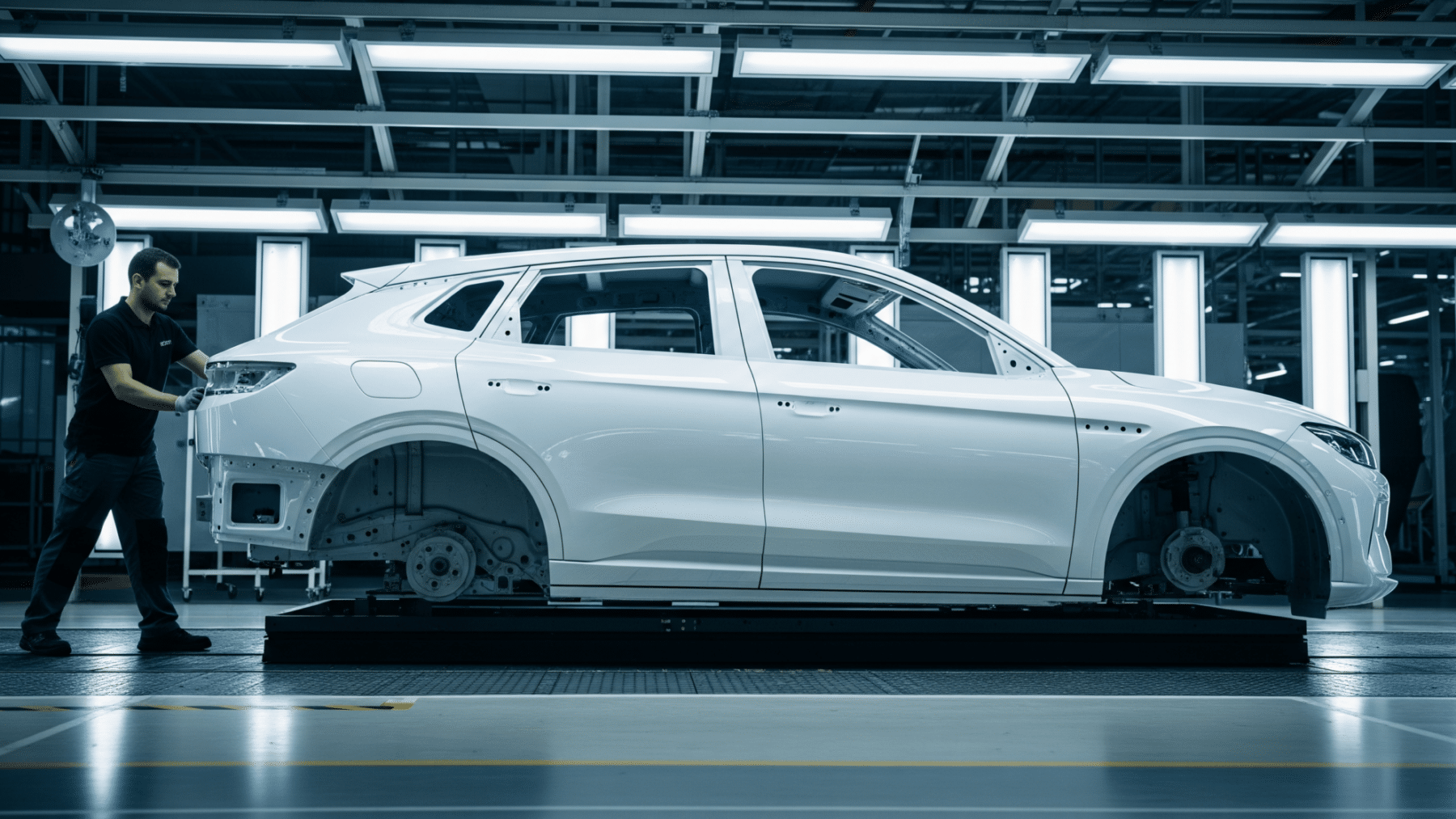
A factory that did not exist five years ago just rewrote a record that stood across the entire history of one of the world’s oldest car companies.
The number arrived quietly on July 28, but the story behind it stretches back to a platform decision BMW made years ago that left almost no room for failure.
A brand-new plant in eastern Hungary nobody outside the industry was watching
Construction of the plant in Debrecen began in 2021. The more than 400-hectare site includes a press shop, body shop, paint shop, and assembly, along with a dedicated battery assembly unit.
BMW Group made a substantial investment in building state-of-the-art infrastructure at the location.
Most new factories spend their first year finding their rhythm.
Debrecen had other plans.
The number that quietly landed on the production floor in late July
BMW Group Plant Debrecen in Hungary produced the 50,000th BMW iX3 on July 28, 2026, nine months after series production began in late October 2025.
Series production started in late October 2025, and less than a year later, the first major milestone had already been reached.
The all-electric BMW iX3 was launched in Europe in March 2026 , and since then demand has been steadily increasing.
That demand did something no production schedule had anticipated.
Why the factory had to add a whole extra shift months ahead of plan
The rapid ramp-up was significantly accelerated by the introduction of the second shift, which started in February 2026, well ahead of schedule. This was the BMW Group’s response to the high demand the BMW iX3 has been experiencing since its market launch.
Preparations are already underway for a third shift, which is scheduled to begin in September of this year.
Supported by strong customer orders, the company is on track to soon reach the next important milestone of 100,000 incoming orders. That order count points to something bigger than one model’s success.
The real reason this record matters far beyond one electric SUV
As the first series-production vehicle of the Neue Klasse, the BMW iX3 marks the start of a new vehicle architecture, in a completely newly built plant.
It is the first series-production model built on BMW’s Neue Klasse platform, introducing a completely new vehicle architecture, advanced software integration, and the technologies that will underpin the company’s next generation of electric vehicles.
Just nine months after the start of series production, the 50,000th BMW iX3 rolled off the assembly line, marking the fastest ramp-up of a newly built plant in the history of the BMW Group.
That claim, confirmed directly on the BMW Group newsroom, carries real weight for American buyers.
At a moment when new-vehicle prices hit a 2026 high of $49,855 and shoppers are scrutinizing every dollar, BMW is betting the Neue Klasse’s new architecture justifies the premium by delivering range, software, and build quality that move faster than competitors.
Other BMW Group plants benefit from the launch experience gained at Plant Debrecen through direct knowledge transfer across the global production network. Insights from the BMW iX3 ramp-up, digital data, quality analyses, and process improvements support future vehicle launches at other BMW Group locations, all as the company prepares to introduce 40 new and revised models globally by the end of 2027.
Compare that to the luxury end of the American EV market, where Lucid’s Gravity GT-S launched as America’s most powerful three-row SUV at $127,750, staking its own claim on a different kind of first.
Both stories point to the same industry truth: in 2026, the launches that land hardest are the ones built on genuinely new platforms, not refreshes of the old ones.
What the Debrecen record signals for every buyer watching the EV market in 2026
The BMW iX3 is the first series-production model of the Neue Klasse. It embodies the transformative shift underway at BMW, with its new design language, consistent digital user experience, sixth-generation electric drive, and a 360° approach to product sustainability. That makes Debrecen the place where the platform the entire company is betting its electric future on gets proven at scale.
By the end of 2027, the BMW Group will launch 40 new and revised models globally.
The plant plays a key role in the further scaling of the Neue Klasse across the BMW Group’s production network.
For anyone keeping score on which automakers are accelerating and which are stalling, a factory that added a second shift before its first birthday, and is already preparing a third, is a number worth remembering.
