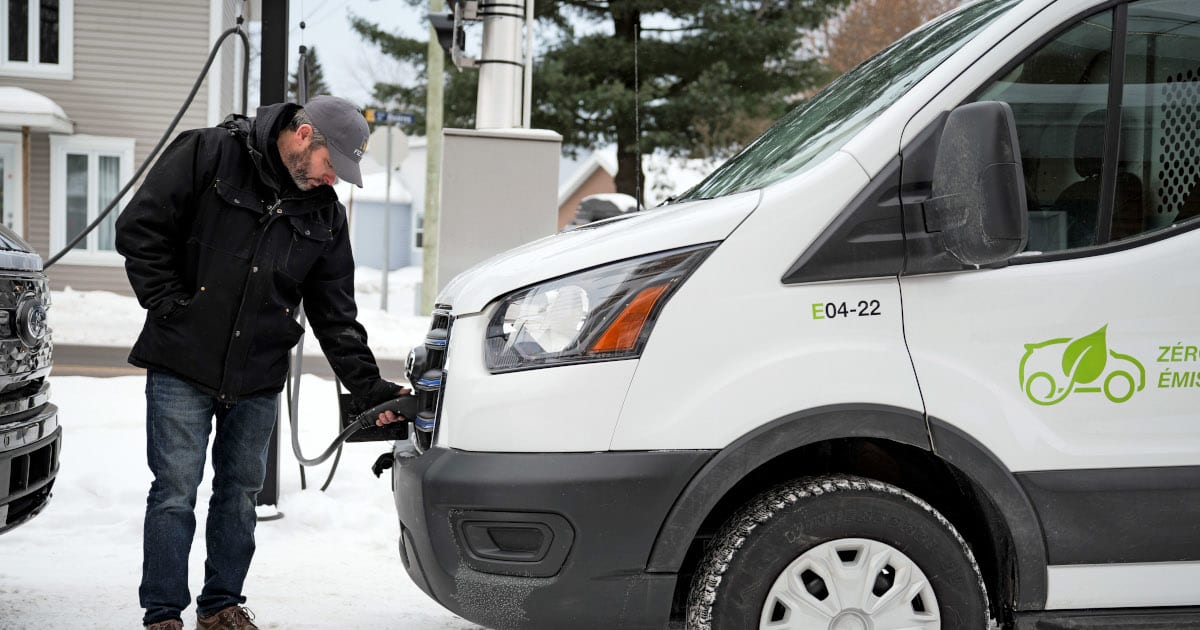
A fleet manager in Ohio opens an app before sunrise and watches a dozen electric vans light up on a map, battery levels ticking upward in real time.
That dashboard came free when the keys did.
No invoice, no login fee, no fine print at delivery.
Three years later, on some trucks, the same screen can go dark unless someone signs a check. On newer trucks, the clock runs out even sooner.
Behind that free ride sits a business decision built to expire on schedule.
Why the free window closes on a timer, not a mileage mark
The mechanism is simple and it has nothing to do with the vehicle breaking down. A commercial automaker bundles complimentary data access into the purchase price of an electric van or pickup, then counts down from the vehicle’s warranty start date rather than from miles driven or years of ownership like a warranty. Ford Pro is committed to making the transition to electric vehicles, such as the E-Transit and F-150 Lightning Pro, easy for fleets with Ford Pro E-Telematics, and when the service launched, fleet operators could sign up to receive three years of complimentary access to this service, which is designed to help manage their electric vehicle fleet and effectively control energy use costs with charging insights.
That clock is a sales incentive, not a guarantee of lifetime service, and it has already gotten shorter for newer trucks. Gas powered trucks in the same fleet get a different deal entirely.
Ford Pro Telematics Essentials is complimentary for the life of a Ford gas vehicle, offering access to vehicle health data such as odometer readings, diagnostic trouble codes, and information around oil life, engine hours, and recalls. Electric vans and trucks do not get that lifetime promise, and Ford’s own current disclosures show eligible vehicles (2022 and 2023 MY) receive a complimentary three-year trial of E-Telematics services, and eligible vehicles (2024 MY) receive a one-year trial that begins on the New Vehicle Warranty start date.
So the EV side of a mixed fleet runs on a strict countdown the gas side never faces, and that countdown has been shrinking as Ford updates model years. Once it hits zero, the automaker’s own paperwork says what happens next in plain language, and it is not a renewal reminder with no cost attached.
What the dashboard actually tracks, and what disappears without it
Picture the screen a dispatcher checks every morning before trucks roll out. It shows which electric van has enough charge for a full route, which one idled too long overnight, and which battery is aging faster than the rest. Fleet buyers often weigh an electric vehicle purchase against exactly this kind of operating visibility.
These are not luxury extras bolted onto a cargo van for show. A real time window into charging behavior is how a small electrical contracting outfit or a municipal works department decides whether an electric van can finish a shift without stranding a driver on the side of a highway.
Losing that view does not stop the van from running, but it does blind the person responsible for the whole route. And the stakes rise with fleet size.
A company running three electric vans can eyeball each one easily. A company running three hundred cannot, which is exactly the scale at which this kind of software stops being optional and starts being the only practical option for managing a fleet at all.
The hard numbers behind the free trial and the invoice that follows
Here is where the dollar figures get specific. After the free introductory period for the standard package, fleets that want the fuller feature set pay a recurring monthly charge per vehicle.
One current dealer listing for the upgraded tier puts Ford Pro Telematics at $20/mo. per vehicle , layered on top of GPS tracking and geofencing the free tier does not include. A separate pricing breakdown lists Ford Pro E-Telematics and Telematics with a second package offering additional features for $27 monthly per vehicle , stacking on fuel efficiency analysis and driver coaching tools.
Multiply either figure across a fleet of a hundred vans and the number stops looking small. That scale is already showing up in Ford’s own disclosures: approximately 400,000 Ford Pro customers were paying for subscription services as of 2023, a 60% jump from a year earlier , and by late 2025 Ford Pro’s paid software subscriptions grew by eight percent in a single quarter, reaching 818,000 , with Ford more recently disclosing more than 840,000 global Pro telematics subscribers .
Ford’s own fine print on the service spells out the obligation directly: after the 3-year trial, annual service contract is required for E-Telematics service , and Ford Pro Telematics requires a purchased subscription.
None of that is hidden deep in a contract nobody reads. It sits on the automaker’s own fleet pages, which makes the catch less a secret and more something a buyer has to actively notice before the free years run out.
Where the free offer still holds, and where fleets get caught out
Even so, the picture is not uniform across every brand, every truck, or even every model year of the same truck. Ford’s own shift from a three-year trial to a one-year trial for newer electric models shows how quickly these terms can move.
Fleet buyers comparing commercial trucks across manufacturers should expect similar variation industry-wide, since other automakers structure their own complimentary telematics windows independently and on their own schedules.
That inconsistency is a real trap for a fleet buyer comparing trucks side by side, even within one brand’s own lineup. A manager who assumes every electric vehicle in inventory carries the same free period as the last one purchased can end up with a surprise invoice landing on a different anniversary for every vehicle on the lot, especially when newer electric and hybrid models enter a mixed fleet at different times.
Fleets that track purchase dates and model years closely avoid the worst of it. Those that treat the free telematics window the way they treat a warranty, something to forget about until it matters, are the ones who get the bill with no warning attached.
What it means for anyone running an electric fleet today
None of this makes the free offer a bad deal. Even a single year of included data access on a new electric van is a real cost saving up front, and it buys time for a small business to learn whether the software is worth paying for at all.
The catch is simply that the free part was always temporary by design, not by accident, and the length of that free part is not fixed even within one manufacturer’s own lineup. So the smart move for any fleet manager is treating the vehicle’s model year and warranty start date as a line on the budget, not a bonus.
Mark the expiration, compare the monthly rate against what the dashboard actually saves in fuel and downtime, and decide before the renewal notice arrives rather than after. That habit costs nothing and prevents the one outcome every fleet wants to avoid.
A van going dark on the dispatch map with nobody sure why, until the invoice explains it.
