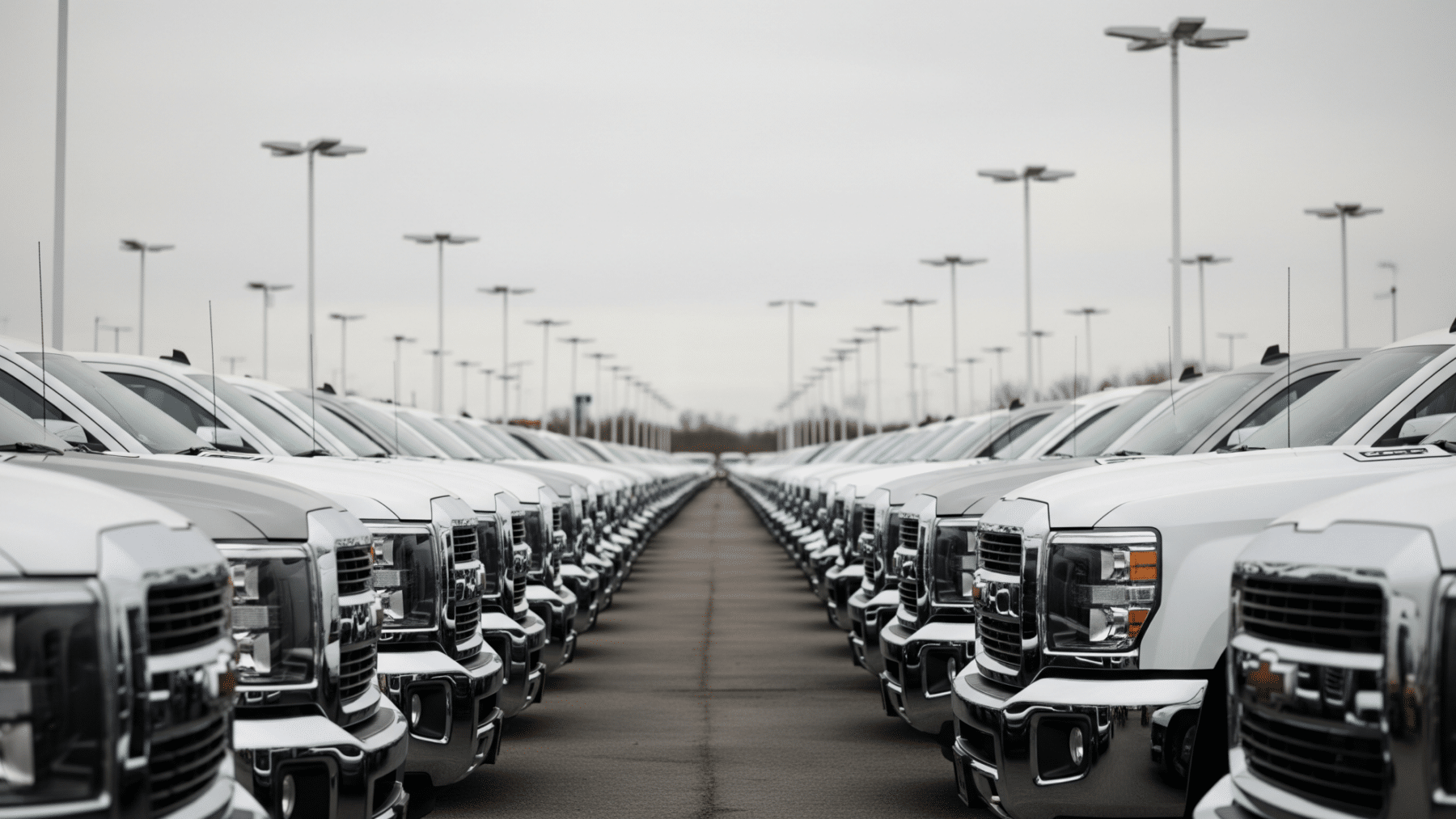
An aluminum mill in upstate New York caught fire repeatedly in the fall of 2025. Most Americans never heard about it. But if you tried to buy a new F-Series truck in the first half of 2026, you felt the consequences at the dealership.
The ripple from those fires traveled straight to Ford’s quarterly sales report, then to Wall Street, then to Ford’s earnings call.
What happened next is not the story most people expected.
The quarter where Ford’s biggest franchise hit a wall
Ford Motor reported a 10.3% decline in its second-quarter U.S. new vehicle sales as the company battled a supplier issue for its F-Series pickup trucks and a significant drop in all-electric vehicles.
Ford reported selling 549,200 vehicles during the second quarter, and during the first six months of the 2026 calendar year, Ford Motor Company sales decreased 9.6% to 1,006,515 units.
That is a lot of trucks not sitting on lots. And the reason traces back to one address in New York State.
Why the most profitable truck line in America ran short on metal
Ford’s most profitable franchise, the F-Series pickup truck line, has been hobbled since September 2025, when a fire broke out at the Novelis plant in Scriba, in Oswego County, New York, on September 16, followed by a second significant fire on November 20 in the area where repair work from the first fire was taking place. A smaller fire had also occurred between those two events, meaning the hot mill was struck three times before the year was out.
The Oswego County facility produces roughly 40 percent of the aluminum sheet used by automakers in the United States, and its sudden shutdown created a critical supply bottleneck for the industry.
Novelis supplies the flat-rolled aluminum that goes into the F-Series body panels. No aluminum, no trucks.
Ford’s pure EV sales fell by 40.7% during the quarter compared with a year earlier. Sales of its F-Series trucks, including the F-150, slipped 11% as Ford began ramping up production after its top aluminum supplier restarted production following the fires late last year.
How Ford still managed to beat its own numbers
Selling fewer vehicles and still improving earnings sounds contradictory. But Ford’s product mix strategy tells the story.
Ford Blue, which covers gasoline and hybrid vehicles, posted earnings before interest and taxes of $1.1 billion, up $474 million year over year.
Ford raised its 2026 earnings forecast after beating Wall Street’s second-quarter earnings expectations despite missing revenue estimates. The Detroit automaker reported adjusted earnings per share of 42 cents and automotive revenue of $44.89 billion. Ford cited operational improvements, resilient vehicle pricing and a high sales mix of profitable products for its performance as well as the improved guidance.
The vehicles Ford did sell carried better margins. Fewer trucks on the lot, but each one worth more to the bottom line than a discounted EV.
Across the industry, rivals were feeling the same hybrid tailwind. Ford’s sales came a day after most major automakers reported second-quarter numbers that were better than expected, largely driven by increased demand for hybrid vehicles. As GCN reported, hybrids took 15.9% of U.S. new-car sales while EV share slid to 7%, reshaping the competitive landscape.
Ford raised its full-year forecast the same day it reported the sales drop
Here is the twist. On the same earnings call where Ford confirmed the sales slide, the company lifted its full-year guidance, because the mill came back online.
Ford now expects adjusted EBIT of $10 billion to $11 billion, up from its previous forecast of $8.5 billion to $10.5 billion.
The Novelis hot mill, originally targeted for a December 2025 restart but delayed by the November fire, ultimately came back online late in the second quarter of 2026, clearing the way for Ford to project a stronger second half.
CNBC reported that Ford raised its 2026 earnings forecast after beating Wall Street’s second-quarter expectations, with shares rising nearly 7% in after-hours trading. That is the market pricing in a second-half rebound, not the quarter that just closed.
It is a sharp contrast to GM’s own guidance lift, where truck strength carried the day without any supply disruption to recover from.
Ford had announced in its Q3 2025 financial results that it expected the fallout from the original fire to equate to a headwind of up to $1 billion. With the company forced to import aluminum from Novelis’s global network to keep production moving at all, that supply shock carried a double cost: lost volume and import duties paid on replacement metal.
What the second half of 2026 means for truck buyers and investors
The Novelis mill is running again. Ford’s guidance is up. The question now is whether the production catch-up actually arrives on schedule.
During a media call, CFO Sherry House said Ford was successfully navigating the Novelis aluminum supply recovery plan and remained confident in meaningful EBIT improvement in 2026, heavily weighted to the second half of the year.
Analysts covering Ford described the second quarter as a likely volume trough, with production expected to normalize upward as the Novelis supply chain returns to full capacity.
For the ordinary truck buyer, that means more inventory arriving at dealers in the months ahead, which should ease the tight supply that pushed prices higher through the first half.
Three separate fires broke out at the Novelis aluminum plant in Scriba, in Oswego County, over the final months of 2025, reshaping the sales chart of the best-selling vehicle line in the United States. The damage was real. The recovery, Ford says, is already underway.
