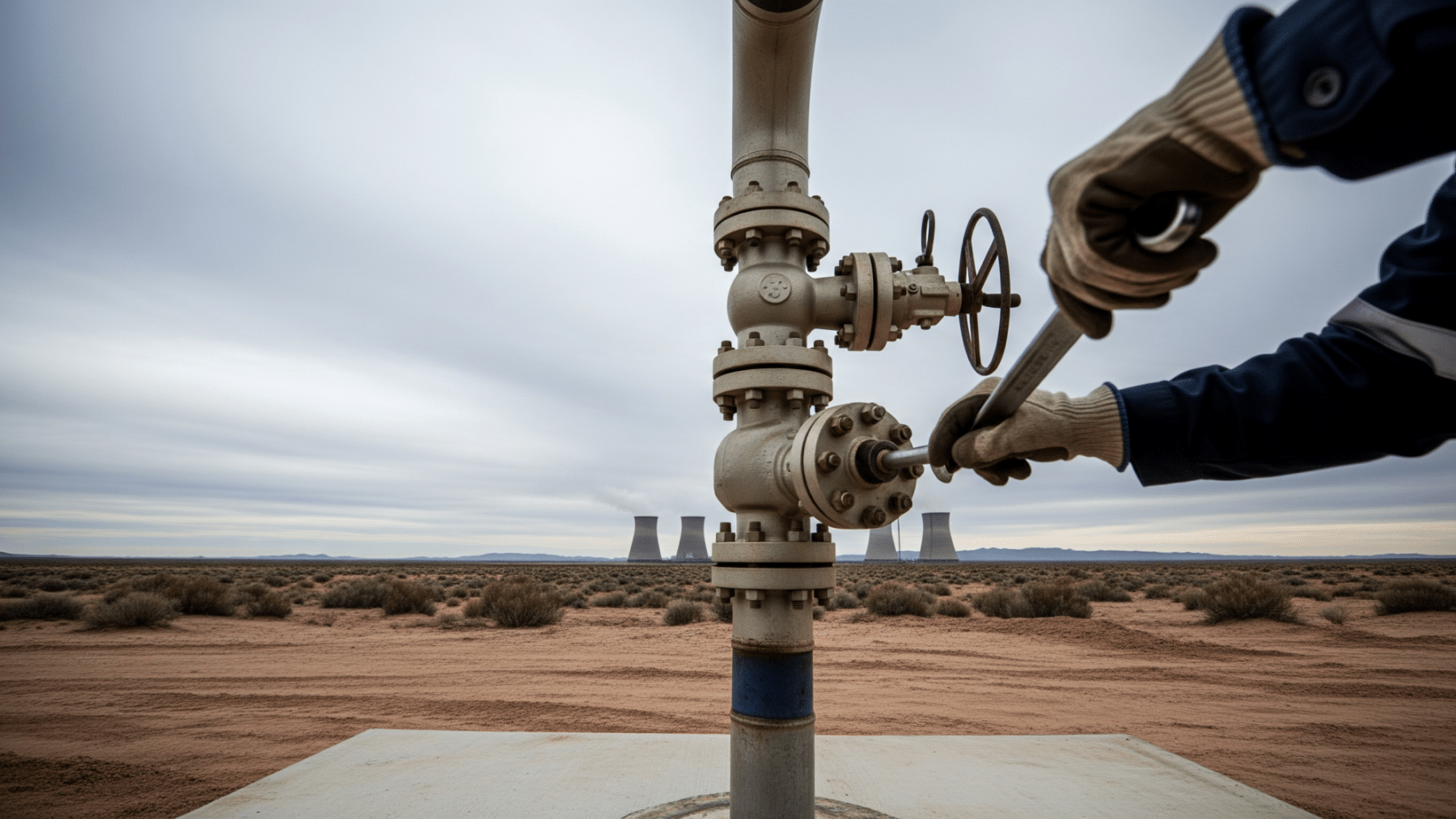
A geothermal power plant in rural New Mexico that was approaching the limits of economical operation is now running at full capacity, and the single new well that rescued it has been recognized by the company as a U.S. productivity record. Geothermal startup Zanskar, which acquired the Lightning Dock facility from Cyrq Energy on May 29, 2024, confirmed this year that the plant has completed a full year of stable operations after a turnaround driven by AI-powered subsurface modeling and modern drilling technology.
A plant on the edge of shutdown
When Zanskar purchased the Lightning Dock plant, the facility was failing fast: the water coming from the underground reservoir was getting colder by the day, making the plant uneconomical to run. The geothermal field had been put up for sale due to underperformance issues. The on-site 15-megawatt power plant supplies electricity to the Public Service Company of New Mexico (PNM) as carbon-free, firm baseload power.
Lightning Dock is notable as the easternmost geothermal power plant in the United States and as the only utility-scale geothermal power plant operating in New Mexico, having replaced the original Dale Burgett power plant in 2019. Electricity generated at Lightning Dock supplies PNM with carbon-free, firm baseload power for their customers around the state.
When Zanskar mapped the underground conditions at Lightning Dock using advanced modeling techniques, the company discovered that the existing wells were only hitting the very top of the reservoir. Those production wells were quite shallow, at just 2,500 feet deep, and not in the best location, according to Joel Edwards, Zanskar’s cofounder and CTO.
8,000-foot well, record-breaking results
The company’s modeling predicted that drilling another, deeper well in a new location would allow the plant to run efficiently. The directional well was drilled into a fracture zone at 7,500, 8,000 feet deep. With a high-flow pump installed, the well was modeled to produce around 5,000 GPM at 330°F. The new well reached a depth of 8,000 feet and started operation in May 2025.
Zanskar has now repowered the Lightning Dock geothermal power plant in New Mexico, with the full 15-MW capacity delivered by a newly drilled production well, powering the entire plant with just that single production well.
Zanskar further validated the thesis that there are still conventional geothermal resources that are untapped and being overlooked. Drilling achievements included faster drilling using PDC bits, precision steering and oversized intermediate casing to allow the installation of a large-capacity line-shaft pump, deviated drilling, and stochastic resource modeling. The well has been described by Zanskar as the most productive pumped geothermal well in the United States.
The new production well was drilled and tested less than eight months after the acquisition. To help make better bets on drilling, Zanskar uses artificial intelligence to identify sites with ample geothermal potential but few surface indications of their viability. The company says that same modeling helped pinpoint where to most productively drill at the Lightning Dock site. Over the past year the plant has hosted researchers and members of Congress.
Investor confidence and a broader model
Following the turnaround at Lightning Dock and a record-setting year of geothermal discoveries, Zanskar announced a $115 million Series C funding round led by Spring Lane Capital on January 21, 2026. With this raise, Zanskar’s total equity funding reached $180 million.
The company is actively deploying the same discovery model across a growing portfolio of newly discovered or overlooked sites, with the goal of developing, building, owning, and operating high-grade geothermal assets as a foundational component of the modern grid.
The Lightning Dock result arrives as grid planners are contending with surging load growth that places a premium on firm, dispatchable generation that can run around the clock regardless of weather.
What Lightning Dock signals for aging geothermal stock
Zanskar remains committed to the perspective that hydrothermal resources can be more productive than previously determined by the industry, and that modern tools and technologies will help to tap deeper into these resources and target them more accurately and precisely. With advanced modeling and modern drilling technology, the company was able to identify a better well site, drill down thousands of feet, and revive the entire operation.
The implication for the wider industry is significant: dozens of conventional geothermal plants across the American West are operating with aging or underperforming well stock, and AI-guided redrilling could extend their productive lives without greenfield development.
Meanwhile, newer closed-loop geothermal pilots are targeting additional plant types. The Department of Defense has separately partnered with geothermal developers to build enhanced geothermal plants at military bases across the western United States.
The DOE has also opened a $171.5 million funding round for next-generation geothermal field tests, signaling that federal investment in the sector is accelerating alongside private capital. For Lightning Dock, the immediate question is whether Zanskar can replicate the same approach at the Nevada sites it has already flagged as candidates.
