General Motors has detailed a fourth-generation electric vehicle platform built around a new battery chemistry the automaker says will deliver roughly 20 percent more driving range for every kilowatt-hour of energy stored.
The company unveiled the plan at its GM Forward event in New York, calling the new cells the world’s first production lithium manganese rich battery.
What GM announced
GM’s fourth-generation EV platform sports a “world’s first” production lithium manganese-rich (LMR) battery, alongside more efficient electric propulsion and centralized computing. The platform also includes an updated version of GM’s Super Cruise driver-assistance system.
Paired with new drive units and better aerodynamics, the platform should deliver approximately 20% more range per kilowatt-hour.
GM said the battery pack is 20% more compact, the vehicle is expected to be 15% lighter and 25% more aerodynamic, and the drive units use 40% fewer parts, cutting complexity.
GM President Mark Reuss told the New York audience that the technology “will appear in our highest volume segments, and it’s a great example of how we’re bringing battery innovation to mass market EVs, with lower costs, long range, and improved performance,” with a focus on crossover SUVs. Electrive reported that Reuss described the platform’s launch as “very imminent.”
Where the batteries will be built
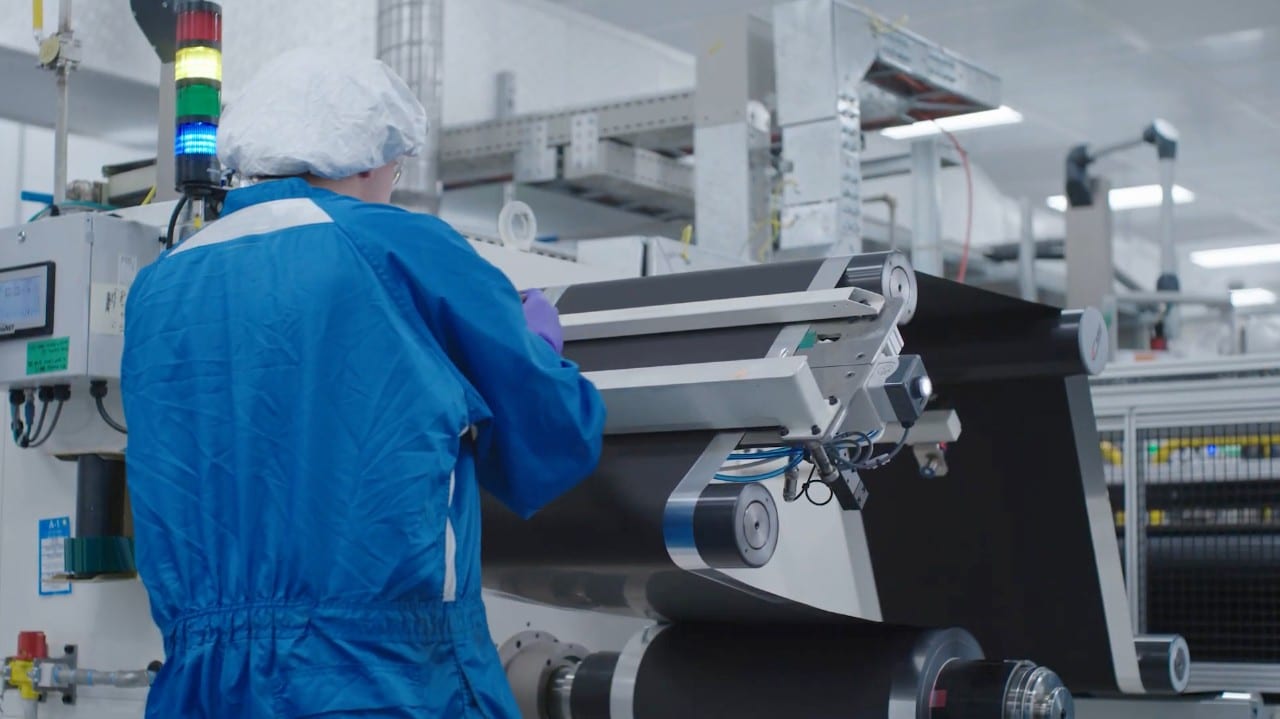
At the heart of the platform is LMR battery chemistry in prismatic cells produced by GM’s Ultium Cells joint venture with LG Energy Solution in Spring Hill, Tennessee.
That plant is separate from the Brownstown plant GM has said it will shut down as its lease runs out in 2027.
Earlier this month, the partners were reported to be moving into commercial LMR production at the Tennessee plant, with output due to start in 2028 and 500 new jobs expected, adding to the plant’s current workforce of 1,200 employees.
Chief Product Officer Sterling Anderson said GM will rely solely on LMR cells to power those EVs, according to CNBC. Anderson has said the heavy use of computer simulation in developing the platform reflects a broader shift at GM, saying the approach meant engineers went “from a battery pack concept to formal program approval in just one month, a process that used to take much longer.”
Why the chemistry matters
LMR batteries swap much of the nickel and cobalt used in conventional high-performance EV cells for manganese, a cheaper and more widely available metal.
LMR cells use manganese as their main element, with less nickel and almost no cobalt compared with nickel-manganese-cobalt (NMC) cells. The chemistry has been held back by voltage fade, a loss of performance over repeated charging.
In February, GM vice president of battery, propulsion and sustainability Kurt Kelty said the company had overcome voltage fade and expected its first LMR-powered vehicles in 2028.
GM designed the LMR prismatic cells to deliver 33% greater energy density than lithium iron phosphate (LFP) chemistry, today’s leading low-cost battery technology, at a comparable cost.
That density edge matters because LFP has become a popular lower-cost option elsewhere in the industry, including at GM’s own Michigan cell plant that began making LFP cells this year.
A faster design process
GM also described a heavily simulated engineering process behind the new chemistry. Developing a new battery chemistry traditionally means building and physically testing hundreds or thousands of cell designs, a process that can take years.
General Motors says it virtually tested more than 300,000 electric vehicle battery designs before building a physical prototype, helping the US automaker move from its first battery-pack concept to formal program approval in just one month.
GM has not named specific models, pricing or a firm on-sale date for vehicles riding on the fourth-generation platform.
When GM and LG unveiled LMR in May 2025, it was aimed at full-size electric trucks and SUVs starting in 2028, but GM now says it plans to use LMR in its highest-volume EV segments, where range, durability, and affordability matter most.
The company’s next-generation central computer is set to debut in 2028 on the Cadillac Escalade IQ, followed by GM’s full-size trucks and SUVs, its three-row crossovers, and its fourth-generation EVs.
