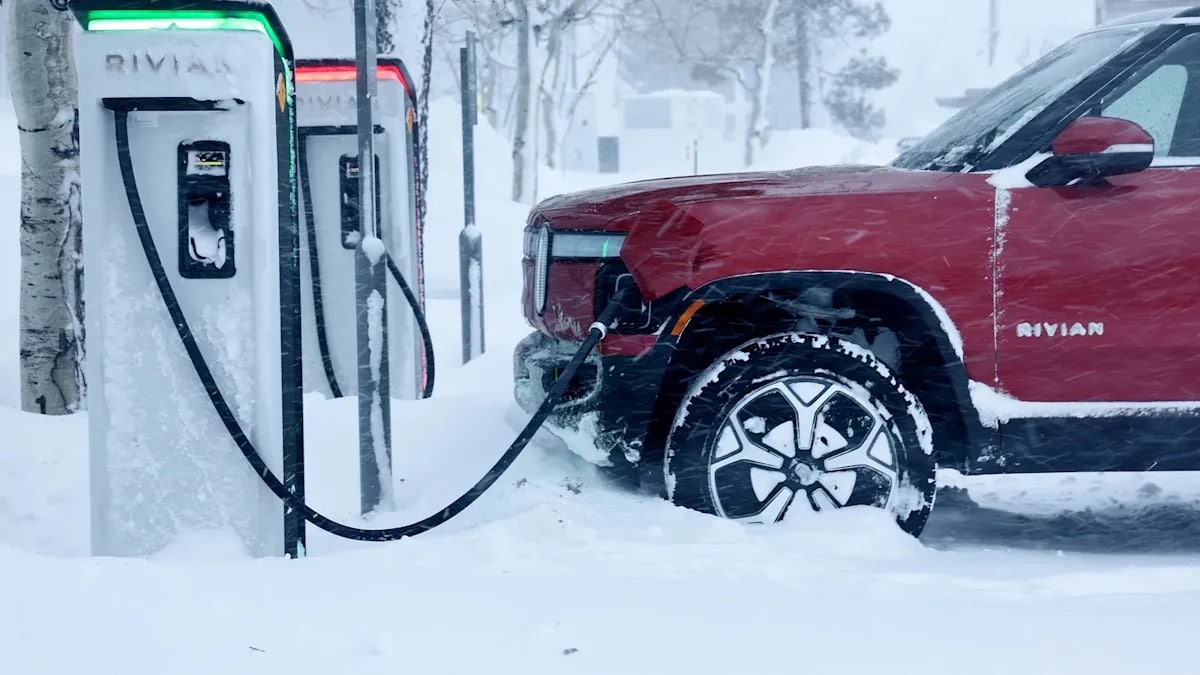
A driveway charger clicks on at midnight, then quietly clicks off again before sunrise, obeying a schedule its owner never set.
That small handoff of control is the entire premise of managed charging.
Utilities have spent years building pilot programs around it.
They hoped drivers would gladly trade a few dollars for the chance to let the grid decide when their car refills.
A new test just came back with an answer nobody in the industry wanted.
So why did almost nobody take the deal, even when the deal paid cash every month?
Why most EV owners wave off the offer
The logic behind managed charging sounds simple enough. A utility gets remote visibility into a car’s charging session and can nudge, delay or throttle it by a few hours, smoothing a demand spike without the driver noticing much difference by morning.
In exchange, the household gets a monthly cash incentive, sometimes paired with a cheaper rate for plugging in overnight. The pitch looks like easy money for almost no effort.
Yet most drivers simply ignore mail and app notifications about a new charging program. And because utilities cannot force anyone onto a non-default program, that indifference becomes a hard ceiling on how much flexibility they can buy this way, no matter how the offer is packaged.
What the offer actually looked like on the ground
The experiment did not lowball its pitch. Some households were offered monthly incentive levels of $0, $5, $20, or $40, with the top tier worth a meaningful slice of the average bill, roughly 15 percent of a typical monthly charge. A $40-per-month incentive is approximately 15% of the total monthly electricity bill , so a driver could have pocketed several hundred dollars a year for doing almost nothing beyond letting the utility see and occasionally adjust a session.
Even so, the response barely moved. At the lowest rung, only about 1.0% of households enrolled in managed charging at a $0 incentive. At $40 per month, only 4.6% of households chose to enroll .
Quadrupling the top incentive lifted participation by less than four points. That flat curve unsettles planners who expect incentives to scale demand. Enrollment stayed below 5%, even among households offered the highest incentive of $40 per month.
The hard evidence behind the headline number
The newest findings come from an economics working paper titled If You Build It, They May Not Come, circulated through the National Bureau of Economic Research. The study was run with Peninsula Clean Energy, one of dozens of community choice aggregators that have taken a large share of electricity retail service, serving San Mateo County on the San Francisco Peninsula, a region with one of the highest EV adoption rates in the country. Earlier studies on managed charging only measured impacts among households who volunteer for a randomized trial, which flattered the results.
This team instead tested the full experimental sample of 12,174 households , not a self-selected group of volunteers, and found enrollment stayed low even with high incentives. The researchers write that they can reject even modest effects on electricity consumption once every offered customer is counted, whether or not they joined.
A related detail explains part of the shortfall. Even households that opted into the program rarely activated managed charging once enrolled, and in fact 20 percent of households who opted into the program never granted access. That pattern shows households have a preference for control over their own EV charging.
So the bottleneck looks less like privacy and more like a reluctance to cede day-to-day control, even among people who had already agreed to join. With so few households choosing to enroll, the managed charging program had no statistically significant impact on overall electricity use.
Where this runs into a bigger complication
None of this means managed charging is worthless. It means voluntary, opt-in programs specifically struggle to reach the scale utilities need, and that distinction is reshaping strategy across the industry.
Some grid operators are already pivoting toward automatic price signals instead of asking for active enrollment at all. San Diego Gas and Electric offers the clearest example already on the books. Its revised EV-TOU-5 plan, effective August 1, 2026, prices super-off-peak electricity at 13.1 cents per kilowatt-hour and on-peak power at 80.2 cents per kilowatt-hour , a gap analysts describe as a sixfold price swing built to redirect charging away from the hours that strain the grid hardest.
No app, no enrollment form, no incentive check required. That approach sidesteps the entire participation problem these researchers uncovered.
Other utilities are testing a middle path, tying a rate discount to acceptance of managed charging as a condition rather than an optional add-on. North Carolina’s electric cooperatives have been piloting telematics charging programs built directly into the ownership experience.
What it means for drivers and for the grid ahead
For an ordinary EV owner, the practical takeaway is almost reassuring. Nobody is about to lose control of when their car charges without a clear opt-in and a real financial reason to accept it.
For utilities, the lesson lands differently and more urgently. Record summer peaks across several regional grids have already raised the pressure to manage EV load more precisely, as detailed in GCN’s earlier look at record grid peaks.
A tool that reaches only single-digit participation cannot carry that weight alone. That is why the steep, automatic rate design looks like the stronger bet going forward.
The honest state of the science is a split verdict. Managed charging works for the households who choose it and fully participate, delivering real savings and real load shifts. It simply cannot be assumed to scale through good intentions and a cash incentive alone.
