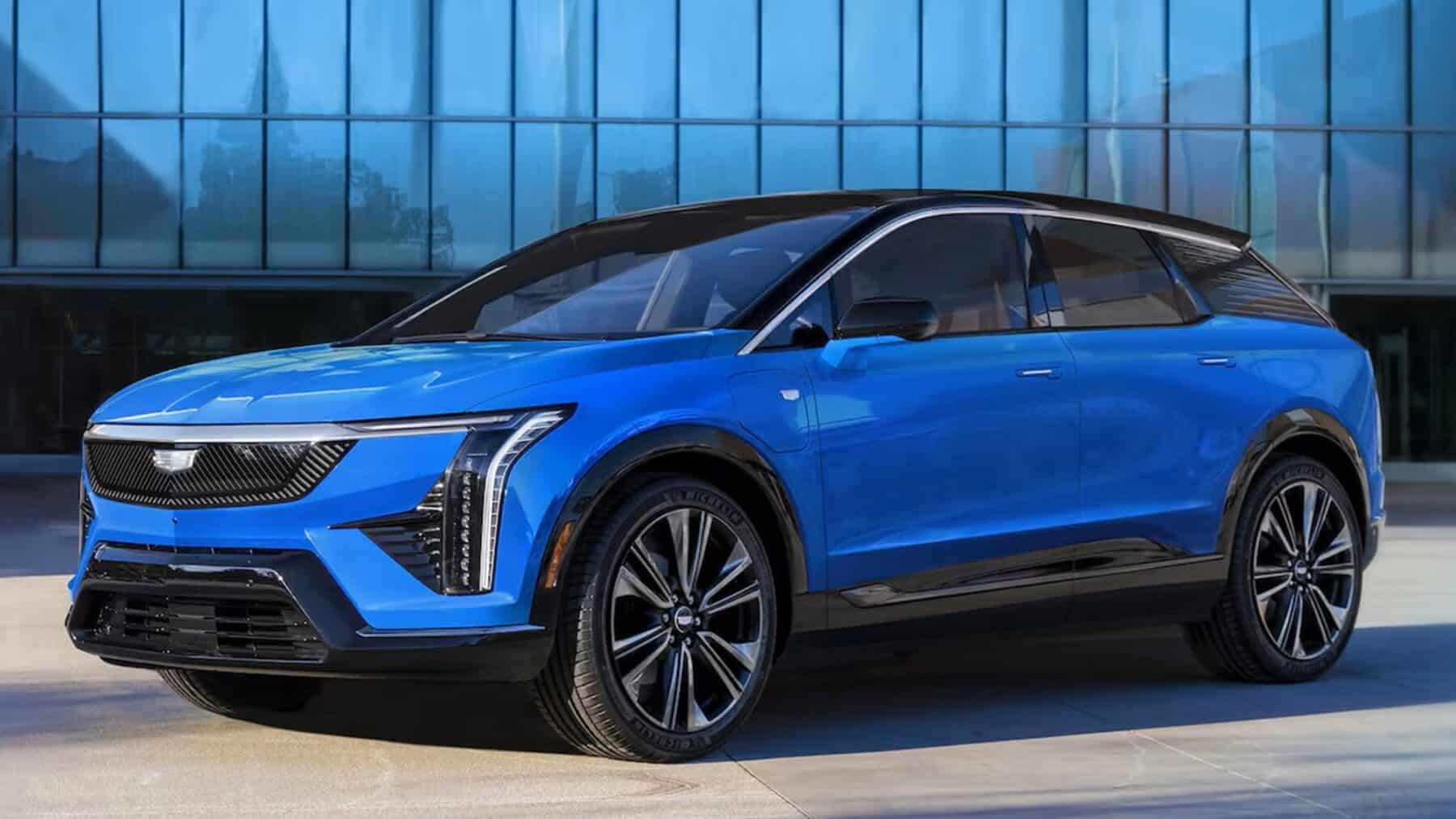
General Motors is recalling nearly 30,000 Cadillac OPTIQ electric SUVs in the United States over a software issue that could prevent the front windows from detecting an obstruction when being closed remotely. The recall campaign was filed on September 24, 2026, and covers 29,347 OPTIQs from the 2025, 2026 and 2027 model years.
What the defect does
The issue is limited to a specific situation involving the key fob’s express-up function. When the front windows are remotely closed, they may fail to stop and reverse if an obstruction is encountered during the final 13 mm of travel.
When the front windows are closed using the key fob’s express-up function, they may fail to detect an obstruction and reverse direction, meaning the vehicles fail to conform to Federal Motor Vehicle Safety Standard (FMVSS) No. 118, “Power-Operated Window Systems.”
That standard requires windows that close automatically to stop and reverse before exerting a squeezing force of 100 newtons or more on a test rod placed in their path. GM filed the recall as a failure to comply with FMVSS No. 118 rather than as a safety defect, and said it was not aware of any field complaints linked to the condition.
How the fault was found
On June 26, 2026, GM detected the issue through a dealer who noticed that the power windows on the Cadillac OPTIQ would not properly stop when they encountered an object while the express-up feature was activated using the vehicle’s key fob. A quality manager analyzed the report and escalated the issue through GM’s Speak Up For Safety program on June 26, 2026.
The closure hardware team subsequently tested five vehicles using the FMVSS 118 procedure, varying the angle of the cylindrical test rod. Four of those five OPTIQ crossovers failed to consistently meet the federal requirements.
GM blamed a calibration set by its supplier, Kwangjin America, of Warren, Michigan. The upper travel range for the anti-pinch system had been set too low, preventing the system from consistently meeting the required stop-and-reverse performance.
Scope of the recall
The recall covers the 2025, 2026 and 2027 model years, and covers vehicles built between July 24, 2024, and September 22, 2026.
The recall includes 12,558 vehicles from the 2025 model year, 10,201 from the 2026 model year, and 6,588 from the 2027 model year. GM’s filing states that 100 percent of all units in that production window carry the fault.
The OPTIQ is GM’s entry-level Cadillac electric SUV.
A separate recall campaign this week covered 1,559 Chevrolet Silverado and GMC Sierra trucks from the 2016 and 2017 model years because the roof-rail airbag inflators may have a manufacturing defect that can cause the inflator end cap to separate or the inflator sidewall to rupture. The OPTIQ recall is the larger action, and it arrives at a time when federal regulators are tracking a wave of software-related safety non-compliance filings across the industry.
The fix and what owners should do
The recall will not require any new hardware. GM will revise the front door window software calibrations in the body control module free of charge. All affected owners can have the updated software installed at a GM dealership, with an over-the-air update also offered for vehicles that support wireless software installation.
GM has already identified the issue on its production line and made the necessary calibrations at the OPTIQ assembly plant on September 22, 2026.
Owner notification letters are expected to be mailed by November 9, 2026. Owners may contact Cadillac customer service at 1-800-458-8006 and reference GM recall N262567230.
Vehicle Identification Numbers involved in this recall became searchable on NHTSA.gov on September 24, 2026. Owners can also look up their VIN directly at NHTSA’s recall portal under campaign number 26V612000. Eligible owners who receive a wireless software prompt should accept the update immediately.
The OPTIQ case underscores how supplier-set calibrations in complex vehicle software chains can escape notice until field testing reveals a compliance gap, a pattern that has prompted NHTSA to expand its scrutiny of electronic and software-driven defects across passenger vehicles in recent months.
