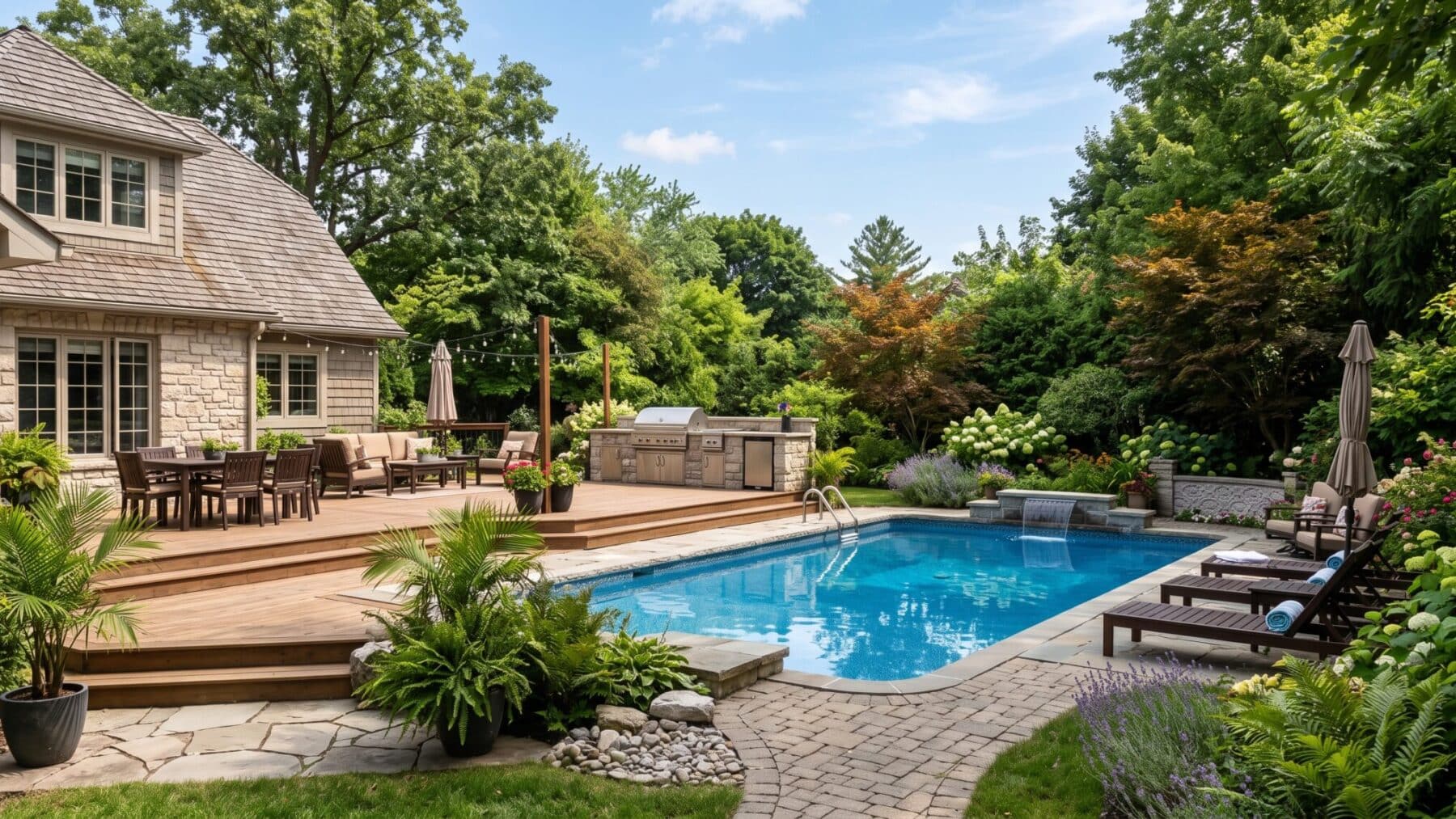
American homeowners are reorienting their backyard renovation priorities away from future resale returns and toward their own day-to-day comfort, according to the 2026 Houzz Outdoor Trends Study. The shift marks a measurable and continuing break from the investment-driven calculus that once guided most outdoor improvement decisions.
Resale motivation falls, comfort motivation climbs
The study draws on findings from a survey of 1,191 U.S. homeowners on Houzz about their recent or planned outdoor and exterior renovation projects.
The share motivated by making their spaces more accommodating rose to 25%, up from 22% in the 2024 edition of the same study, while those renovating to improve resale value fell to 15%, down from 18% in 2024.
The share of homeowners citing deteriorated or broken outdoor elements as a renovation trigger held steady at 41%, remaining the single top motivator overall.
The share of renovating homeowners looking to improve resale value and those acting because they finally had the time both declined by three percentage points each. Motivations tied to personalizing a recently purchased home and finding recent inspiration remained relatively stable.
Homeowners are transforming their backyards into destinations for gathering, unwinding and enjoying the outdoors, with personal enjoyment taking priority over resale considerations for many renovation projects. That behavioral shift is playing out in the specific features homeowners choose to install.
What renovated backyards now look like
Lounge or seating areas are the most common outdoor living space, included by more than four in five renovating homeowners at 83%, followed by dining areas at 55%, quiet retreats or reading areas at 53%, gardening areas at 49%, and outdoor cooking areas at 48%.
In 2026, over 80% of all renovated outdoor areas include seating, with 71% featuring sofa or lounge chairs. Homeowners are also investing in features that extend the usability of these spaces beyond daylight hours, with two-thirds (66%) of lounge areas incorporating outdoor lighting.
The most significant shift in home exterior accents is in the share of homeowners citing a preference for beams, which jumped by 24 percentage points to reach 43%.
The share of homeowners choosing to replace their original lawn with natural grass has dropped by 9 percentage points, to 63%, since 2024.
Synthetic turf installations rose 10 percentage points to 19%, while hardscaping projects increased 7 percentage points to 57% and mulch grew in popularity, rising 5 percentage points to 51%. Nearly half of homeowners upgrading their lawn areas, at 48%, are incorporating garden beds. The data points toward homeowners prioritizing low-maintenance surfaces that free up time to actually use their outdoor spaces.
A tighter housing market shapes the decision
Among homeowners, 41% say high interest rates have led them to view their current house as a forever home, according to a separate 2026 survey by IPX1031. While many Americans still believe in the long-term value of owning a home, most feel locked out of the housing market due to rising costs, interest rates, and economic uncertainty. When selling is off the table, improving for resale loses its logic, and improving for personal use becomes the rational alternative.
More than 3 in 5, or 62%, of Americans say buying a home in 2026 is unrealistic.
That sense of being anchored in place may be accelerating investment in the home one already has.
The outdoor living shift also connects to broader questions about how Americans balance time and money at home. Research on full-time working parents has found that more than half say their job makes being present at home harder, underscoring why a functional, comfortable backyard carries real everyday value for families who carve out limited time there.
For households also navigating the reality that most grocery shoppers still favor the physical store and other routine in-person rituals, a well-designed outdoor space represents an extension of domestic life rather than a speculative investment.
What the trend means for the renovation market
The findings suggest homeowners are investing in outdoor spaces with long-term lifestyle goals in mind, and whether they are creating a lounge area, an outdoor kitchen, or a low-maintenance landscape, the focus in 2026 is making the outdoors feel like home.
The Houzz study surveyed 1,191 U.S. homeowners on Houzz between April 25 and May 6, 2026, who recently completed, were undertaking, or were planning an outdoor renovation. Houzz describes itself as the AI-powered software platform for home construction and design. The study was published in June 2026.
For contractors and outdoor living suppliers, the data signals a consumer who is building to stay, not to sell, and who will measure the return on a new patio or pergola in seasons of use rather than in dollars at closing.
