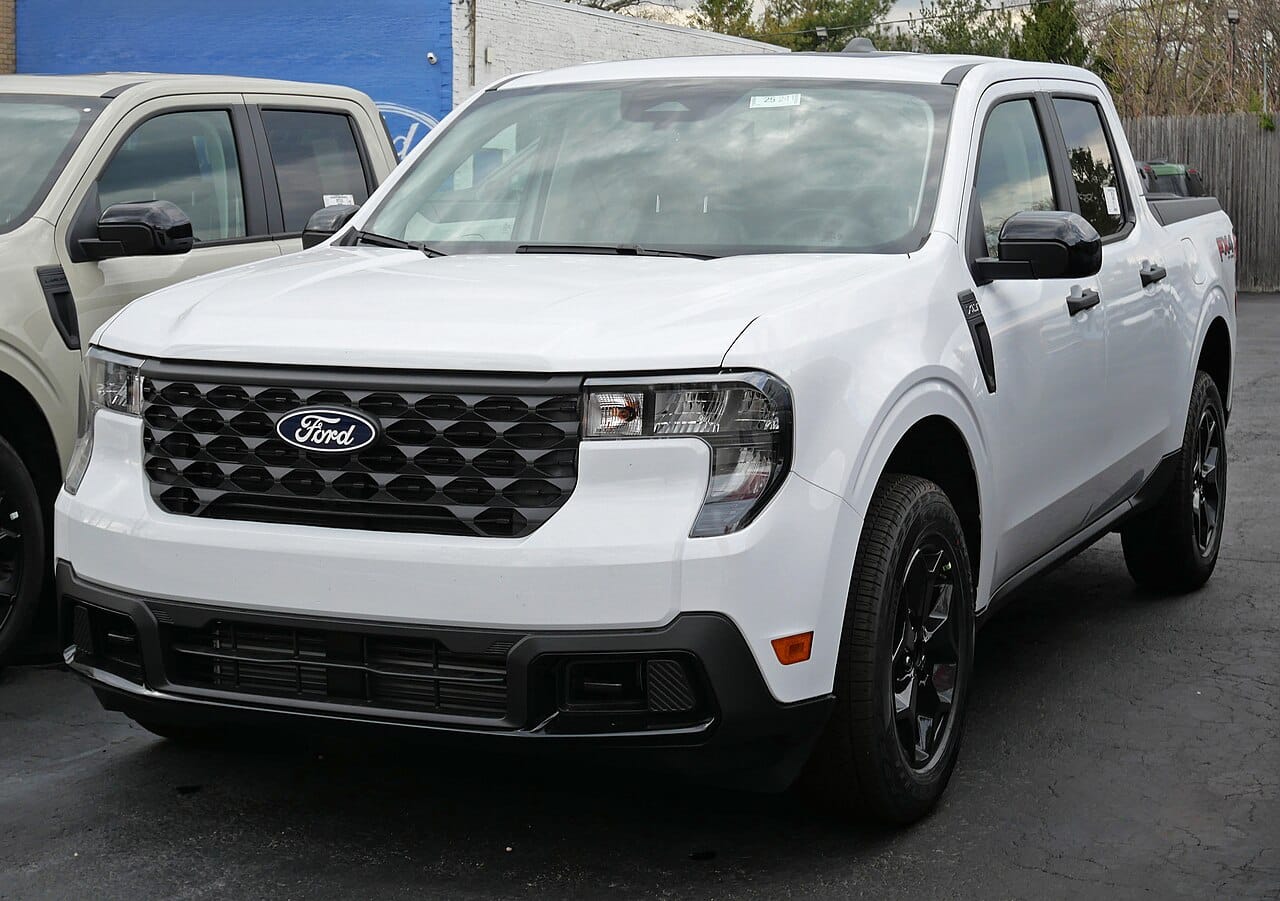
A compact pickup truck rolls off a transport trailer onto a dealer lot, its hood badge quietly announcing a gas-electric drivetrain.
Down the row sit its gasoline siblings, unsold a little longer this season.
Inside the showroom, a sales manager checks a tablet tracking which powertrain actually moves.
Three states away, a rival automaker’s hybrid crossovers are vanishing just as fast.
The numbers behind both lots just rewrote who leads America’s hybrid race.
Why one model can surge while a company’s hybrid total falls
The split comes down to lineup breadth versus single models. A single hot nameplate can post a blowout quarter even while a company’s broader hybrid business shrinks, because the overall total depends on how many hybrid models a brand actually sells.
That is exactly the mechanism playing out at Ford right now. Hybrid vehicle sales totaled 44,308 units, down 19.7 percent, yet the automaker also set a third-quarter record with 27,793 Maverick Hybrid trucks, up 59.6 percent.
So how do both things happen at once? Ford is phasing out other models that used to carry hybrid volume, including the Escape, even as the Maverick Hybrid alone keeps setting records. Adjusting for the planned phase-out of Escape and Corsair, Ford estimates its retail share increased approximately 0.4 percentage points year over year to 12.1 percent. Rivals with newer, wider hybrid lineups are catching the exact buyers Ford is losing elsewhere.
Which brings in the other half of the story. That monthly gap of roughly 10,000 hybrids goes a long way toward explaining why Hyundai Motor Group is now forecast to outsell Ford in the third quarter and take Ford’s No. 3 spot in U.S. sales, behind General Motors and Toyota. That gap is what let a rival briefly leapfrog a Detroit giant in the US sales rankings.
Inside the numbers that moved an entire sales ranking
Picture a dealership lot in August, where Hyundai and Kia stores were quietly closing the gap with Ford on overall sales, driven in large part by hybrids. Hyundai Motor was expected to outsell Ford in quarterly sales for the first time ever, according to a forecast from Cox Automotive, and Cox analysts said Ford and General Motors were seeing sales lag because they don’t have many hybrid vehicles. Hyundai’s August hybrid sales jumped 33 percent, representing 29 percent of total sales, roughly 25,000 hybrids out of August total sales of 86,977.
That imbalance showed up fast in the bigger picture. Hyundai Motor Group outsold Ford in the United States for the second consecutive month, claiming third place in monthly market share in both July and August.
Even so, the lead stayed thin enough to flip again within weeks.
Because the margin was so tight, a single strong month could swing it back. Hyundai Motor Group failed to overtake Ford for third place in U.S. auto sales in the third quarter, after Ford posted surprise results in September and reclaimed the position in the quarterly rankings. Ford’s own third quarter sales release confirms the recovery came from trucks and large SUVs, not from hybrids broadly. Ford took third place with 509,764 vehicles, about 3,500 more than the Korean group, a gap smaller than a single week of Maverick production.
The hard numbers behind the swing, and where they came from
Before any of this reached dealer lots, it showed up in federal and company sales filings. Ford’s own 8-K sales release to the Securities and Exchange Commission, covering the quarter ended in September, is the primary record behind the Maverick figures and the broader hybrid decline cited above.
That filing also shows how concentrated Ford’s hybrid strength has become. Year-to-date sales of 74,300 pickups also set a record for the Maverick Hybrid, and just over 60 percent of Ford Maverick buyers are picking the hybrid this year. The F-150 Hybrid added to that tally, with F-150 Hybrid sales totaling 34,527 trucks through September.
Across the wider industry, the trend behind both companies is the same one driving GM’s own hybrid rethink, detailed in a record hybrid share this year.
Cox Automotive reported hybrid vehicle sales from the second quarter of this year increased 23 percent from a year earlier to represent a record 16.3 percent of U.S. sales from April through June, compared with roughly 5.8 percent of sales for EVs. Hyundai’s side of the filing tells a parallel story, with its August sales release showing 86,977 total sales and record August hybrid sales up 33 percent, representing 29 percent of total sales, while Kia reported hybrid sales climbing 99 percent, with the Sportage Hybrid up 40 percent.
Where the pattern breaks down and what still favors Ford
None of this means Ford is losing the broader race. Even with hybrids sliding, Ford’s truck business kept its footing, and the company’s pickup dominance remains largely untouched by the hybrid swing happening elsewhere in its lineup. F-Series sales totaled 561,508 trucks through September, more than 140,000 ahead of Chevrolet Silverado.
Because Ford’s hybrid sales are concentrated in just two models, the company is more exposed to any slowdown in truck demand than a rival spreading hybrids across sedans, crossovers and SUVs. That concentration cuts both ways, inflating single model records while shrinking the company total.
Yet the ranking battle proved less durable than headlines suggested. Hyundai Motor Group had been expected to pass Ford and reach third place for the first time on a quarterly basis, after its monthly sales in July and August topped Ford’s, but Ford held the position after recording sales above forecasts for the month of September.
So the lesson is less about one company losing and more about how thin the margins have become industry wide, a shift connected to broader strategy moves like the bundled tech features automakers now use to win loyalty beyond the powertrain itself.
What the swing means for buyers and the rest of the industry
For shoppers, the practical effect is simple: hybrid trucks and crossovers are getting harder to find at a discount, because demand is outrunning the dealer allocations automakers planned months ago. Ford’s own release points to Maverick Hybrid demand outpacing supply, a trend buyers are already noticing at the curb.
That scarcity is also reshaping how automakers plan future plants and model years. Executives who once treated hybrids as a bridge technology are now treating them as a core profit center, a shift driven by jumping hybrid sales in the U.S. amid dimming EV demand, inflated gas prices and more offerings in the market.
Even so, nothing here is settled. Monthly rankings swung twice in two months, and hybrid demand remains uneven model by model. What is clear is that hybrids, once an afterthought, now decide which automaker gets to call itself America’s third best seller.
