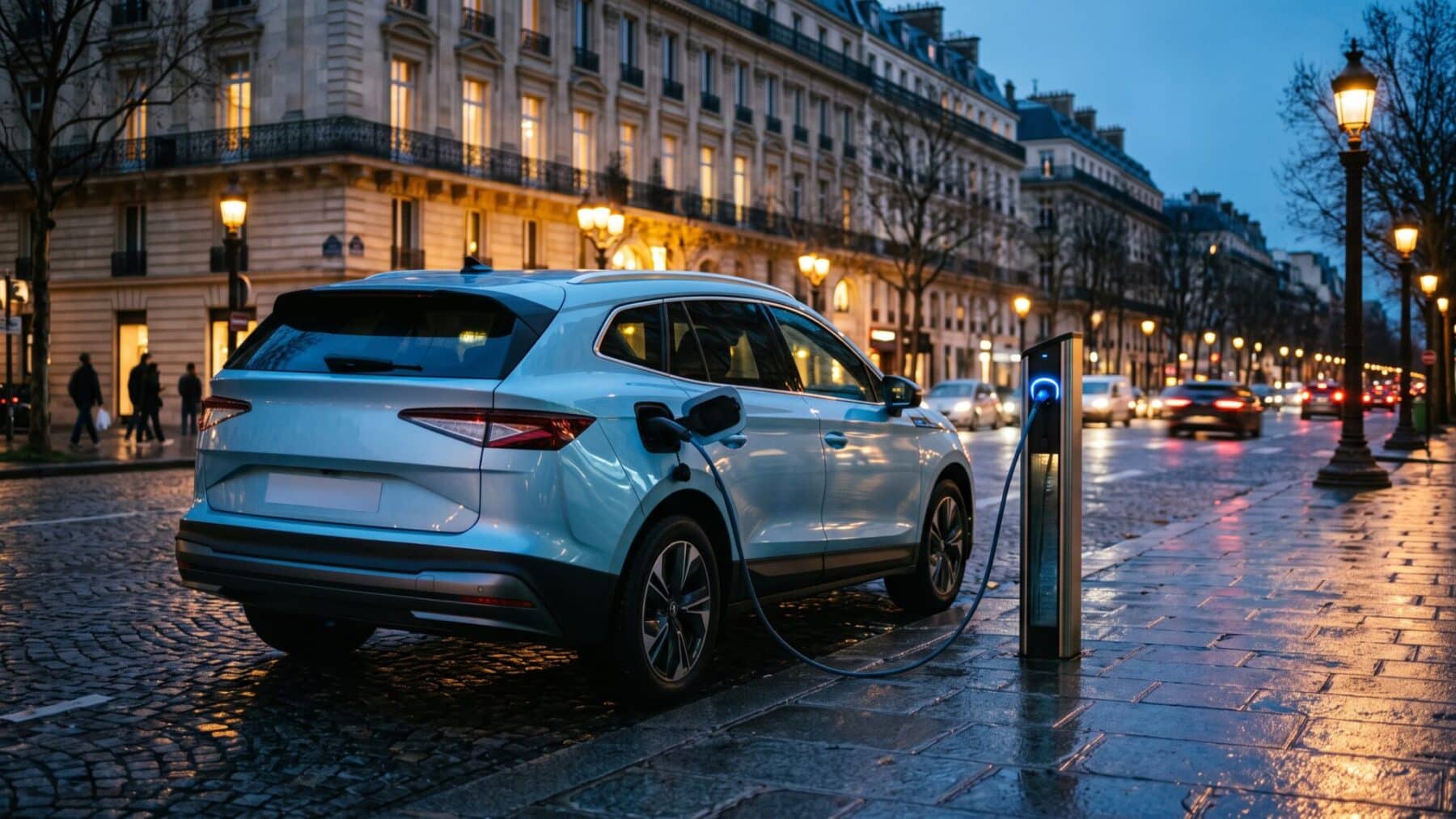
Picture the window sticker: under $37,000, up to 314 miles, and a charging port that plugs straight into a Tesla Supercharger without an adapter.
That is the machine that rewrote the US sales chart this spring.
It sat at the bottom of the EV rankings not long ago. Now it is sitting at number four.
What changed inside it that made the numbers move so fast?
How a ground-up redesign turned a slow seller into a chart climber
The 2026 Toyota bZ arrived as a fundamentally different vehicle from the model it replaced. The most important number is range: the long-range front-wheel-drive version now carries an EPA rating of 314 miles, up from just 252 miles on the outgoing model. Toyota delivered that gain without raising the price of the top front-wheel-drive trim by much.
The base model dropped by over $2,000, landing at $36,350 before discounts. That combination, more range, lower price, is precisely what EV shoppers have said in survey after survey they need before they commit.
But the third change may matter most at the charging station. The 2026 model adds battery preconditioning and a standard NACS port, so drivers can use Tesla Superchargers without an adapter. That opens access to the largest fast-charging footprint in America, virtually overnight, at no extra cost.
Where the bZ stands on the US sales chart right now
The Toyota bZ took fourth place in US EV sales during the first half of this year with 17,553 units sold, up 90 percent year-on-year. The Chevy Equinox EV ranked fifth with 16,249 units. Outside of Tesla, the Hyundai IONIQ 5 led all EVs with 20,730 units.
To understand how striking that positioning is, consider what the bZ is sitting beside on the Toyota lot. The electric SUV is now outselling the Land Cruiser, which moved 16,412 units in the same period, and the Sequoia, which reached 13,939. An EV that once trailed the gas lineup is now leading parts of it.
With the new C-HR and bZ Woodland also on sale, Toyota moved 21,855 EVs in total in the first half of the year. The bZ alone accounts for the vast majority of that figure.
The evidence behind the 90 percent gain
Toyota reported selling 10,029 units of the bZ from January through March, a roughly 79 percent gain over the same quarter last year. That result was enough to push the bZ past both the Equinox EV and the IONIQ 5 in a single quarter, making it the third-best-selling EV in the US behind only the two Tesla models, something almost no analyst had forecast entering the year.
Then momentum held. First-half sales reached 17,553, up 90 percent. The Equinox EV, by contrast, shed 41 percent of its volume over the same period. You can see how EV incentive pressure is squeezing the segment broadly, which makes the bZ’s gain against that headwind more striking.
The bZ carries a 57.7-kWh pack on the base front-wheel-drive trim and a larger 74.7-kWh pack on higher trims, with DC fast-charging peak rates of 150 kW. Those are competitive numbers at a price that undercuts most rivals.
Where the bZ still falls short
The 90 percent gain is real, but the ranking table has limits worth understanding. Toyota’s electric SUV sits fourth, behind the Tesla Model Y, Model 3, and IONIQ 5. The gap to the IONIQ 5 is roughly 3,000 units, and the gap to Tesla’s dominance is a different category entirely.
The bZ also carries notable feature gaps that reviewers have flagged consistently. The lack of one-pedal driving and built-in route planning remain persistent criticisms. Both are features that competing platforms from Hyundai and General Motors have offered for years, and their absence matters most on long trips where route planning saves real time at the charger.
The competitive landscape is not standing still either. A major overhaul of the Equinox EV is reportedly on the way, and Tesla’s expanded Model Y lineup now pushes into larger, more expensive territory. A larger, more capable segment is forming above the compact crossover class, and the bZ does not currently play in it.
What the bZ’s rise signals for the broader EV market
The pattern here is instructive beyond one nameplate. Several major brands reported significant year-over-year sales declines in the same period: the Ford Mustang Mach-E fell 47 percent and the Honda Prologue dropped 48 percent.
Against that backdrop, the bZ’s 90 percent climb reads as something more than a single model win. What it suggests is that the product specification floor has risen sharply. Buyers appear to be punishing any EV that falls below roughly 300 miles of range or prices above $40,000 without a compelling reason. The bZ cleared both bars at once, and the sales data rewarded it quickly.
For shoppers, the shift is straightforward good news. Starting under $37,000, the bZ sits among the more affordable EVs in America, and more competition at that price point means automakers cannot hold prices steady while delivering an underwhelming product. The bZ proved that in six months, and rivals are already responding.
