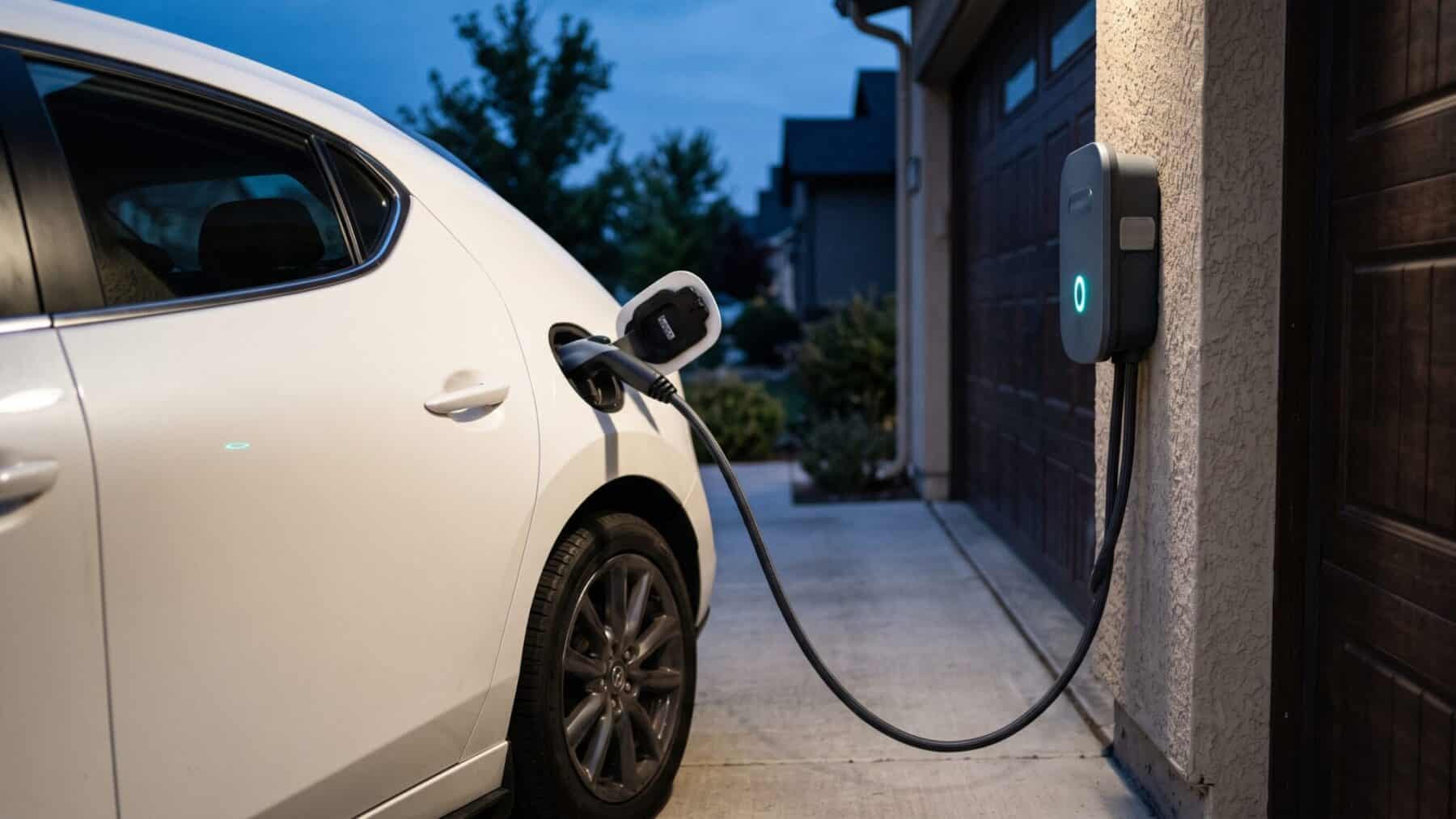
Picture millions of electric cars sitting in garages across America, every one of them drawing power from a grid already running thin on reserve margin.
Each night the same pattern plays out: drivers come home, plug in, and the local transformer absorbs the hit.
For years that was just how it worked.
This June, something shifted at the hardware and software level, and two major automakers turned those parked cars from load into resource.
So what is the mechanism that makes a parked car useful to the grid?
How a car sitting in a garage becomes a power source the utility can call on
The technology behind the shift comes in two flavors. Vehicle-to-grid capability lets a car push stored electricity back onto the network. Its simpler cousin, managed one-way charging, lets the utility slow or pause the draw on command. Both work on the same basic idea: the battery is large, the car sits idle most of the day, and the grid needs flexibility exactly when the vehicle is plugged in.
Those parked cars are simultaneously driving the need for grid upgrades and handing utilities a tool to defer those expenses. Managed charging strategies shift when EVs are charged to times of low power demand, making better use of the grid and deferring costly utility upgrades. By enabling utilities to meet additional electricity demand using their existing infrastructure, managed charging spreads fixed costs over a higher volume of electricity sales, lowering the cost per kilowatt-hour and putting downward pressure on rates.
That is why the financial argument is now landing in boardrooms rather than research labs.
What the hardware moves this June actually looked like on the ground
On June 16, Rivian partnered with ChargeScape, a vehicle-grid integration platform that supports utility managed and bidirectional charging programs across the country. Earlier that month, General Motors announced it would release a firmware update giving existing GM Energy vehicle-to-home systems full vehicle-to-grid capability with no hardware modification needed.
GM also announced a V2G pilot with DTE Energy, a Michigan investor-owned utility involving 30 GM employees, and active testing plans with Pacific Gas & Electric. Both moves landed within weeks of each other, compressing what analysts had projected as a multi-year rollout into a single month. For ordinary drivers, the pitch is lower monthly bills in exchange for letting the utility nudge their charging window by an hour or two overnight.
For the automakers, each enrolled vehicle is a recurring data and service relationship that outlasts the sale.
The numbers behind why utilities are moving this fast
The nearly 7 million electric vehicles in the United States are simultaneously driving the need for grid upgrades and providing utilities with a powerful tool to defer those expenses. US utilities are working with third-party software providers and automakers to develop and scale managed charging programs that can spread out the EV charging load and avoid creating peaks that stress local systems, helping to defer infrastructure upgrades that drive up rates.
The enrolled-vehicle counts underpinning these projections come from utility filings and grid impact studies conducted over the past two years, with the 30 percent upgrade deferral figure drawn from a managed-charging analysis cited by the US Department of Energy. As this site has reported, the IEA projects EV charging demand will exceed 1,500 TWh by 2035, roughly sixfold above current levels. And as electric truck depots near 15 megawatts of local grid demand, the pressure on distribution systems is arriving faster than most utilities planned.
The California Public Advocates Office reported in 2025 that EV charging management had a “significant” impact on costs for all three investor-owned utilities in the state, and that mass shifting of peak EV load away from peak hours could save between $5 billion and $18 billion in distribution costs by 2040.
Where the strategy runs into real limits today
The enrollment numbers tell the harder story. Bidirectional charging is only possible with certain vehicles and compatible charging equipment. Few V2G-capable models are on the market, and the regulatory landscape remains fragmented. A driver in one state can earn bill credits for lending their battery to the grid, while a driver two states over faces utility tariffs that make the same behavior pointless.
Standardized control protocols could make the hardware needed to scale active managed charging less expensive to interconnect, but that standardization is still in progress.
Fleet operators face a sharper version of the same constraint. Commercial charging sites pull far more power per location than residential plugs, and enrolling a fleet of parked semi-trucks in a managed program is a different engineering problem from nudging a commuter’s sedan overnight. The software platforms built for residential use have not fully caught up to that scale.
What the race to own the charging relationship means for rates going forward
Active managed charging can meet new electrification load and defer or reduce the distribution system upgrade costs that would otherwise be needed. But the outcome depends entirely on how many vehicles actually enroll, and enrollment today remains a fraction of the full US electric car fleet.
Reserve margins, the buffer between available supply and peak demand, are projected to tighten in the years ahead, with some regions already turning negative under extreme conditions. That shrinking buffer is the clock ticking behind every managed-charging negotiation happening right now. Utilities that lock in platform agreements before the margin tightens further gain the most flexibility at the lowest cost per kilowatt of headroom secured.
For the automaker that wins the enrollment race, the prize is a revenue stream measured in dispatched kilowatt-hours rather than vehicle sales. The car in the garage is becoming an infrastructure asset, and the fight to own that relationship is reshaping the economics of the US power industry one firmware update at a time.
