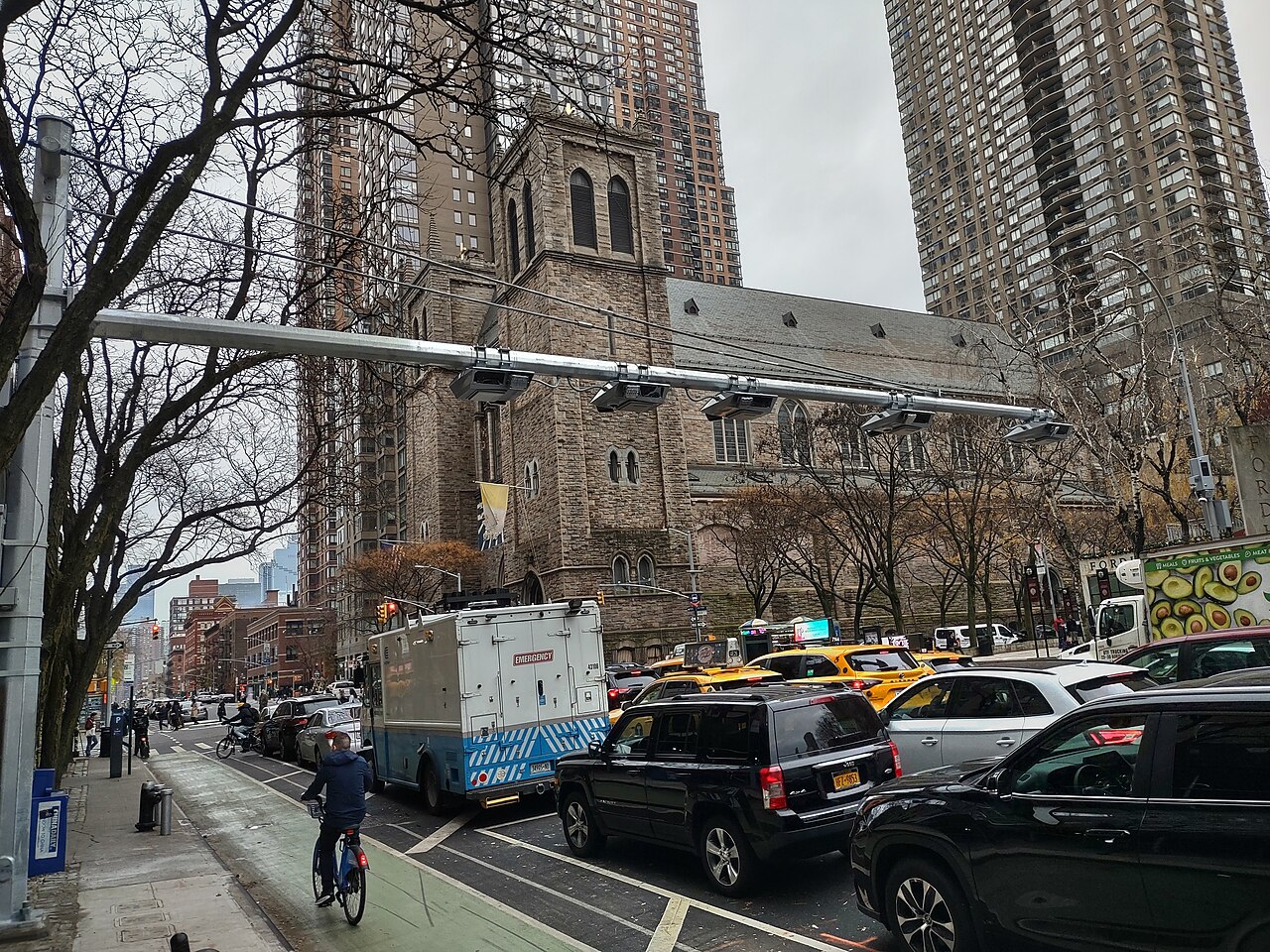
Nearly two years after New York City became the first American city to charge drivers a toll for entering its busiest streets, new independent analyses show the program has kept traffic down and pushed subway, bus and rail ridership higher.
A Bloomberg Opinion review published this month found that since the Metropolitan Transportation Authority started charging cars and trucks to drive into Manhattan south of 60th Street on Jan. 5, 2025, the number of vehicles entering the congestion zone has dropped and so have travel times, emergency-vehicle response times, air pollution and possibly noise pollution, with congestion also seeming to be down outside the zone and no sign of the north-of-60th-Street parking apocalypse that some feared .
What the tolling program does
The Metropolitan Transportation Authority began charging most cars and trucks to enter Manhattan south of 60th Street on January 5, 2025.
The toll runs through E-ZPass transponders and license plate cameras rather than staffed booths, a setup also tied to the broader expansion of automated roadside monitoring the site has reported on in its piece on neighborhood cameras nationwide.
Drivers entering Manhattan south of 60th Street pay a toll, tracked through E-ZPass and a network of license plate cameras.
Traffic down, transit ridership up
A Reason Foundation review of the program’s second year, published in October, found the effect has held steady rather than faded.
Between January 5, 2025, and January 4, 2026, roughly 27 million fewer vehicles entered the Congestion Relief Zone south of 60th Street compared with the previous year.
In May 2026, entries into the Congestion Relief Zone and its excluded roadways were 6.5 percent lower than in May 2025, and year-to-date traffic in 2026 was down 3.5 percent.
Transit has absorbed the shift. Increases in subway, bus and commuter-rail ridership into the congestion zone appear to have more than made up for the decline in people entering by car.
A separate review by the Permanent Citizens Advisory Committee to the MTA found a similar pattern in the program’s first year, with New Yorkers taking nearly 1.3 billion subway trips in 2025, about 7.7% more than in 2024 , a gain that translated into tens of millions of additional rides compared with the year before.
That kind of shift echoes how commuting habits shape daily routines more broadly, something this site has explored in its report on a worker’s daily commute.
Revenue funds transit upgrades
The congestion tolls have brought in $1 billion and counting (that’s the total through September) for MTA capital improvements.
That revenue stream is financing projects including subway car replacements and accessibility upgrades, continuing a funding pipeline the state outlined when the program marked its first anniversary in January.
Ride-hailing patterns have also shifted under the new toll structure. Cordon pricing also changed the rideshare market, with Uber and Lyft passengers paying a $1.50 congestion toll for trips that begin, end, or pass through the zone, compared with 75 cents for yellow and green taxis.
A 2026 study estimated that Uber trips fell by up to 6 percent after the charge took effect, while Lyft trips increased 2, 5 percent during a temporary rider subsidy.
Why it matters beyond New York
New York remains the only US city with an active congestion toll, making it a closely watched test case for other dense metro areas weighing similar fees as they rethink downtown traffic and transit funding.
The latest data suggest the effects have not simply been a one-year novelty tied to initial driver behavior changes, but a durable shift in how people get into Manhattan’s core.
Cities from Boston to Seattle are separately grappling with how to refill downtown streets as office attendance patterns keep shifting, a dynamic that shapes whether any transit or tolling investment pays off over time.
For now, the New York numbers give transportation planners elsewhere a rare multi-year dataset on what happens when a major American city puts a price on driving into its busiest district.
