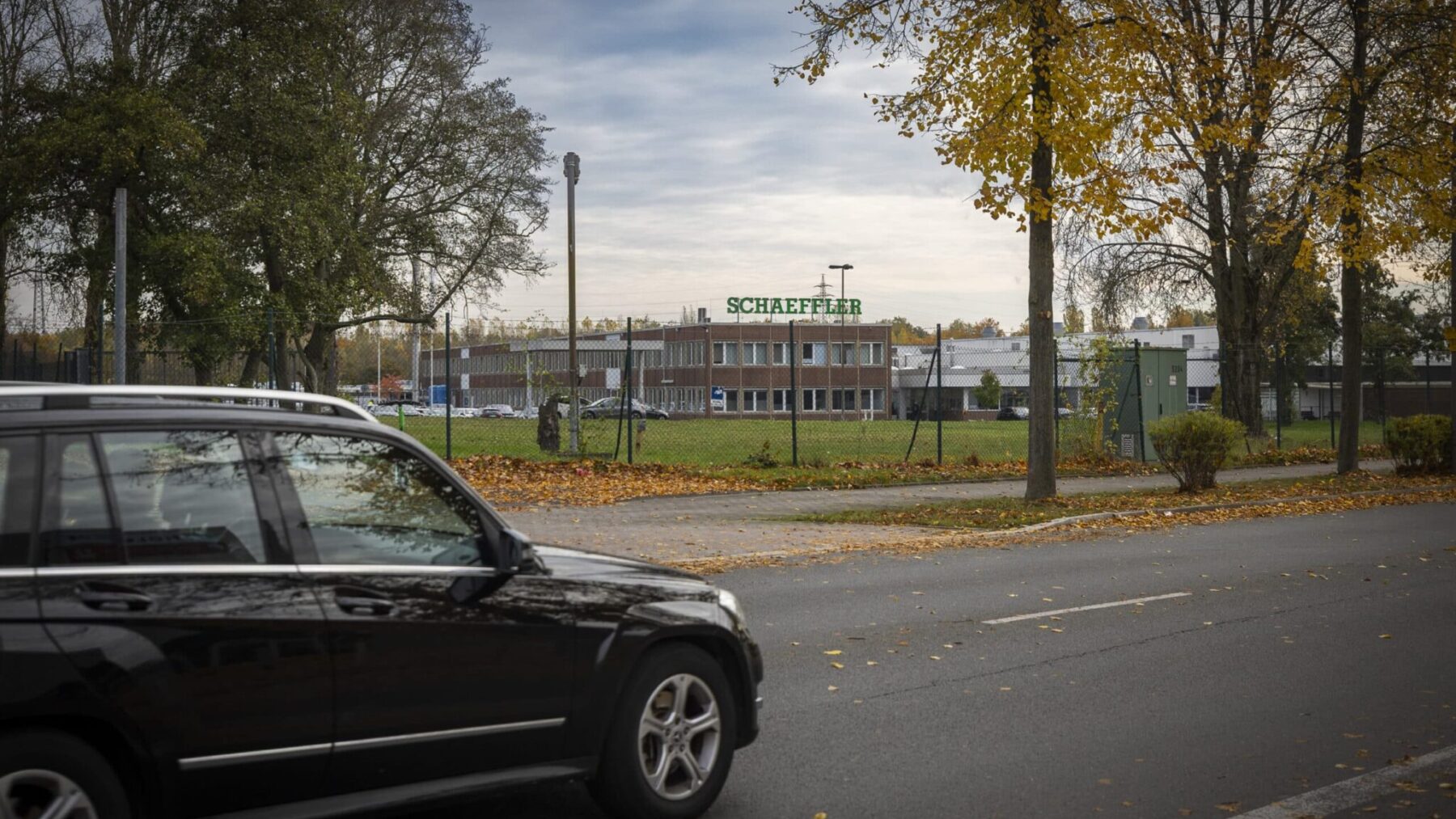
German auto parts maker Schaeffler announced plans on November 3 to eliminate a net 3,460 jobs across Europe and close five manufacturing sites, citing persistent overcapacity and a slower than expected shift to electric vehicles.
The cuts amount to roughly 9 percent of the company’s core workforce in Germany.
What Schaeffler announced
German auto supplier Schaeffler said on Tuesday it would cut 3,460 jobs and close five sites in Europe as it responds to weakening demand for combustion-engine vehicles, slower-than-expected electric-vehicle adoption and intense competition. About half of the positions are in production, 30% in R&D and 20% in other functions , across 16 locations in Europe.
Schaeffler plans to cut 3,460 jobs in Europe, 2,660 of which are in Germany. The German reductions are to be completed by 2028 and are equivalent to roughly 9 percent of Schaeffler’s core German workforce.
The restructuring follows an earlier program Schaeffler announced in November 2024, following the completion of the restructuring measures announced in November 2024 and the conclusion of 1,800 partial retirement agreements in early October .
The five sites Schaeffler will close are Dortmund with 430 staff, Morbach with 160, Berlin with about 270, Schwalbach, and the Belgian plant in Herstal near Liège, which employs about 15 people. According to CNBC’s reporting on the announcement, operations will also be discontinued at its Berlin and Schwalbach sites, and toolmaking will cease at Höchstadt .
A large proportion of Schwalbach’s approximately 385 employees are expected to move to Frankfurt.
Why the company says it needs the cuts
Schaeffler, which manufactures bearings and powertrain systems and employs approximately 108,000 people worldwide , pointed to weak demand for combustion engine vehicles paired with an electric vehicle transition that has not materialized as quickly as expected.
Schaeffler blamed the new savings program on conditions in the auto business: demand for parts for combustion-engine vehicles is falling, the shift to electric vehicles is taking longer than expected and competition is getting tougher , and the company also pointed to personnel costs per employee in Germany that are about 2½ times higher than elsewhere in Europe and an organization with too many layers of management.
About 50% of the cuts will be in production, 30% in research and development, and 20% in other business units.
Chief executive Klaus Rosenfeld told CNBC the company is “a downturn in the automotive industry, overcapacity in our plants, it is too much research and development capacity that we have, too high personnel costs, and also a too complex organization,” and said “it’s important that we not only adjust on the one hand, but that we look forward into the new opportunities like robotics, like defense, and others.”
Costs, savings and a pay solidarity plan
Schaeffler expects its cuts will deliver annual earnings improvements of around EUR 300 million a year from 2030, with one-time costs of around EUR 480 million , most of which will be booked in 2026.
Most of the work will be done in 2027 and 2028.
To soften the blow, the company plans what it calls a solidarity contribution, a temporary and voluntary pay reduction across all employee levels. Voluntary salary cuts are also being considered, starting with the management board.
Without this contribution, the cuts would otherwise have been even larger, according to the company .
The company also said it hopes to offset at least part of the reduction by creating new positions in growth areas including humanoid robotics and defense, though it has not said how many jobs it expects to add in robotics or defense, or when .
Reaction from workers and unions
The announcement has drawn criticism from German labor group IG Metall and Schaeffler’s own works council, which criticized the new restructuring plan, saying repeated rounds of job cuts and site closures were weakening the company’s German industrial base .
The works council, representing the affected workforce, has called for dialogue with management, arguing that cuts alone will not restore the company’s health.
They are demanding clearer commitments on future products, manufacturing investment and job protections before agreeing to further concessions.
The move adds Schaeffler to a growing list of European auto suppliers paring back factory footprints amid soft demand, a trend that has also reshaped production planning among automakers navigating the uneven pace of the electric vehicle sticker prices adjustment following the end of federal incentives in the United States.
Schaeffler’s German cuts echo broader turbulence across the supplier base even as automakers like GM continue to reshape battery and powertrain plants, such as its recent decision on the new LMR battery platform aimed at extending range.
