A thrift store rack of acid-wash jackets from decades ago draws a longer line than the new arrivals most Saturdays.
Nobody browsing it was alive when those jackets were new.
A college student hums along to a song that hit the radio before she was born.
Her older coworker barely recognizes the tune.
Longing for a past you never touched is doing real work in American culture right now.
So which generation does most of that longing, and why does it skip the people who were actually there?
What makes someone miss a time they never lived through
Psychologists call it historical nostalgia, a felt longing for a period a person never personally experienced. It differs from ordinary nostalgia, which runs on a person’s own memories of their own childhood bedroom or their own high school hallway.
Historical nostalgia instead borrows someone else’s memories secondhand, through old photographs, inherited records and retro aesthetics that keep recirculating long after the moment itself has passed.
That borrowing tends to peak during present-day dissatisfaction, a sense that life right now feels less solid than some other period must have been. The mind reaches backward for an imagined stability it cannot find in the present.
Which raises the obvious question of who does the most reaching. The answer breaks along generational lines, not simply toward whoever is oldest.
A scene that plays out in record shops and vintage racks across the country
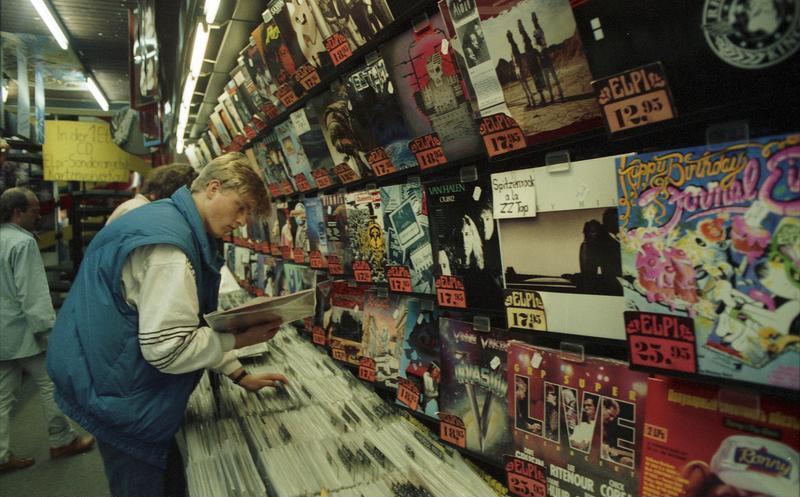
Walk into any secondhand shop or used record store in a mid-size American city and the pattern shows up fast. Shoppers piling up vintage band shirts and film cameras from well before their own birth years skew toward their thirties and forties, not their teens or their sixties.
That lines up with a trend GCN has tracked before, where old mall clothes now get resold as vintage treasure decades later, often for far more than they cost new.
It also connects to a broader shift in how Americans shop at all, since secondhand shopping becomes routine for most US adults. A chunk of that browsing is pure emotion. Streaming habits echo it too, with playlists built from before a listener’s birth and feeds stuffed with footage of malls that closed before most viewers could walk.
What the research actually found when it measured who feels this most
A research team at the Human Flourishing Lab, part of the Archbridge Institute, set out to measure how widespread this borrowed longing really is among American adults. Working with The Harris Poll, they surveyed a nationally representative sample of just over 2,000 U.S. adults, asking directly across age groups rather than assuming it was strictly a young habit.
Their findings showed more than two-thirds of Americans report feeling nostalgic about eras they never personally experienced.
The generational breakdown is where it gets surprising. Gen X and millennials report the highest rates of historical nostalgia, with Gen Z close behind them, while boomers and the Silent Generation trail well behind all three.
That cuts against the easy assumption that older people are always the most sentimental group in a room. Separate psychological work backs up why the split makes sense, since younger adults have less lived past to draw on and lean harder on borrowed memory instead.
Where this pattern gets complicated and does not fully hold
Even so, the picture is not one clean ranking. Gen Z, the youngest adult cohort, still reports meaningful historical nostalgia, just not quite at the level above it.
The researchers were also careful about what an earlier, related project could claim. A prior qualitative study from the same lab focused specifically on how young adults creatively engage with retro-inspired culture, built to sketch a descriptive picture rather than pin down an exact prevalence rate for every bracket. The nationally representative survey that produced the two-thirds figure above was a separate, quantitative effort designed to measure prevalence directly.
That distinction matters.
Other nostalgia researchers add a further wrinkle, noting the emotional texture shifts by life stage too. Someone in their twenties and someone in their sixties can both feel wistful without the feeling meaning the same thing to either of them.
What this actually means for anyone daydreaming about the wrong decade
None of this suggests there is anything to worry about in loving a decade you missed.
If anything, researchers studying nostalgia broadly have found it functions as a coping resource, something that steadies a person rather than drags them down. That reframe matters because historical nostalgia often gets dismissed as empty costume play, when the data treats it as a genuine, measurable piece of how middle generations process a present moment that feels unusually unstable.
So the next time a coworker in their late thirties cannot stop talking about a sitcom that ended before they started kindergarten, there is a documented reason behind it. It is a shared generational habit with its own name and its own research base, not an odd personal quirk.
The healthiest version of it looks like what shows up in thrift shops every weekend, where curiosity about a past a person never got to have becomes a steadying anchor rather than an escape from the present.
