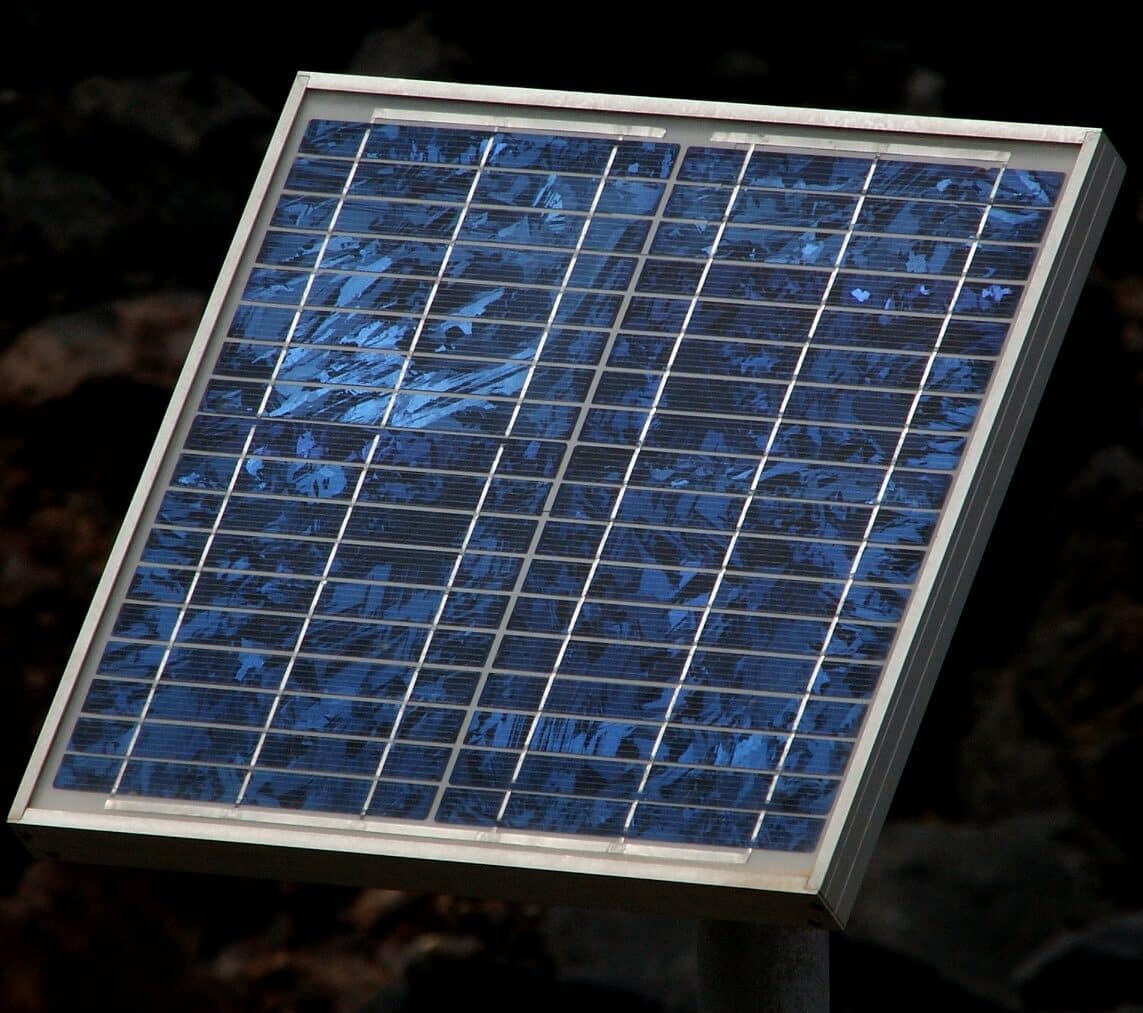
On August 6, 2026, President Trump signed a proclamation imposing a 15% ad valorem tariff and minimum import prices on polysilicon and its derivatives under Section 232 of the Trade Expansion Act of 1962, effective December 4, 2026. It marks a significant expansion of federal trade intervention across the solar supply chain since the original Section 201 safeguard tariffs first took effect during President Trump’s first term.
What the proclamation does
President Trump issued a Section 232 proclamation on August 6 imposing new trade measures on imports of polysilicon and certain derivative products, including silicon wafers, solar cells, and solar modules. The measures take effect on December 4, 2026, and replace the solar safeguard tariffs imposed under Section 201 of the Trade Act during President Trump’s first term and maintained through the Biden presidency, which expired on February 7, 2026.
Although the proclamation imposes additional Section 232 tariffs on covered imports, its most significant feature is a new Minimum Import Price program. It sets price thresholds at $21 per kilogram for polysilicon, $100 per kilogram for silicon ingots and wafers, $0.22 per watt for solar cells, and $0.38 per watt for solar modules. The 15% ad valorem tariff applies to downstream derivative products, ingots, wafers, cells, and modules, rather than to raw polysilicon itself, to incentivize onshoring of value-added processing.
The proclamation frames the action primarily around semiconductor supply-chain security, citing the decline in the US share of global polysilicon production capacity and the decline in US semiconductor wafer fabrication capacity. The solar-sector rationale is presented as a secondary but related basis, given that solar-grade polysilicon demand is described as necessary to sustain the production volumes and unit costs that keep semiconductor-grade polysilicon production commercially viable.
Two domestic factories, a sprawling import dependency
The United States has two polysilicon factories: Hemlock Semiconductor, a joint venture owned by Corning Inc. and Shin-Etsu Handotai, located in Hemlock, Michigan, and Munich-based Wacker Chemie, which launched its Charleston, Tennessee, production site in April 2016.
US solar manufacturing has expanded since Congress created tax incentives in 2022, but much of that growth has been concentrated in panel assembly. That leaves manufacturers dependent on imported wafers and cells, which require longer investment timelines.
The domestic cell gap is acute: the US currently has only 3 gigawatts of cell capacity. While several new cell factories are in development, these are not expected to be enough to supply all domestic module factories.
The proclamation lands as US module assembly capacity has surged. Domestic nameplate module manufacturing capacity now stands at roughly 66 gigawatts after only about 1 gigawatt of new module capacity came online in the second quarter of 2026.
That assembly buildout, enabled by Inflation Reduction Act manufacturing tax credits, is exactly the context the Administration cited when arguing that domestic polysilicon production must also scale. Companies with US solar factories, including T1 Energy, First Solar, and Qcells, the US solar arm of South Korea’s Hanwha, applauded the move.
Corning, the US partner in Hemlock Semiconductor, said the decision encourages continued investment in US capacity and supports long-term US competitiveness. Wacker said it was reviewing the actions to fully understand their impact.
Inverter order adds a second front
Alongside the polysilicon action, on August 26, 2026, the White House issued Executive Order 14420, declaring a national emergency to secure the US bulk-power system and restricting the procurement and installation of foreign-produced bulk-power system electric equipment, including transformers, inverters, and circuit breakers, linked to covered foreign entities, a list that notably includes China. The Department of Energy has 120 days to publish formal rules implementing the policy.
Further restrictions on foreign products may catalyze new domestic utility-scale solar and storage inverter manufacturing. Together, the two August actions represent the broadest attempt yet to build a fully domestic solar supply chain, from raw material to inverter.
SEIA’s newly released Q3 2026 Solar Market Insight report stated that the Section 232 action on polysilicon and the inverter order “will now reshape the economics of a full domestic solar supply chain.” The industry is already navigating a parallel wave of anti-dumping duties; as GCN reported, Commerce finalized dumping duties reaching 249.13% on solar cells from India, Indonesia, and Laos earlier this year.
What happens before December 4
Importers of solar modules, cells, wafers, ingots, and polysilicon must begin evaluating product coverage, pricing documentation, first-sale arrangements, Foreign Trade Zone usage, and potential duty drawback eligibility before the December 4, 2026, effective date.
At entry, importers must submit documentation showing the first arm’s-length sale in the United States was at or above the applicable minimum import price, or produce pre-August 6, 2026 contract terms at entry. They must also show that the imported product, or any downstream product made with it, will be resold in the United States at or above the applicable minimum import price.
The proclamation recognizes time-limited, fixed-price contracts entered into before August 6, 2026, within its documentation framework, but does not provide a blanket exemption from the new regime.
The new remedies take effect December 4, 2026, giving developers, manufacturers, importers, and financiers approximately 120 days to evaluate their exposure. For developers and module buyers, it also sets a hard deadline: projects that cannot be completed under pre-August contracts will face cost structures that reflect the new price floors across every link of the silicon supply chain.
Meanwhile, domestic manufacturers such as SEG Solar continue to expand US module capacity, positioning themselves to benefit from the cost premium the proclamation now places on foreign-sourced material.
