There is a power technology being sold to utility companies and data-center operators right now on a single, compelling promise: electricity around the clock, rain or shine, no batteries required.
It does not need the sun. It does not need wind. It draws heat from deep rock and turns it into baseload power as reliably as a gas plant, but without the fuel bill.
Hundreds of thousands of Southern California homes are already on the receiving end of contracts for that power.
And the company behind the biggest bet on this technology closed an oversubscribed funding round, then went public.
But a research note published weeks after the IPO put a very specific number on a problem most of those contract holders had not yet priced in.
Why this underground energy source is having its biggest moment in decades
The United States leads the world in geothermal electricity capacity with roughly 3,900 megawatts, and DOE analysis shows the potential for at least 300 gigawatts of reliable, flexible geothermal power on the U.S. grid by 2050.
That gap between roughly four gigawatts and 300 is the entire bet.
Twenty-six power purchase agreements for geothermal energy were signed between 2021 and 2024, more than double the number signed in the previous five years.
Several of those PPAs are for power supply to artificial-intelligence-driven data centers.
Improvements in drilling performance at the DOE’s Utah demonstration site cut drilling time from 310 hours in 2020 to 110 hours in 2023.
The technology driving all of it is called enhanced geothermal systems: drill deep, fracture hot rock, circulate water, generate steam. No volcano required.
The single project everyone in the geothermal industry is watching right now
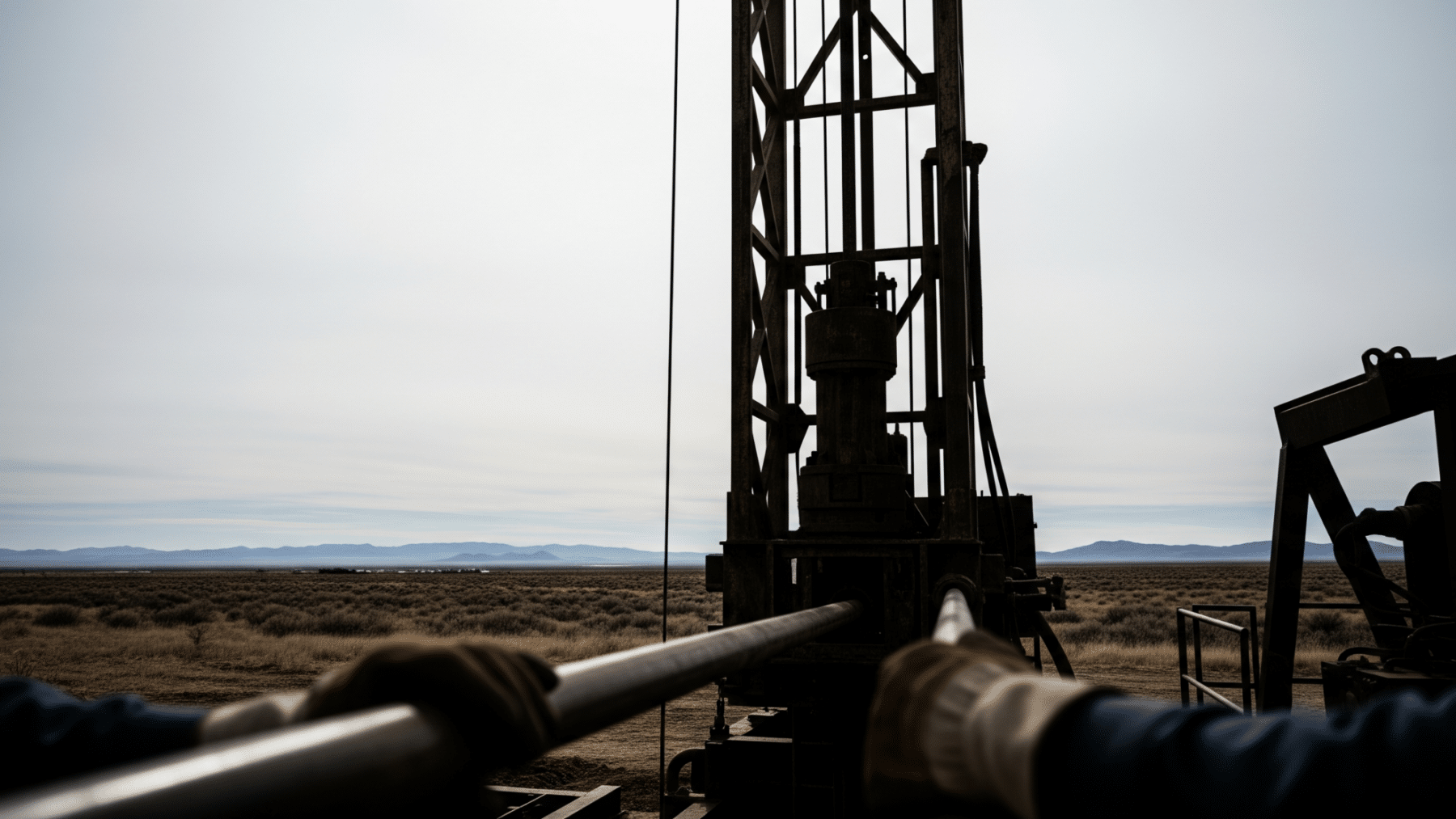
Fervo Energy’s flagship development, Cape Station, is well underway in Beaver County, Utah, and its initial 100-megawatt installation is on track to start delivering power to the grid in late 2026, which would make it the first commercial-scale enhanced geothermal project to hit such a milestone worldwide, according to Fervo.
The project is expected to reach approximately 100 MW of operating capacity by early 2027, with plans to scale to 500 MW.
An additional 400 MW is slated to come online in 2028, bringing the total to 500 MW.
Fervo achieved record-breaking reservoir performance at Cape Station while drilling to rock temperatures exceeding 428 degrees Fahrenheit.
A 30-day well test at Cape Station achieved a maximum flow rate of 107 kg/s at high temperatures, potentially enabling over 10 MW of generation per well.
That result exceeds levels of productivity the National Renewable Energy Laboratory did not believe would be possible until 2035, and is three times the output of Fervo’s commercial pilot in Nevada.
In December 2025, Fervo closed its oversubscribed $462 million Series E funding round. The IPO filing became public on April 17, 2026, and the company debuted on public markets on May 13, 2026, trading on Nasdaq under the ticker symbol FRVO.
What the contracts already signed are promising to deliver
This is where the everyday promise enters the picture.
Fervo announced agreements with Southern California Edison totaling 320 megawatts of power from Cape Station, with the capacity to power hundreds of thousands of homes across Southern California.
The project is fully contracted through power purchase agreements with Southern California Edison, Shell Energy, and community choice aggregators. An expanded deal with Clean Power Alliance adds 18 MW of carbon-free geothermal energy.
Those contracts represent firm, dispatchable power: the kind utilities lean on to keep lights on when solar drops off at dusk and grid demand peaks.
As evening load surges from millions of EV plug-ins add pressure to the Western grid, that around-the-clock reliability is exactly what planners say they need most.
The levelized cost of energy for conventional hydrothermal systems sits at $63 to $74 per megawatt-hour for flash-based plants.
That is competitive. The pitch to buyers is nearly irresistible.
The transmission gap analysts flagged the moment Fervo went public
Here is the catch that did not make the brochure.
Early investor feedback has “skewed positive” after Fervo went public, but according to Utility Dive, the company’s pipeline of around 42 GW is impacted by transmission constraints in the West, with those constraints potentially slowing Fervo’s anticipated roll-out “as most sites are in rural areas with limited infrastructure,” Jefferies equity analyst Julien Dumoulin-Smith said in a research note.
The Jefferies analysis found that Fervo depends on third-party transmission infrastructure for all current revenue and contracted power purchase agreements.
For Cape Station Phase II specifically, the company holds approximately 290 MW of interconnection and transmission rights, which is insufficient to support the full 384 MW of combined contracted capacity for that phase.
If additional transmission capacity cannot be secured, revenues will be reduced or contracts may be modified.
The plant drills fine. The rock is hot enough. The electricity is real.
But the wires to carry it do not yet exist in full, and no amount of drilling fixes a rural transmission gap.
What the company says and where the grid race goes from here
Fervo’s management appears more bullish than analysts initially expected when it comes to connecting generation directly to customers behind the meter.
Senior vice president of strategy Sarah Jewett said the company is “seeing an increasing amount of behind the meter commercial interest.”
That behind-the-meter path, selling power directly to large industrial or data-center customers at the fence line, sidesteps the transmission problem entirely.
Fervo has over 3.6 GW of projects in its active development pipeline, alongside a stated potential to develop over 42 GW in total geothermal-energy capacity across the nearly 600,000 acres it has leased in the American West.
The scale of that pipeline means the transmission question is not a Cape Station quirk; it is a recurring constraint across the whole program.
The broader grid infrastructure push is already underway. Fervo says it has raised about $1.5 billion overall since 2017 as it develops what it describes as the world’s largest enhanced geothermal system in Utah.
The technology genuinely works. The rock is genuinely hot.
The bottleneck is the same one slowing every large new generator trying to reach American customers: a transmission system that was not built for where the best energy resources happen to sit.
Phase I of Cape Station is on track to begin delivering clean power to the grid by late 2026, reaching approximately 100 megawatts of operating capacity by early 2027, with Phase II targeted for 2028, assuming the wire catches up with the well.
