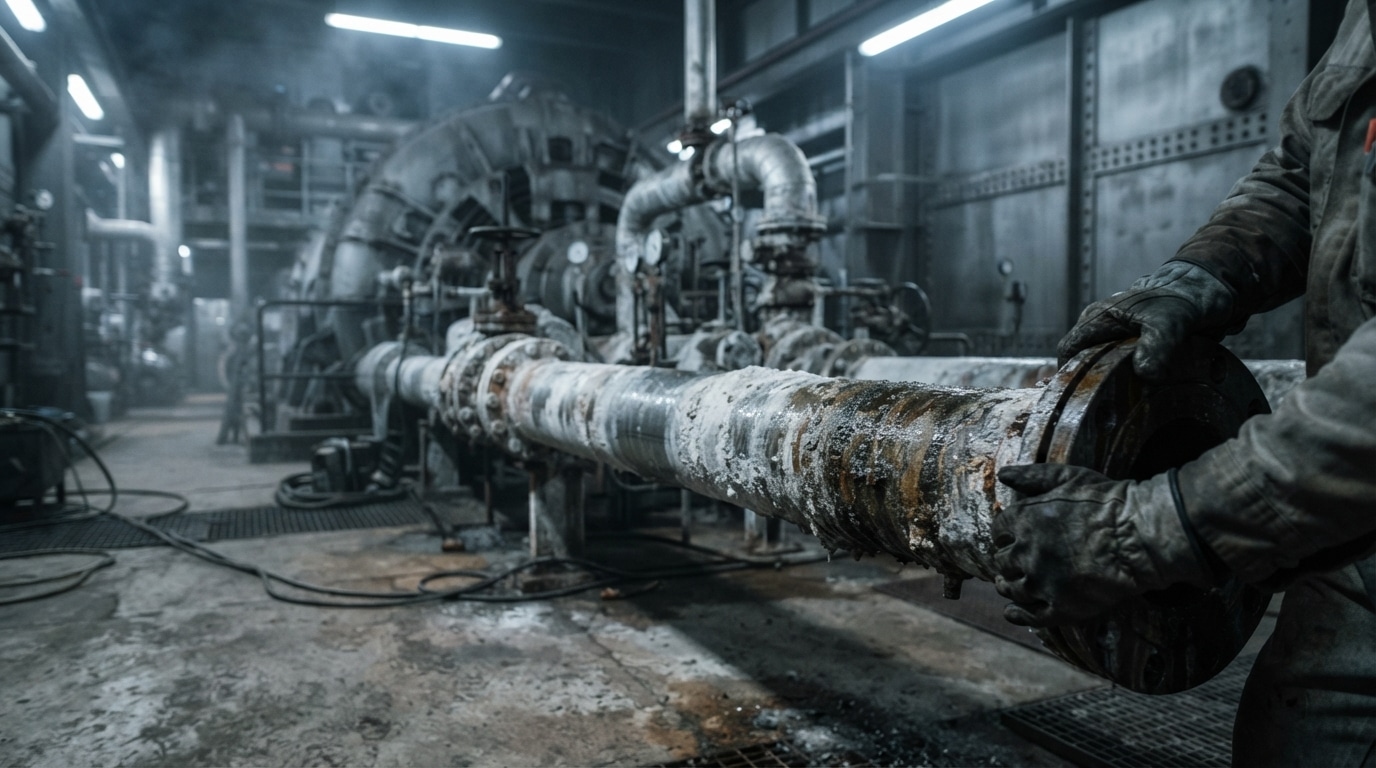
Walk into any operating geothermal plant and the machinery looks exactly as advertised: heavy turbines, pressurized steam, a steady hum.
The wells are still producing. The grid connection is live.
But the global output numbers have been drifting in the wrong direction for years, even as new plants come online and investment keeps climbing.
Geothermal carries the strongest reliability pitch in the power industry. What the pitch rarely includes is what happens to the underground resource as the decades roll by.
How a geothermal well loses its edge without ever shutting down
Geothermal plants draw heat by circulating water or brine through rock hot enough to flash into steam, which drives a turbine the same way a gas plant does. The machinery on the surface can run indefinitely. The reservoir below does not stay the same.
As operators pump brine out of the ground, reservoir pressure gradually drops. The rock cools around the production zone, and the temperature of the fluid reaching the surface edges lower with each passing year. Less heat means less steam and less usable energy, even though the plant is technically running on schedule.
A second problem compounds the first. Dissolved minerals in geothermal brine, silica and calcium carbonate chief among them, plate out on pipe walls and turbine blades as the fluid cools. That scaling narrows flow passages and cuts steam quality. Regular descaling helps, but it introduces planned downtime that chips away at the near-perfect availability figures operators advertise.
Together, pressure decline and mineral scaling create a gap between the nameplate rating on a plant and the megawatts it actually delivers over a full year. That gap is the geothermal capacity factor, and it has been moving in one direction across most of the world’s major producing fields.
The promise written into every power purchase agreement
When a geothermal developer pitches a contract to a utility, the central selling point is reliability. Solar produces nothing after dark; wind goes quiet when the air stills. Geothermal runs around the clock, and the standard industry claim puts availability above 95 percent in most project prospectuses.
That availability figure measures the share of hours a plant is mechanically capable of generating power. It says nothing about how much power the plant actually pushes onto the grid during those hours.
Grid buyers sign contracts based on capacity factors of 80 to 90 percent, figures that reflect early-life output from a freshly drilled field. Those projections are real when the wells are new. The question surfacing in resource planning circles is how long they hold, and what happens to grid reliability calculations when they do not.
What the global generation data actually show
The most direct evidence comes from a global analysis of 71 geothermal fields conducted by Bloomberg New Energy Finance and corroborated by IRENA generation data, which tracks both installed capacity and actual electricity generation worldwide. The Bloomberg NEF study found a global average capacity factor for geothermal electricity of approximately 73 percent, and correctly noted that developers use considerably higher capacity factors in their project finance models, a figure meaningfully below the 80-to-90 percent range embedded in most long-term contracts. Meanwhile, the International Renewable Energy Agency reports that geothermal electricity generation has grown at an average of only about 2.5 percent per year since 2014, a pace that consistently trails the rate at which new nameplate capacity has been commissioned.
For a technology whose grid value rests on high and steady output, a realized capacity factor in the low-to-mid seventies is significant. A solar farm is expected to improve as panel costs fall; a geothermal field is expected to hold steady at the figures written into its original agreement.
US figures from the Energy Information Administration reinforce the trend. American geothermal generation has remained essentially flat for more than a decade despite capacity additions, a plateau reflecting the maturation of legacy fields in California’s Imperial Valley and The Geysers complex. As utility-scale battery storage grows and competes for the firm-power contracts geothermal once won by default, the output gap is harder to explain away.
Where the decline is steepest and where it barely shows
Not every geothermal field degrades at the same rate. The Geysers in Northern California, the largest geothermal complex in the world by installed capacity, has seen output fall sharply since its late-1980s peak, when total installed capacity reached more than 2,000 MW, while net generating capacity today runs at roughly 825 MW, a textbook case of reservoir over-extraction. Operators slowed the decline by injecting treated wastewater back into the field, but generation has never recovered to peak levels.
By contrast, fields in New Zealand and Iceland, where operators managed extraction rates more conservatively and geology provides stronger recharge, have held capacity factors above 80 percent for extended periods. The difference is not purely geological. Reservoir management decisions made in a plant’s first decade, how fast operators draw fluid and whether they invest in reinjection early, shape long-term output as much as the rock itself.
The complication for the US market is that legacy fields were developed under economics that rewarded maximum early extraction. Those decisions are now embedded in the resource and cannot easily be undone. The DOE-backed effort to convert a Pennsylvania shale gas well to geothermal is one example of how developers are reaching heat resources where natural recharge is not available at all.
What the output gap means for grid planning and what remains unresolved
For grid planners, a technology that promises firm baseload power and then delivers a slowly shrinking share of its nameplate capacity is harder to manage than intermittency. A solar shortfall is predictable by the hour. Geothermal decline unfolds over years, making it easy to overlook in short-term assessments and difficult to price into long-term contracts.
The most consequential near-term test is underway at Utah FORGE, the federal enhanced geothermal demonstration project drilled more than a mile into hot dry bedrock near Milford, Utah. The site has begun a multi-month endurance test designed to evaluate whether an engineered reservoir holds its pressure and temperature over sustained production. Researchers will measure flow rates, fluid temperature and pressure at the wellhead continuously to build the first long-run performance dataset for an enhanced geothermal system at this scale.
The principal investigator said the test is meant to move geothermal from promising to proven, with actual production data replacing the projections that have historically driven contract negotiations.
The honest answer for grid buyers today is that geothermal’s reliability advantage is real but narrower than the marketing suggests. Whether enhanced geothermal can hold its output over a 20- or 30-year contract term, without the pressure decline that has defined the conventional industry, is the question the next decade of data will finally answer.
