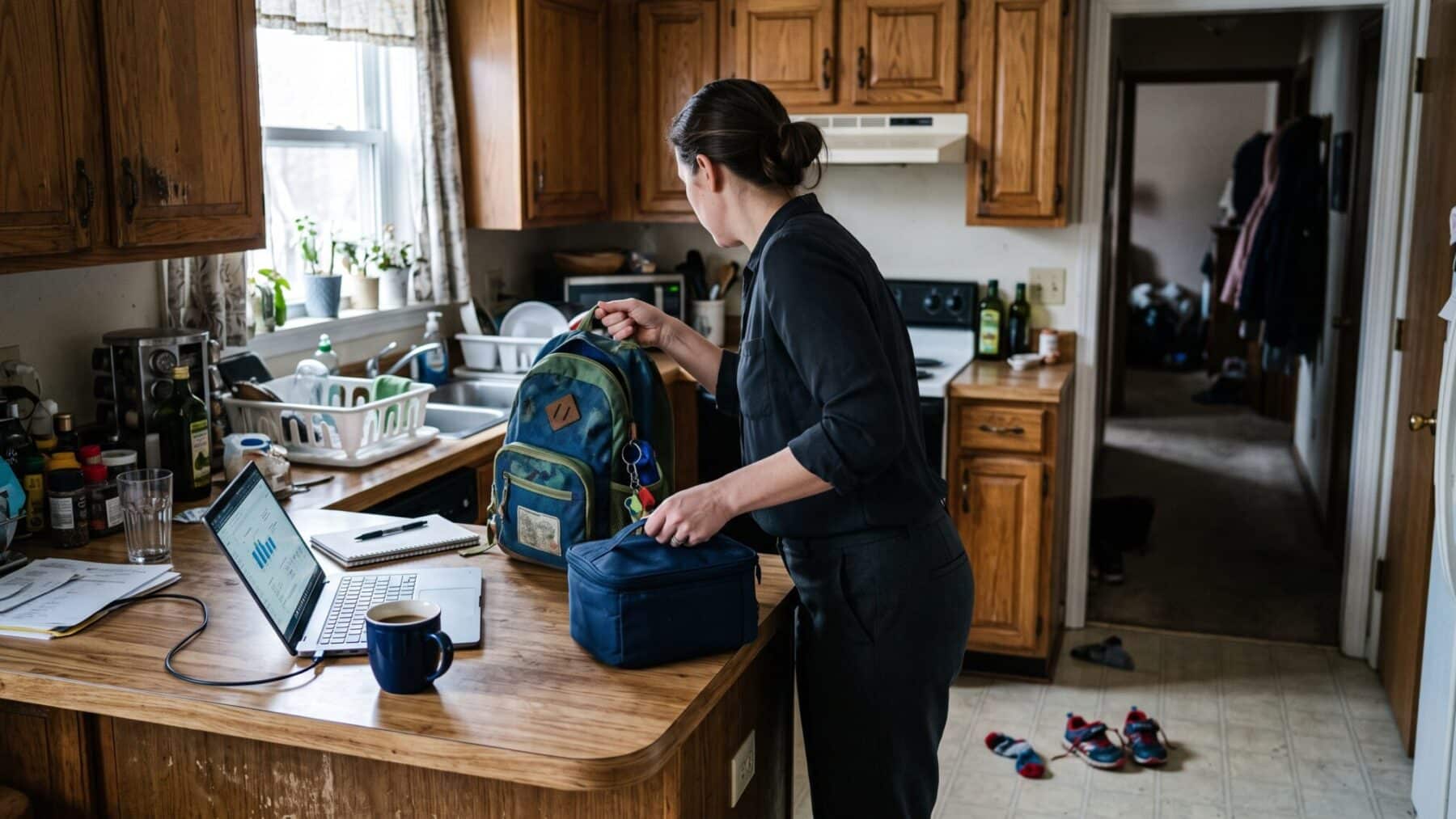
For the first time on record, a majority of American two-parent families have both partners working full time, and a sweeping new survey makes clear that the milestone has arrived without a matching shift in who handles the childcare or who absorbs the cost of it.
As of 2025, just over half (52%) of different-sex couples with children under 18 consist of two full-time working parents, up from 46% a decade ago and 31% in 1975, according to Pew Research Center analysis of U.S. Census Bureau data.
A landmark shift in how families work
The findings come from a Pew Research Center survey of 2,242 U.S. working parents conducted March 2, 15, 2026. The report examines how working parents navigate the demands of work and family life, how they divide responsibilities at home, and how workplace benefits and arrangements shape their day-to-day experiences.
About half of full-time working parents (52%) say their job makes it harder to be a good parent, while 45% say being a parent makes it harder to advance at work.
The pressure is felt differently across the household. Some 62% of full-time working moms say it is difficult for them to balance work and family responsibilities, compared with 47% of dads.
Childcare costs outpace access at every income level
As many working parents struggle with the cost of childcare, the issue has become a focus for policymakers across the political spectrum. Pew asked working parents with at least one child age five or younger about their experiences finding care.
Some 48% of working parents caring for a child age five or younger said it is difficult to find a childcare arrangement that meets their cost expectations. Parents with less predictable work schedules were more likely to use multiple types of care and also reported having a harder time finding care during the hours they need it.
A majority (59%) of working parents with children five or younger, including 68% of working moms with a child in that age group, say it would be extremely or very helpful to have on-site childcare at their workplace. Just 7% say this is available to them.
Many parents rely on multiple care arrangements to cover their work hours. About four in ten working parents (39%) say they use more than one care arrangement for the same child, a logistical reality that falls disproportionately on those with variable hours.
Who handles the parenting tasks when both parents clock in full time
In different-sex couples where both parents work full time, 52% say the mom takes on more parenting tasks, while just 10% say the dad does more, and 39% say tasks are shared equally.
That gap shows up directly in workplace behavior too. In these couples, moms are considerably more likely than dads to take unexpected time off from work to care for a sick child or because of childcare issues, according to the Pew report.
Satisfaction with that division is also lopsided. Dads in families with two full-time working parents are more likely than moms to say they are extremely or very satisfied with how they and their partner divide parenting tasks (55% of dads versus 36% of moms) and household chores (49% versus 26%).
Remote work offers some relief but is not a cure-all. Two-thirds of parents working from home most or all of the time report substantial flexibility to attend their children’s activities, compared with 19% of parents who rarely or never worked remotely. Still, those who regularly work from home are no more likely than those who work from home less often to say balancing their job and family life is easy.
What working parents say they actually need
On-site childcare stands out for an especially large mismatch across all working parents. Some 43% of working parents, and 59% of those with a child age five or younger, say this would be highly helpful. But just 6% of working parents say this is available at their workplace.
Overall, 30% of working parents who are not self-employed say they would be extremely or very worried about losing pay if they had to take time off for a family emergency.
The findings land at a moment when American families are redefining what normal looks like at home. The dual-income household is now the statistical majority, yet the infrastructure around it, affordable childcare, flexible scheduling, and equitable division of domestic labor, has not kept pace.
For researchers tracking how young Americans are forming families in the first place, the Pew data offers a pointed picture of what couples encounter once children arrive.
Some 14% of working parents are neither married nor living with a partner, as of 2025, and the strains documented in the survey apply to those households with even fewer shared resources to draw on. As children’s independent time outside the home continues to shrink, the pressures documented in this report point to a broader renegotiation of what working parenthood demands and what support systems need to provide.
