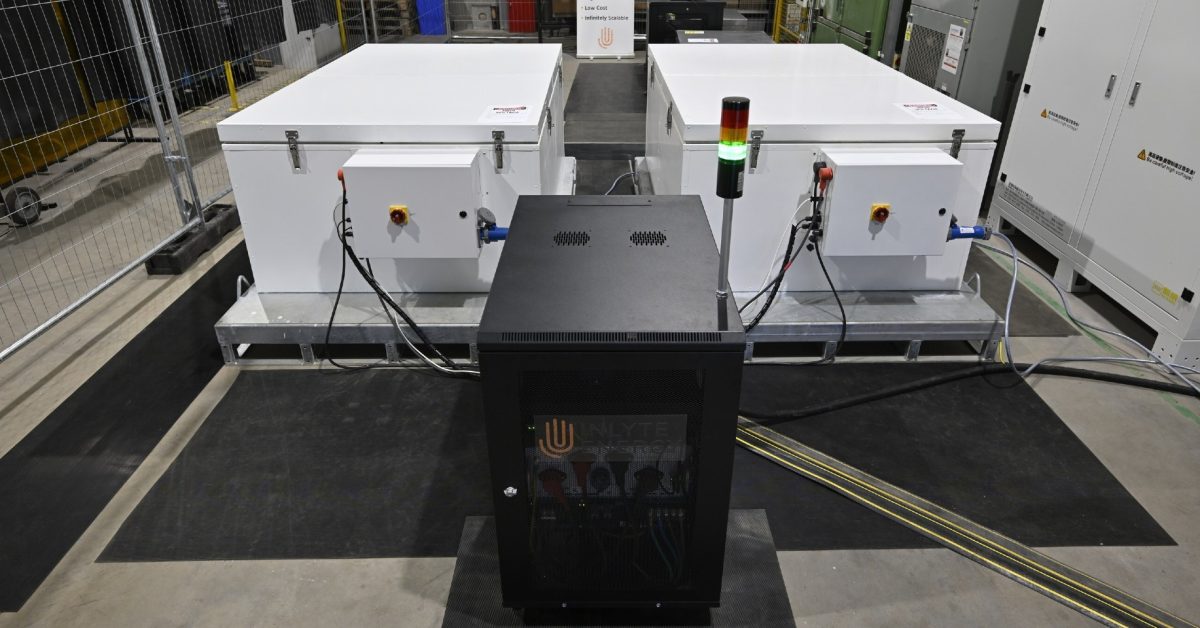
Massachusetts has awarded more than $4.5 million to help build an 80 megawatt-hour iron-sodium battery at a Western Massachusetts ski resort, the state’s largest single grant under a new long-duration storage program.
Inlyte Energy and CutPeak Energy announced the project on October 1 for Berkshire East Mountain Resort in Charlemont, with the system designed to manage the resort’s heavy snowmaking power loads.
A battery built for snowmaking spikes
Berkshire East Mountain Resort in Charlemont has been awarded a $4.51 million state grant supporting development of a 4-megawatt, 80-megawatt-hour long-duration battery energy storage system. The proposed system would be capable of supplying its full 4-megawatt output for 20 hours, according to the Massachusetts Executive Office of Energy and Environmental Affairs.
The project is being designed around the resort’s highly variable electricity demand, since snowmaking can push power demand to approximately 4 megawatts during relatively short periods when conditions favor making snow.
The award supports development of an Inlyte iron-sodium battery system capable of delivering up to 80 MWh of stored energy, with an online date targeted for 2028. The project remains subject to final commercial agreements, financing and customary development approvals, according to the companies’ joint announcement.
State grant backs unconventional chemistry
The project is one of two long-duration storage demonstrations selected under the Healey-Driscoll Administration’s $40.3 million Advancing Massachusetts Power Energy Storage Grant Program.
The award is part of a broader state push that has drawn comparisons to grid-scale lithium installations the industry has been racing to deploy, including a record quarter that pushed grid batteries to a record earlier this year.
Inlyte’s chemistry departs from the lithium-ion packs dominating most grid deployments. The company describes itself as a U.S.-based, FEOC-compliant supplier using abundant materials like iron and salt, with a chemistry that mitigates fire risk, an important consideration at a mountain serving as a public recreation and community destination.
Massachusetts officials framed the award within a wider resilience effort.
Energy and Environmental Affairs Secretary Rebecca Tepper said batteries supplied more electricity to the grid in the first eight months of 2026 than in all of 2025, adding that the state is excited to support two innovative zinc- and sodium-based storage systems to help communities get through major storms.
Validation partners and a second project
The Berkshire East project builds on Inlyte’s ongoing projects with Southern Company and the University of California, Irvine, which are advancing field validation of its iron-sodium technology, including performance across a wide temperature range.
Berkshire East represents the next stage in scale by applying the technology in a multi-megawatt, long-duration installation. The Electric Power Research Institute will provide independent monitoring, verification and knowledge transfer from the project, helping translate operating experience into lessons for future long-duration storage deployments.
A second long-duration demonstration under the same state program will test a different chemistry. Mystic Place Apartments in Medford received $883,500 for a 10-hour aqueous zinc battery system, giving regulators side-by-side data on two non-lithium approaches to multi-hour storage.
Why resort power economics matter
Berkshire East General Manager Andy Cornish said the facility’s electricity bills are driven largely by the intensity of snowmaking rather than overall usage, and that the battery addresses both cost and reliability at once, according to the companies’ announcement.
The resort’s experience echoes a broader shift in how commercial sites with spiky, short-duration loads are rethinking power contracts, a dynamic also playing out as commercial EV charging rates get rewritten around peak demand in other states.
If the Berkshire East system reaches commercial operation on schedule in 2028, it would stand among the larger iron-sodium deployments in the country.
It would also serve as a test case for whether ski resorts, with their brief but extreme seasonal power spikes, can serve as a template CutPeak has said could extend to hundreds of similar sites nationwide.
