Robotics software startup FieldAI has signed a term sheet to raise roughly $700 million in new funding at a valuation of about $10 billion, according to a SiliconANGLE report citing Business Insider, which first reported the deal based on a person familiar with the matter.
The financing has not formally closed, and no lead investor has been named.
The financing would increase the Irvine-based company’s valuation fivefold in slightly more than a year , compared with the roughly $2 billion valuation it carried in August 2025.
What FieldAI builds
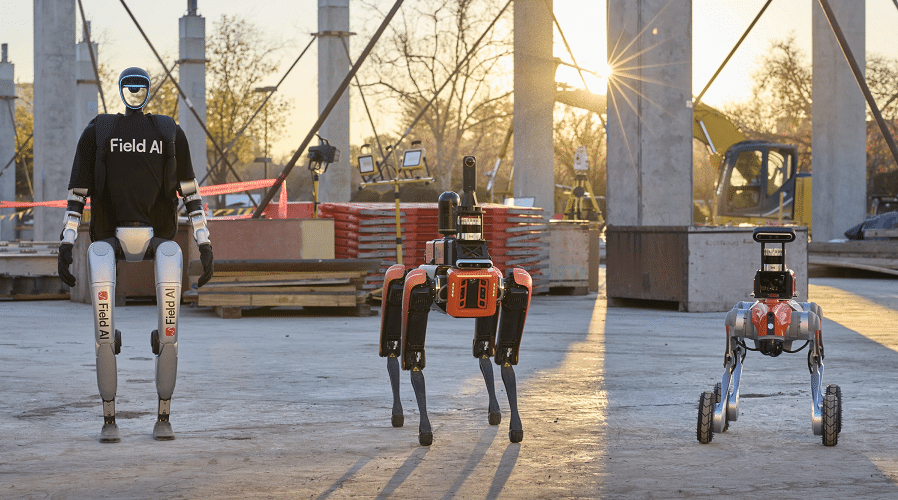
Founded in 2023, FieldAI is developing what it describes as a “universal general-purpose brain” designed to power humanoid robots, robot dogs, drones and industrial rovers. The company does not manufacture hardware, instead licensing autonomy software built on in-house foundation models.
The pitch is that a single software stack can let different kinds of machines operate in unpredictable, real-world settings rather than the controlled environments where most robots are still confined.
That kind of navigation challenge is closely tied to the broader push toward physical AI, where developers increasingly test robot behavior in simulation before deploying it on hardware, a workflow NVIDIA has detailed in its own Omniverse developer blog, which describes developers combining frontier AI models with NVIDIA Omniverse libraries to help carry out that work, building applications for exploring scenarios, investigating failures and improving designs.
A rapid valuation climb
The new figure would build on a financing round FieldAI closed in August 2025. The company announced in August 2025 that it had raised $405 million for a $2 billion valuation.
The newly reported $700 million raise would roughly quintuple that valuation in just over a year, as investors pour money into physical AI.
FieldAI’s earlier round drew backing from a deep and recognizable cap table. Previously named financial backers include Bill Gates, Bezos Expeditions, Emerson Collective, Khosla Ventures, Canaan Partners, NVentures, Prysm Capital and Singapore-based Temasek. It remains unclear which, if any, of these investors are participating in the new round, since “it’s not clear which venture capital firm led FieldAI’s latest round,” Business Insider noted, and “FieldAI has signed a term sheet for the financing, the person said, meaning the deal has not yet formally closed.”
Revenue and rivals
Unlike many early-stage robotics bets, FieldAI has pointed to actual commercial traction to justify the markup.
The report, citing a person familiar with the deal, said FieldAI has added at least $35 million in revenue and customer contracts since June, bringing the total to more than $135 million.
Customers include construction firms, data center operators, and defense companies.
That commercial case distinguishes FieldAI within a crowded field of well-capitalized rivals chasing the same goal of a general-purpose operating layer for robots. The new valuation brings FieldAI closer to its main competitors. Physical Intelligence is valued at roughly $11 billion and Skild AI is valued at more than $14 billion.
Deal still pending
FieldAI did not respond to a request for comment on the new round, and the investors involved have not been disclosed. The term sheet means the financing could still change before it formally closes.
The surge in funding interest around robot autonomy software echoes a broader wave of capital flowing into agentic AI and simulation tooling this year, a trend visible even in how enterprises are building and routing AI workloads, as seen with the rapid adoption of a coding tool now used by more than 20 million developers.
It also follows a pattern of major funding rounds reshaping how companies approach enterprise software and infrastructure, similar to the dynamics behind Island’s enterprise browser raise earlier this year.
If the FieldAI round closes as reported, it would stand among the larger private financings in the physical AI sector this year, underscoring how quickly investors are willing to reprice startups that claim measurable commercial revenue alongside ambitious robotics software.
