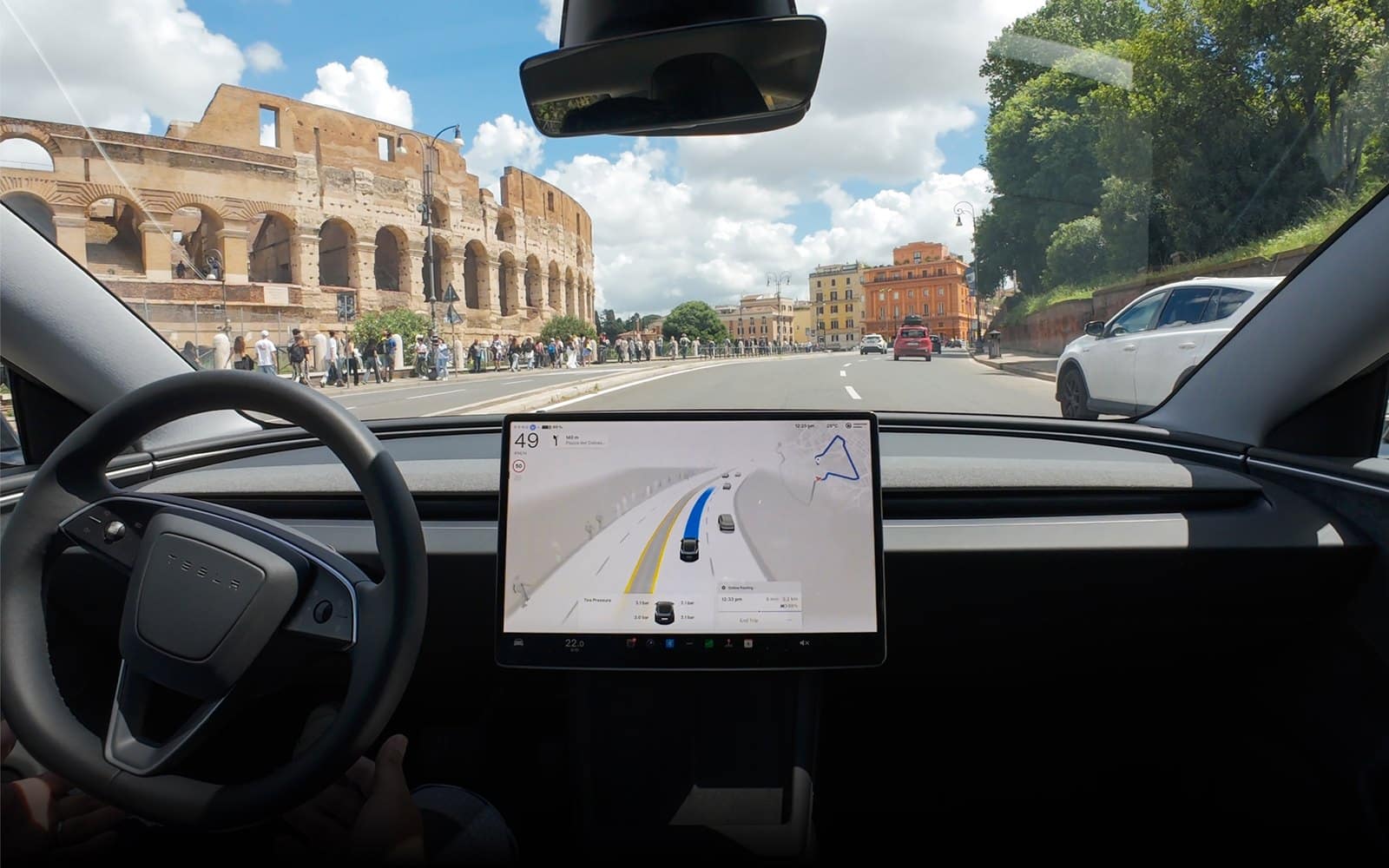
Tesla has renamed its “Full Self-Driving” software to “Tesla Assisted Driving” across Europe, a change the automaker made after pressure from German regulators over what officials called misleading branding.
The shift, confirmed this month, comes as a long-delayed European Union vote on whether to approve the system bloc-wide has slipped again, with December now the earliest opportunity.
Germany pushed for the change
Germany’s transport minister, Steffen Bilger, said earlier this month that calling the software “Full Self-Driving” was somewhat misleading because it doesn’t perform the entire task of driving , according to TechCrunch. He spoke with Tesla last month, and the company suggested the name change, according to an official release from the ministry.
Tesla has changed the name of its advanced driver assistance system in Europe after pushback from Germany’s transportation ministry. It’s now called “Tesla Assisted Driving,” instead of “Full Self-Driving (Supervised).”
The system still requires drivers to keep their hands near the wheel and remain ready to take over at any moment, functioning as a Level 2 driver assistance feature rather than an autonomous one.
The rebrand marks a significant concession from Tesla, which had used the Full Self-Driving Supervised name for years despite the system requiring human drivers to pay attention to the road and take over when necessary.
Bilger said he will now advocate for approval of Tesla Assisted Driving across Europe ahead of an EU-wide vote that could happen later this year.
EU-wide approval still stuck
The renamed software remains in regulatory limbo at the European level. Tesla’s FSD (Supervised) system remains approved in a handful of EU states, with approvals spreading nationally after the Dutch certification, though a bloc-wide vote has not yet been scheduled.
RDW, the Dutch authority responsible for vehicle approvals, approved version 2026.3.6 of Tesla’s Full Self-Driving (Supervised) software on 10 April 2026 under UN Regulation 171, the EU standard that governs Driver Control Assistance Systems, a category of Level 2 vehicle automation. This made the Netherlands the first European country to officially approve the driver-assist technology.
Over 18 months, Tesla provided 1.6 million kilometres of test data from EU roads, completed 4,500 closed-track tests, and carried out 13,000 ride-along evaluations, satisfying more than 400 individual regulatory compliance requirements.
For a bloc-wide green light, the Dutch approval needs to be endorsed by a qualified majority of EU member states. That threshold has not yet been reached, and multiple reports indicate the EU’s technical committee is not expected to vote again until December, making that the earliest a decision can happen.
Scrutiny over confidential safety data
The approval process has drawn criticism over transparency. On Wednesday, Reuters reported that Tesla’s campaign for European approval has been “built on faulty company safety research” and “flawed studies,” and that the Dutch vehicle safety regulator, RDW, faced fierce pressure from Tesla and its legion of online supporters.
Email correspondence obtained by Reuters shows the regulator agreed, at Tesla’s own request, to keep the entire safety case confidential.
The driver assistance debate is playing out as automakers race to differentiate their advanced safety systems from true autonomy. Other manufacturers have taken a more cautious naming approach, even as hands-free systems from multiple brands sit in hundreds of thousands of vehicles already on US roads, where federal regulators continue to track performance data closely.
Why it matters for drivers and investors
The branding fight matters beyond semantics. Clearer names could reduce driver overreliance on partially automated systems, a concern regulators and safety researchers have raised repeatedly as advanced driver assistance spreads across more vehicle lineups.
That includes systems bundled into newer electric models that also come with built-in data tracking for fleet and consumer use alike.
For Tesla, EU-wide approval would open a major new market and bolster the company’s broader ambitions around supervised and eventually unsupervised driving software.
Until the technical committee reaches a qualified majority, however, the newly renamed Tesla Assisted Driving will remain a patchwork product available in only a fraction of the European Union.
