A power window stops halfway up.
An airbag light blinks on for no reason. A dashboard screen freezes mid boot.
None of those failures ever makes headlines on their own.
But the parts behind them, tiny switches costing a fraction of a cent, turned out to be the single weakest link in the modern car.
So how did something this small nearly stop assembly lines on two continents?
How one small part became a single point of failure
Modern vehicles run on thousands of tiny components that almost nobody thinks about: diodes, transistors and basic logic chips that flip power on and off for things like window motors, seat heaters and airbag sensors. They are unglamorous and dirt cheap, often selling for fractions of a penny apiece.
That cheapness is exactly why carmakers never built backup supply lines for them. Automakers spent years worrying about advanced processors for infotainment and self driving systems, while treating these basic switching parts as commodities that would always be there.
One supplier, Nexperia, ended up making an outsized share of them. It holds approximately 40 percent market share in the segment covering transistors and diodes used in automotive applications, according to research firm TechInsights , with automakers relying heavily on these parts for systems like door locks and climate control under just-in-time manufacturing. That concentration meant a single corporate dispute could ripple through car factories worldwide almost overnight.
Inside the factory where the trouble actually started
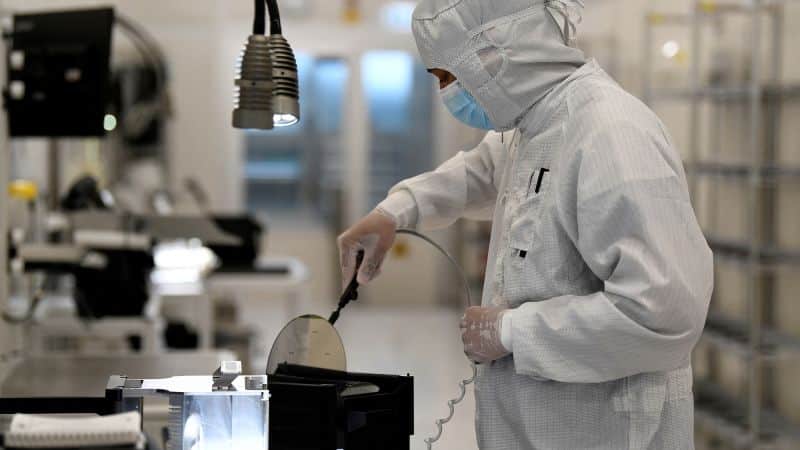
The flashpoint sat in a nondescript industrial zone in southern China. A factory next to a weed-ridden lot in China’s industrial south has become a global choke point for automotive chips , a role nobody outside the parts world had ever noticed before.
From its Dongguan factory, Nexperia ships semiconductors used in everything from car brakes to electric windows. Each part sells for fractions of a penny, yet the resulting shortage forced both Nissan and Honda to cut production.
The Dutch government took control of Netherlands-based Nexperia in late September, citing concerns its technology could be passed on to Chinese owner Wingtech. That move prompted Beijing to ban exports of the company’s finished products in response.
China’s retaliation targeted the exact plant doing the finishing work. Approximately 70 per cent of chips manufactured in the Netherlands are sent to China for packaging and testing before being re-exported to customers globally , meaning even European made chips could not reach a car factory without that single site signing off.
What the production numbers actually showed
Within weeks, the shortage stopped being theoretical. Honda became the first confirmed case of the dispute impacting a Japanese automaker , cutting output at its Ontario, Canada plant by 50 percent in late October before halting operations at its assembly plant in Mexico due to a shortage of semiconductors entirely.
Honda later disclosed in its own earnings report that the chip shortage had compounded tariff pressures already weighing on its production volumes. Industry groups had already sounded the alarm before the cuts landed.
The European Automobile Manufacturers’ Association warned of imminent disruption to automotive factory schedules from Nexperia-related chip shortages, saying the industry was working through reserve stocks while supplies rapidly dwindled. Trade officials scrambled to broker a fix as inventories ran down to weeks, not months.
A resolution eventually came through diplomatic channels far removed from any factory floor. China blocked shipments of chips from Nexperia’s plant in the southern Chinese city of Dongguan, though it has now allowed those exports to resume , averting the widespread shutdowns that had been predicted. You can read the original reporting on the export reversal for the full timeline of how fast the standoff moved.
Why the fix is thinner than it looks
Even after shipments resumed, the two halves of the company split apart rather than reuniting. Nexperia’s Chinese unit said it would operate completely autonomously for the year, since there are now effectively two separate Nexperias following the Dutch intervention.
The Chinese unit says it holds enough silicon wafers to last the full year on its own. That sounds reassuring on paper.
But it also means two separate supply chains now exist where one used to. And the underlying qualification problem never went away, since automotive grade parts cannot simply be swapped for a new vendor’s equivalent overnight.
Automotive grade components require formal qualification testing, a process that cannot be compressed into weeks. Buyers hunting for a genuine second source were still working through that requalification well into this year.
This is the same fragility that shows up elsewhere in a modern car’s electronics, where features drivers assume are rock solid depend on hardware most owners never see. It echoes how a hands-free driving system can sit dormant in hundreds of thousands of vehicles without most drivers noticing the subscription clock running underneath it.
What it means for the next car you buy
None of this shows up on a window sticker or a spec sheet. A buyer comparing trim levels never sees a line item for diode supply risk, yet that risk can decide whether a dealership has the exact configuration in stock.
So the lesson is not that cars are suddenly less reliable.
It is that the cheapest parts in the vehicle turned out to have the least redundancy built around them, a blind spot that took a government intervention to expose. Carmakers say they are responding with longer term supply contracts and a push for second source vendors, the same instinct that reshaped chip buying after the pandemic era shortage.
Whether that holds up the next time two governments clash over a single factory is still an open question. For now, the parts keep flowing, the window motors keep working, and the dashboard screens keep booting on schedule, a fragility that is simply invisible again until the next dispute finds it.
