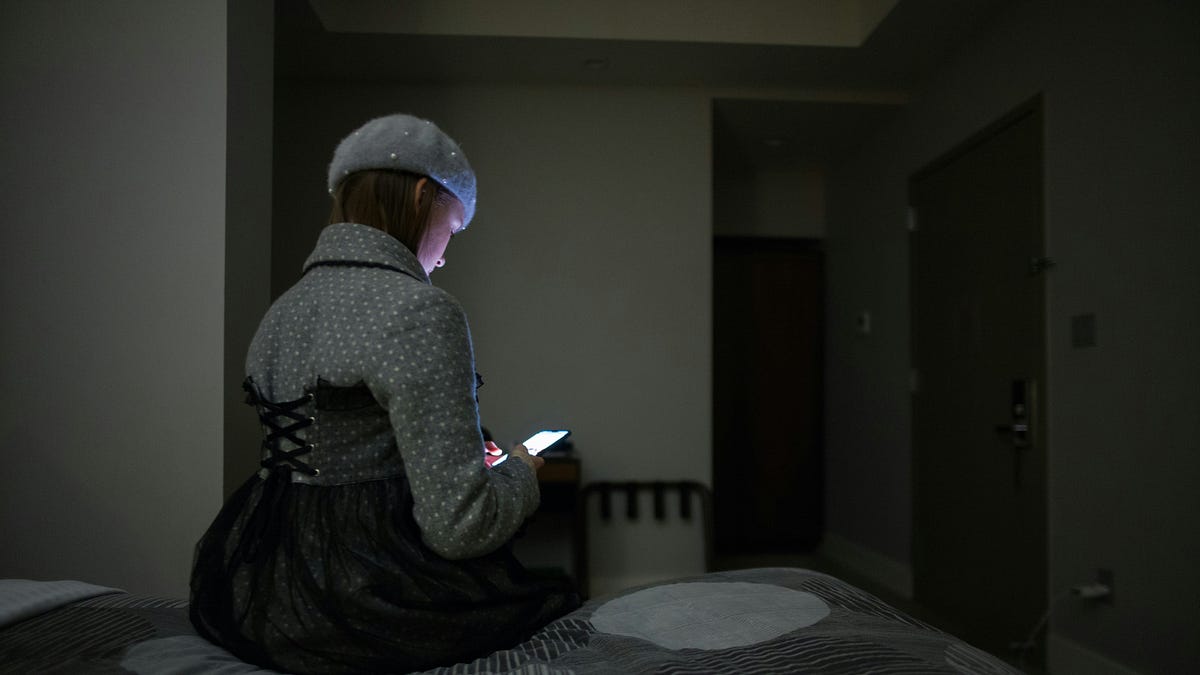
A phone sits face up on the counter, a name from a decade ago still parked in the contacts list.
The thumb hovers, types half a sentence, deletes it.
This happens in kitchens and parking lots and waiting rooms across the country, more often than anyone admits out loud.
Nothing stops the message from going except the person holding the phone.
So what is actually running through that pause, and why does almost everyone hit it at the same point.
The mechanism: why an old friend starts to feel like a stranger
The block is not logistics. One reason for this reluctance may be that old friends feel like strangers , and participants were no more willing to reach out to an old friend than they were to talk to a stranger .
That reclassification happens quietly, and it cuts both ways.
The brain files the relationship under social risk instead of safe connection. Sandstrom said a useful way to look at old friends could be “strangers with history.”
And the pattern holds up under scrutiny. Participants were also less willing to contact old friends who felt more like strangers . That is the opposite of what you would expect if busyness were the real obstacle.
The scene: a text drafted, then abandoned, over and over
Picture someone scrolling an old group photo, recognizing a face, feeling a genuine pull to reconnect. That moment of warmth is common. What almost never follows is the actual act of pressing send on a simple hello.
This gap between wanting to reconnect and actually doing it shows up again and again in the research. The desire is sincere, yet the barrier stays psychological rather than practical, repeating itself the moment someone opens a contact and closes it again.
It mirrors a related pattern GCN covered recently, where friendships follow strict selection patterns rather than simple proximity.
Even people who say they value old friendships above almost anything hit the identical wall. That is the strange part of the whole habit.
The evidence: seven studies, nearly 2,500 people, one stubborn number
The clearest data comes from psychologists at Simon Fraser University and the University of Sussex, in a paper by co-authors SFU Professor Lara Aknin and Dr. Gillian Sandstrom at the University of Sussex in Brighton, U.K., that looks at whether and why people are reluctant to reach out to rekindle old relationships , published in a series of experiments in the journal Communications Psychology. Across the first two studies, most people reported losing touch with an old friend yet expressed little interest in reaching out, with sample sizes of 401 and 199 participants.
The majority of participants, 90 percent, in the first study had lost touch with someone they still care about. Yet, a significant number, 70 percent, were neutral, or even negative, about the idea of getting back in touch in that moment, even when they felt warmly about the friendship.
Then came the behavioral test. Even when participants wanted to reconnect, thought the friend would be appreciative, had the friend’s contact information, and were given time to draft and send a message, fewer than one third sent a message.
A separate line of research, from a team including a lead researcher at the University of Pittsburgh involving nearly 6,000 participants, found that people consistently underestimate how much others in their social circle appreciate an unexpected check-in, whether it’s by phone, text or email . It points the same direction without being part of the same study.
The complication: good intentions alone do not fix it
Researchers tried the obvious fix first: tell people how much their friend would appreciate hearing from them. But interventions focused on changing attitudes were ineffective .
That is because the problem was never purely informational. The resistance sat deeper, closer to the instinct that keeps someone quiet near a stranger on a train.
What did work was sideways. Researchers adapted an intervention shown to ease anxieties about talking to strangers and found that it increased the number of people who reached out to an old friend by two-thirds.
Practicing reaching out to current friends first successfully encouraged people to reach out to old friends. That lines up with other social friction points, like the hesitation before a first follow up text after a date, where timing and nerve matter more than people assume.
What it means: the gap is closable, and cheaply
None of this requires a grand gesture. Participants in several studies were prompted to imagine reaching out to an old friend with a brief hello message, closer to a quick hello than a reunion letter.
So the real finding is not that people have drifted apart on purpose. A short, solvable hesitation sits between wanting and doing, and it shrinks the moment someone actually presses send.
Even so, the researchers note real limits to the finding. The interventions tested responded to barriers identified across the studies, but the research centers on friends participants already wanted to reconnect with, so it says little about mending a bond that ended through real conflict.
What remains is an ordinary piece of evidence: the text sits in drafts not because the friendship cooled, but because reaching out briefly feels like talking to someone new. The fix is simply pressing send.
