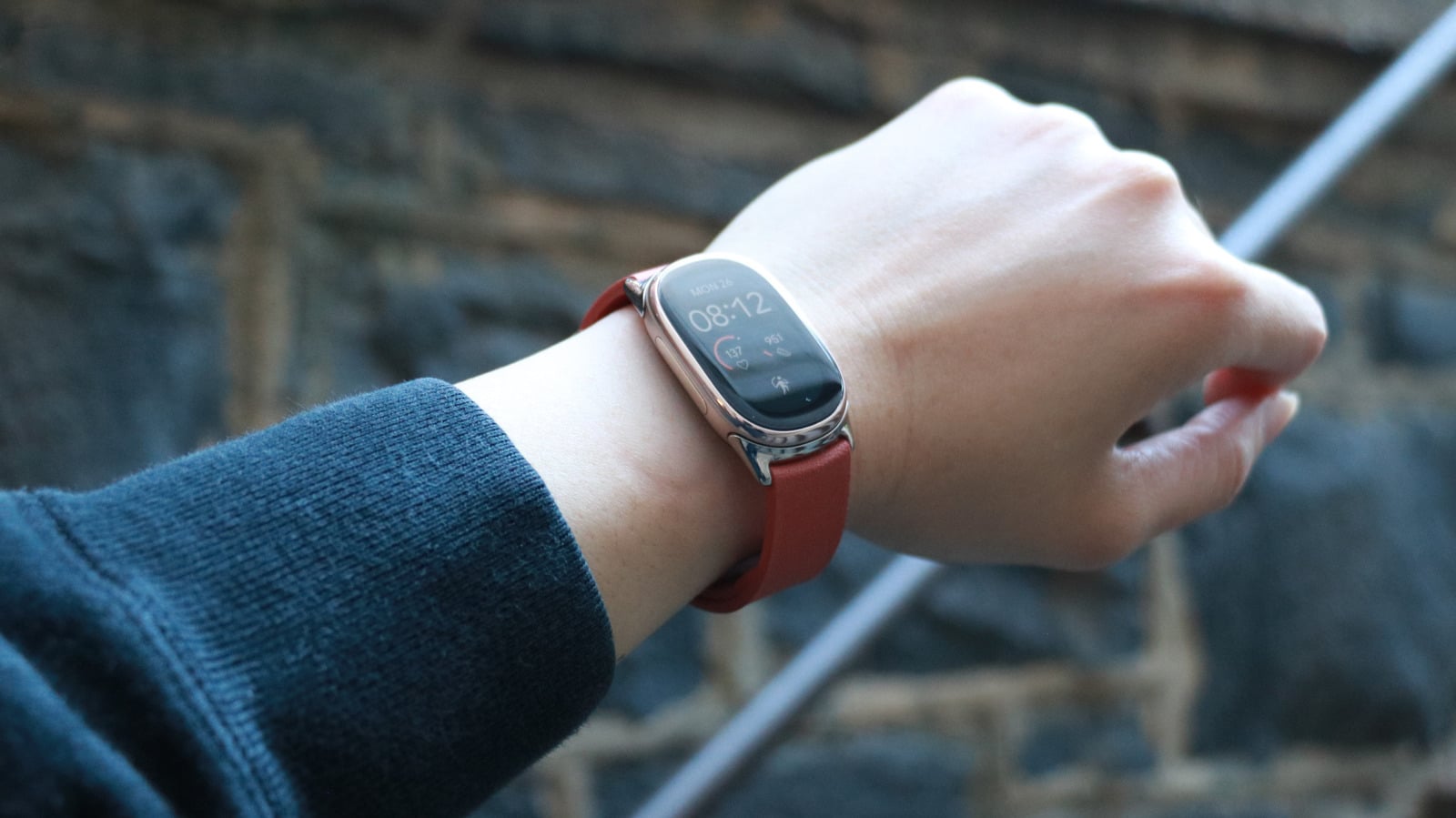
Google’s new Fitbit Edge fitness tracker is officially on store shelves, the company confirmed in a blog post this week.
The launch marks the software giant’s latest push to wrap its Gemini artificial intelligence into everyday wearable hardware.
The device went up for pre-order on the Google Store for $179.99, with retail availability starting October 27.
What the Edge brings to the Fitbit lineup
Google describes the tracker as “a deliberate step change in design and performance.”
It features the company’s largest, brightest tracker display yet, with a new screen design and physical side buttons for easier controls.
The device slots into Google’s wearable lineup “between the lightweight simplicity of Fitbit Air and the power of Pixel Watch 5,” according to a Google Health blog post.
Google described it as built for active lifestyles, offering glanceable, real-time guidance, and serving as an on-wrist window to the Google Health Coach.
The Edge features a larger OLED display, advanced health tracking, built-in GPS, a replaceable battery, and up to seven days of battery life, but lacks NFC payments.
Google priced the tracker at $179.99, and multiple outlets, including Bloomberg, report that it effectively replaces the Fitbit Charge 6 in the lineup.
Software is the real upgrade
The Edge’s headline feature is not its screen but the software layer riding on top of it.
The Fitbit Edge, priced at $180, features automatic workout detection, an altimeter and proactive health monitoring to detect changes in blood pressure and insulin resistance trends.
The Health Coach and Health Guardian features are available on the new Fitbit Edge through a Google Health Premium subscription.
Google says buyers will get three months of Google Health Premium on them when they purchase Google Fitbit Edge.
The approach mirrors a broader industry shift toward bundling subscription software with wearable hardware, a model GCN has covered previously with a rival fitness band that ties core functionality to an ongoing membership fee.
On the app side, Google Fitbit Edge works with most modern Android and Apple iOS phones, meaning the tracker is not locked to Google’s own Pixel ecosystem.
All data and settings run through the Google Health app, which has become the unified software hub for Google’s wearable portfolio.
One account, three devices
Google has been consolidating its fitness software stack throughout 2026. The company introduced the new Google Health app, Health Coach, and Fitbit Air earlier this year as part of an effort to shift health technology from a fragmented, reactive data-tracking ecosystem to a proactive, personalized companion for everyday life, and has continued expanding Health Guardian features to Fitbit Air and the new Edge alike for subscribers.
That is intended to let someone swap between a screenless band, the new Edge, and a full smartwatch without losing historical health data or coaching progress.
This software continuity reflects Google’s broader strategy of treating Fitbit, Pixel Watch and the Google Health app as a single connected platform rather than three separate product lines.
Rishi Chandra, general manager of health and home at Google, outlined that goal in the company’s Google Health blog post announcing the Edge and other updates.
Why it matters
The Edge launch shows how hardware makers increasingly compete on software and AI features rather than sensors alone.
With GPS and other health sensors now standard across much of the wearable market, the differentiator Google is betting on is Gemini-driven coaching delivered through its app.
That strategy parallels how other large tech companies are folding generative AI assistants into established consumer software, such as Microsoft’s recent move to embed its own AI assistant directly inside its core productivity apps.
For consumers, the tradeoff is that the most advanced features of a $179.99 device remain gated behind a recurring software subscription.
That pattern is becoming standard across the fitness wearable category as companies look to turn one-time hardware sales into ongoing revenue.
