A cul-de-sac of brick rowhouses sits quiet under a gray Maryland sky.
Pipes run just beneath the frost line, buried there months ago.
Somewhere under that ground, a bigger question is still being argued over.
Regulators, a gas utility and hundreds of households are stuck negotiating who actually pays for heat drawn from the earth.
The answer reaches well past anyone who signed up.
So what looked like a tidy monthly bill for a few hundred homes quietly became a line item on everyone else’s statement too.
How a shared loop turns one neighborhood’s heat into everyone’s expense
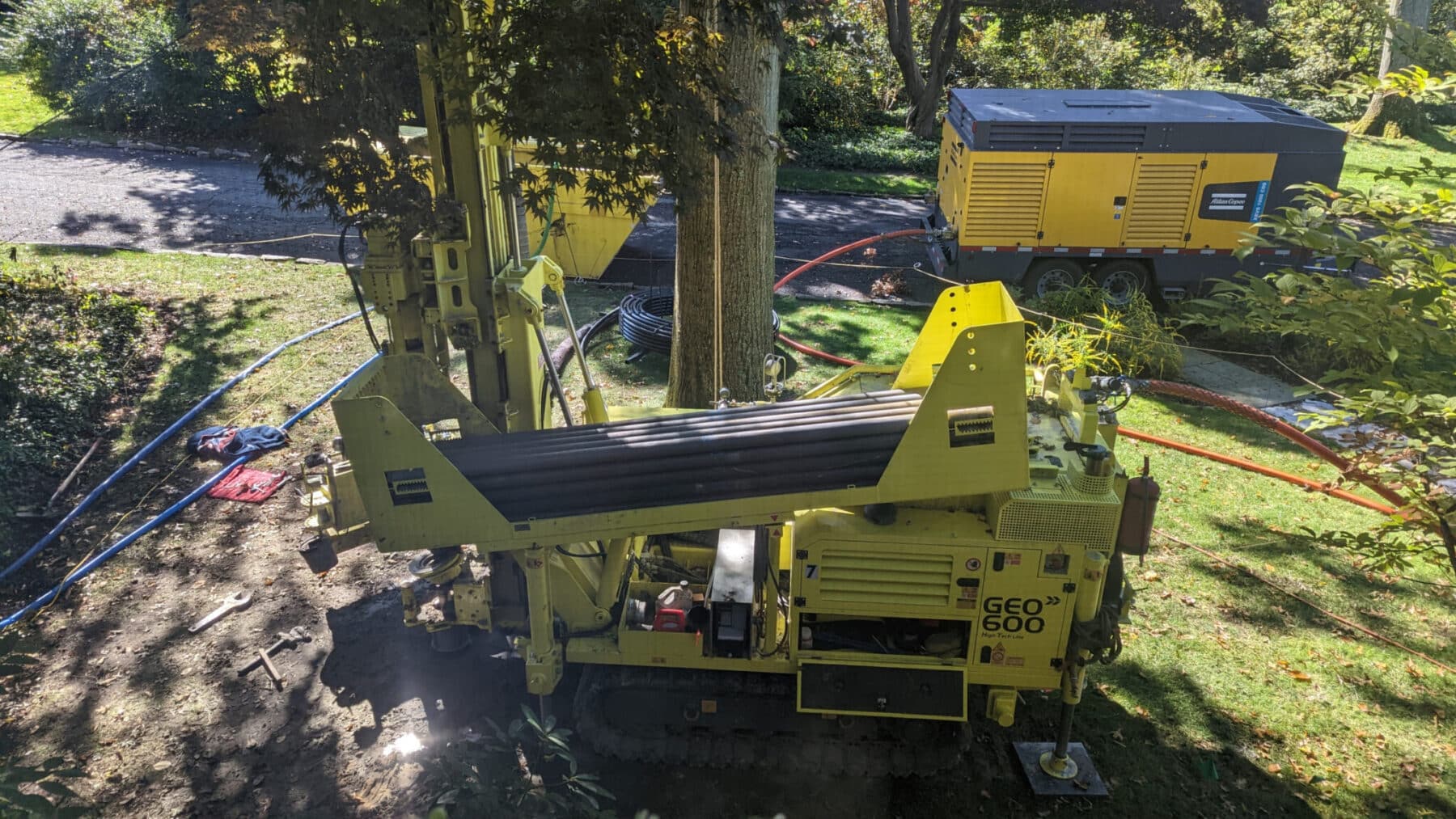
A networked geothermal system works by drilling a cluster of boreholes and threading a loop of water and antifreeze beneath an entire block, rather than giving each house its own backyard well. That shared pipe then feeds individual heat pumps inside each home, trading a furnace and a flame for a compressor and the earth’s steady underground temperature.
The appeal is obvious on paper. Sharing one loop among dozens of buildings spreads out the single biggest expense in any geothermal project, the drilling itself, across far more customers than a single household could ever absorb alone.
But that same shared infrastructure is exactly why the bill never stays contained to the block it serves. Utilities fund networked pilots the way they fund a gas main or a substation, by folding construction costs into the rate base and spreading them across the entire customer pool.
Which means a handful of signed up households enjoy the comfortable monthly fee while every other ratepayer in the territory quietly helps finance the pipe under a stranger’s street.
A Maryland neighborhood becomes the real world test case
The clearest look at how that math plays out is unfolding in Maryland, where Washington Gas has proposed a networked geothermal pilot at Northwest Park in Montgomery County. At Northwest Park, residents would pay $12.50 monthly. At a nearby senior living facility that would also benefit from the pilot, residents would owe $3 monthly and nearby single family homes would owe $30 monthly. That price comes from utility filings reported by Maryland Matters.
Even so, that comfortable price tag for participants was never the full story.
After the project is operational, Washington Gas estimated that its nonparticipating customers would see a $5 to $8 increase on their monthly bills. The utility, the ones who keep their existing gas furnace running exactly as before, would still see that increase. Washington Gas estimated the project’s cost at $40 to $50 million , a figure that becomes a permanent fixture on bills across the utility’s entire service territory rather than vanishing once construction wraps.
The commission reviewing the plan balked at the arithmetic, leaving the pilot stalled rather than approved.
The dollar figures behind the stall, and the scrutiny driving it
These figures come directly from utility filings and regulatory dockets, not outside estimates, and a similar pattern played out one state over in Maryland’s own BGE territory. Baltimore Gas & Electric proposed two projects, one in Columbia, including the Verona at Oakland Mills apartments, two nearby community centers and an ice rink, and a second in Baltimore, including a dormitory building at Coppin State University and the nearby St. Stephen’s Court Apartments.
BGE estimated that the Columbia project would cost about $54.1 million, and the Baltimore project $43.5 million. But it argued that if regulators approved both projects, it could save about $13 million in administrative costs.
In a December ruling, the commission determined that the proposals from Baltimore Gas & Electric and Washington Gas were “not only exorbitant, but also speculative and therefore carry the possibility of increasing even more.” Maryland’s Warmth Act caps what pilot participants pay, but that protection only covers people inside the program, not the larger group funding it from outside.
Where this has already fallen apart, and where it has not
Massachusetts offers the clearest outside precedent for both outcomes. A Framingham pilot run by Eversource connected a shared loop to about 140 residential and commercial customers , with residential customers in its pilot paying $10 per month, plus their electricity bill which covers the energy to pump fluid through the system, while commercial customers pay $20 per month , and regulators approving recovery of the remaining construction cost from the broader customer base.
Yet not every proposal survives that scrutiny.
A separate networked pilot planned for Lowell, Massachusetts was scrapped entirely after National Grid concluded the math no longer worked, with National Grid scrapping a geothermal energy project in Lowell after cost estimates were too high . A regulatory delivery director for the utility said plainly, “We just did not think it was going to provide good value or make sense for our customers.” Underground conditions and rising estimates made that project costlier than planners expected before anyone finished construction.
So the same financing model that works smoothly in one city can collapse under its own weight in the next, depending on what the ground underneath actually costs to drill.
What happens next for households weighing a similar offer
None of this means networked geothermal is a bad deal for the people who sign up. Early participants in Framingham and the households slated for Northwest Park are still getting below market heating costs locked in for years, financed by a much larger pool of ratepayers who never asked for the arrangement.
That tradeoff is not unique to geothermal. It mirrors how a utility books buried power lines, spreading an expensive, visible upgrade across millions of invisible bills.
Even so, federal backers are betting the economics will keep improving. The Framingham project received a $7.8 million Department of Energy grant to support a second phase that would begin construction in 2026 and launch by early 2027 , built in part to show whether connecting a new network to an existing one can bring costs down further.
Regulators in Maryland have not killed the program outright; they have asked for better numbers. Until those arrive, anyone paying a bill in a pilot utility’s territory is, in a small way, already helping pay for a system they may never plug into.
